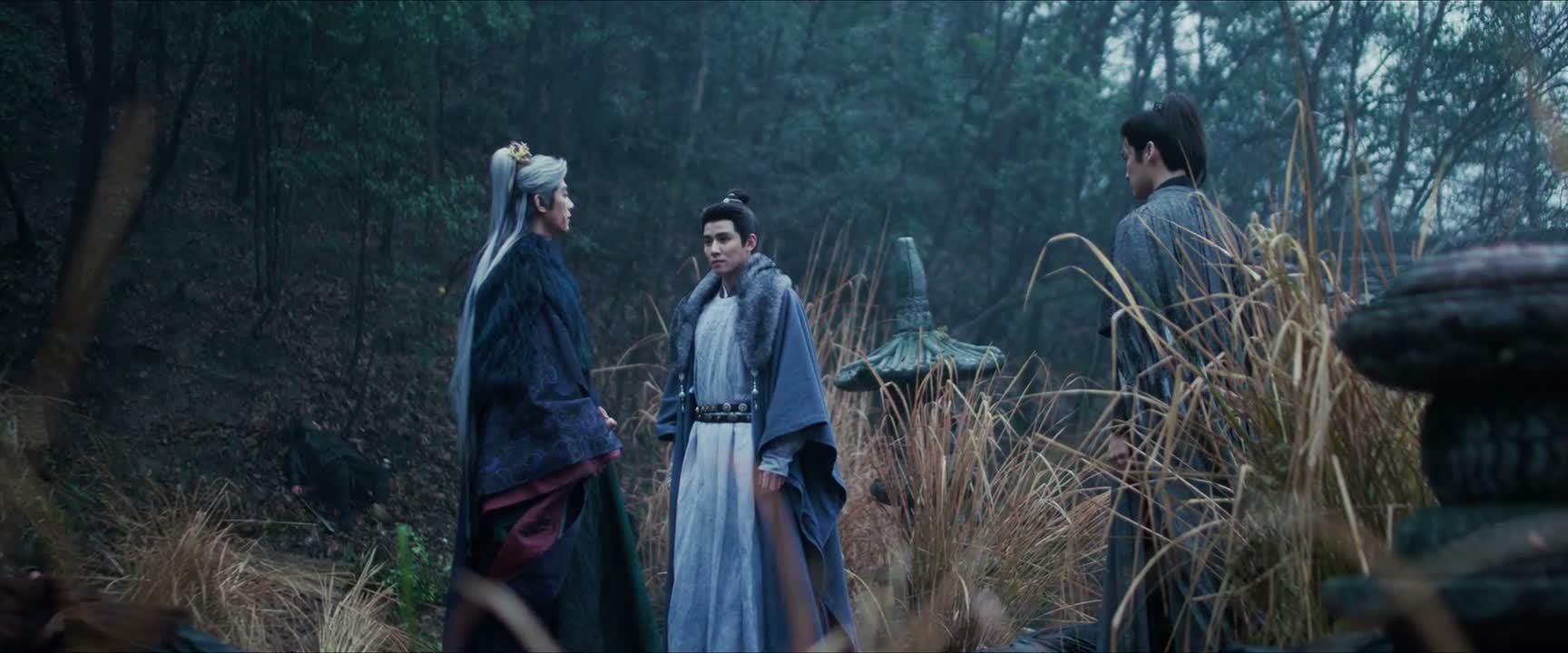
不会一直是孤身在路上吧 有多危险你知道吗
“were you traveling alone the whole time? Don't you know it's dangerous?”
THE DIALOGUE REEL
还有
“And,”
不会 一直是 孤身在路上 吧 有多危险 你知道吗
“were you traveling alone the whole time? Don't you know it's dangerous?”
我大老远跑来找你
“I came all the way here to you,”
“You haven't been traveling all by yourself this whole time, have you? Do you have any idea how much danger you're putting yourself in? I was worried sick about you.”
In Chinese interpersonal relationships, close companions (friends, lovers, or family members) often express deep affection and care by chiding or criticizing someone for neglecting their own safety or well-being, reflecting the traditional mindset 'ai zhi shen, ze zhi qie' (the deeper the love, the harsher the reproach).
LEARNING CHUNKS & PARTICLES
indicates conjecture, often with surprise or a desire that something is not true ('surely... not')
A highly frequent colloquial pattern used to deduce a worrying or unexpected situation from subtle clues.
completely alone; traveling alone without companions
Carries an emotional nuance of loneliness, drifting, or being vulnerable without anyone to look after you.
emphasizes an extreme degree, used to reprove or urge someone to take something seriously ('Do you have any idea how... it is?')
A rhetorical question structure that reinforces the speaker's anxiety and concern about the gravity of the situation.
Placed at the end of a sentence to express conjecture, doubt, or tentative probing.
Placed at the end of a sentence to form a rhetorical question, heightening the tone of reproach and warning.
VOCABULARY & EXPRESSIONS
Parallel Spoken Cinema Scenes (语义近邻切片)

“I can't live a lonely life anymore.”

“So you'll never be alone again.”

“you are still single.”

“Yet I have always been alone.”

“But today, she will be all alone.”
“But what was waiting for me throughout this journey?”