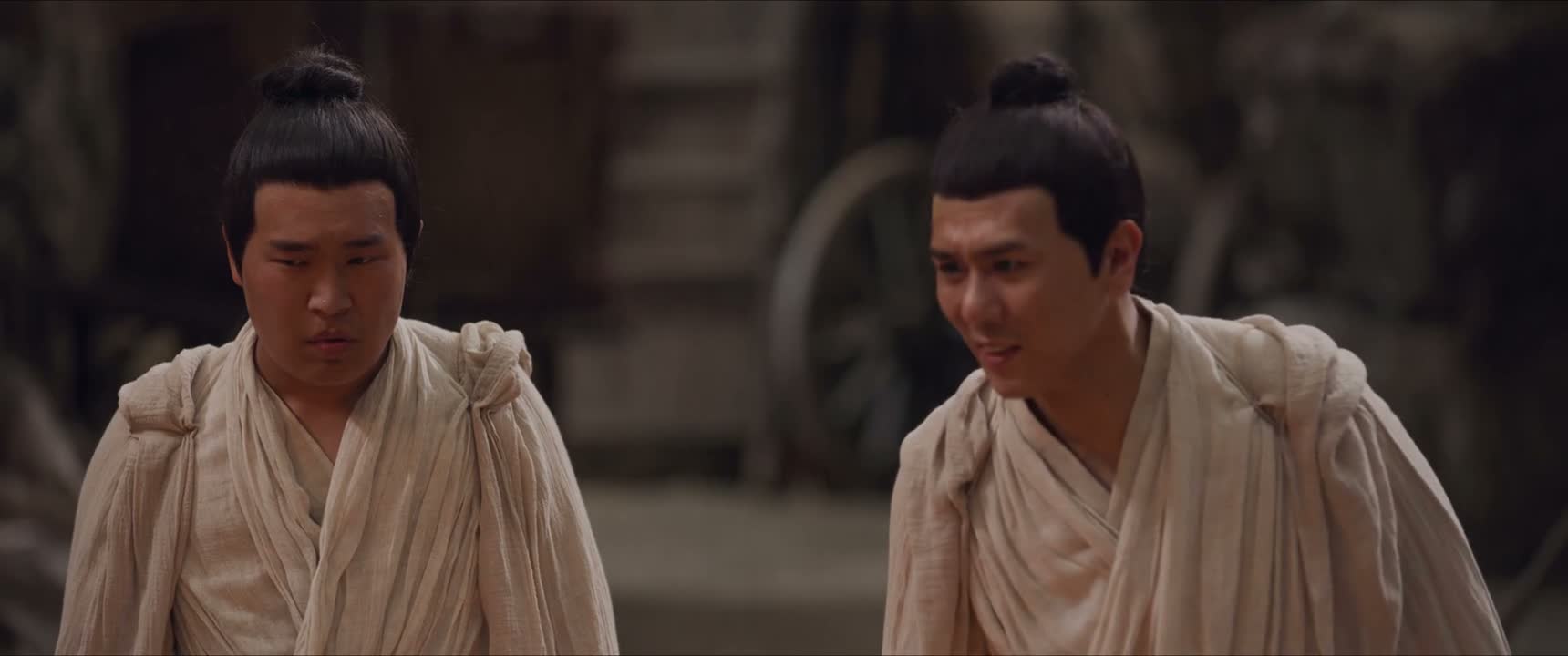
我俩都挑水都累死了 你咋安排的嘛 好 好 好
“Carrying water is exhausting us. - How did you plan this? - Okay, okay.”
THE DIALOGUE REEL
“In an hour? The water is too far from the kitchen.”
我俩 都挑水都 累死了 你 咋安排的 嘛 好 好 好
“Carrying water is exhausting us. - How did you plan this? - Okay, okay.”
马上安排 让人再等会儿 赶紧 赶紧啊
“- I'll fix it now. - Tell them to wait. Hurry up.”
“The work allocation is terrible and we're exhausted; just stop making excuses and sort it out immediately.”
Reflects the arduous division of labor in traditional Chinese rural, industrial, or collective settings, where water had to be manually carried with shoulder poles to supply communal kitchens for cooking.
LEARNING CHUNKS & PARTICLES
exhausted to death; extremely tired
Verb/Adjective + 'si le' is a common colloquial hyperbolic pattern expressing an extreme degree.
how did you arrange this?
'za' is a colloquial equivalent of 'zenme' (how/why) widely used in Northern dialects, often carrying a tone of questioning or reproach.
Used at the end of a sentence to express obvious dissatisfaction, resentment, or a reminder of something self-evident.
VOCABULARY & EXPRESSIONS
Parallel Spoken Cinema Scenes (语义近邻切片)
“the two of us are almost exhausted!”

“You look tired. Have some water.”

“I'll have to do the work of two people all by myself, and it'll be exhausting.”

“We've gone back and forth on this. Aren't you tired?”

“Let me get you some water. You've worked so hard. Here.”

“We're struggling way too much now.”