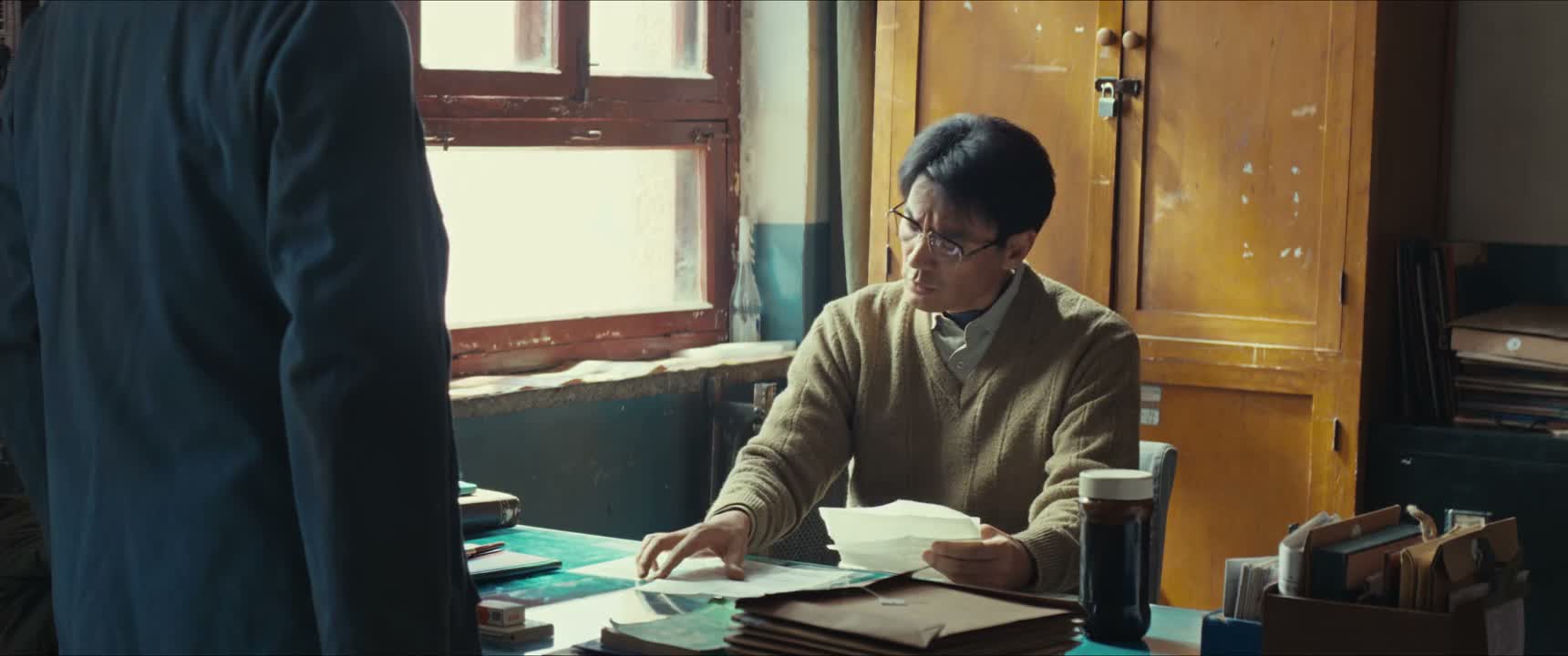
咱做人不能太不讲究了吧
“Be decent, alright?”
THE DIALOGUE REEL
我踢你
“Kick you out?”
咱 做人 不能 太 不讲究 了 吧
“Be decent, alright?”
“Meiyu Bainian was a huge company.”
“You should at least have some decency and play by the rules.”
An implicit standard regarding interpersonal ethics, etiquette, and decency in Chinese culture. Calling someone 'bu jiangjiu' (unprincipled or improper) is a relatively severe verbal reproach regarding their moral character and conduct.
In Beijing and northern Chinese colloquial speech, 'zan' is frequently used instead of 'women'. Here it serves to bridge psychological distance, appealing to a shared common standard to indirectly or tactfully criticize the other person's behavior.
LEARNING CHUNKS & PARTICLES
ungenerous, improper, or disregarding rules and etiquette
A highly frequent colloquial expression, often used to reproach someone for acting unreasonably, violating social ethics, or lacking magnanimity.
to conduct oneself, one's behavior and moral character toward others
Often used with patterns like 'bu neng...' (one cannot...) or 'dong de...' (know how to...), evaluating someone's moral integrity or principles of conduct.
A compound modal particle where 'le' marks that a situation has reached a certain point, and 'ba' conveys a consultative rhetorical tone, softening direct confrontation while expressing strong criticism and dissatisfaction.