同志谢谢啊 谢谢 没事 走 回家
“Thank you, comrade. Thank you. - You're welcome. - Go home!”
THE DIALOGUE REEL
“If not for him, you'd have broken your leg!”
同志 谢谢啊 谢谢 没事 走 回家
“Thank you, comrade. Thank you. - You're welcome. - Go home!”
“Go! I'll tell your father what you've been up to.”
Direct spoken expression in this communicative setting.
Historically in socialist China, 'tongzhi' served as a universal, egalitarian term for addressing any unfamiliar citizen in public.
LEARNING CHUNKS & PARTICLES
comrade; polite stranger address (historical/regional)
A common historical form of polite address among strangers in mainland China, though less frequent among younger urbanites today.
it's nothing; no worries
Use this handy phrase to downplay a minor incident or reassure someone that everything is under control.
Softens the expression of gratitude to make it warmer and more approachable.
VOCABULARY & EXPRESSIONS
Parallel Spoken Cinema Scenes (语义近邻切片)

“First, thank you all for not turning around and leaving.”

“Thank you. It's nothing. Thank you so much.”

“Thank you. You're welcome. Take care.”
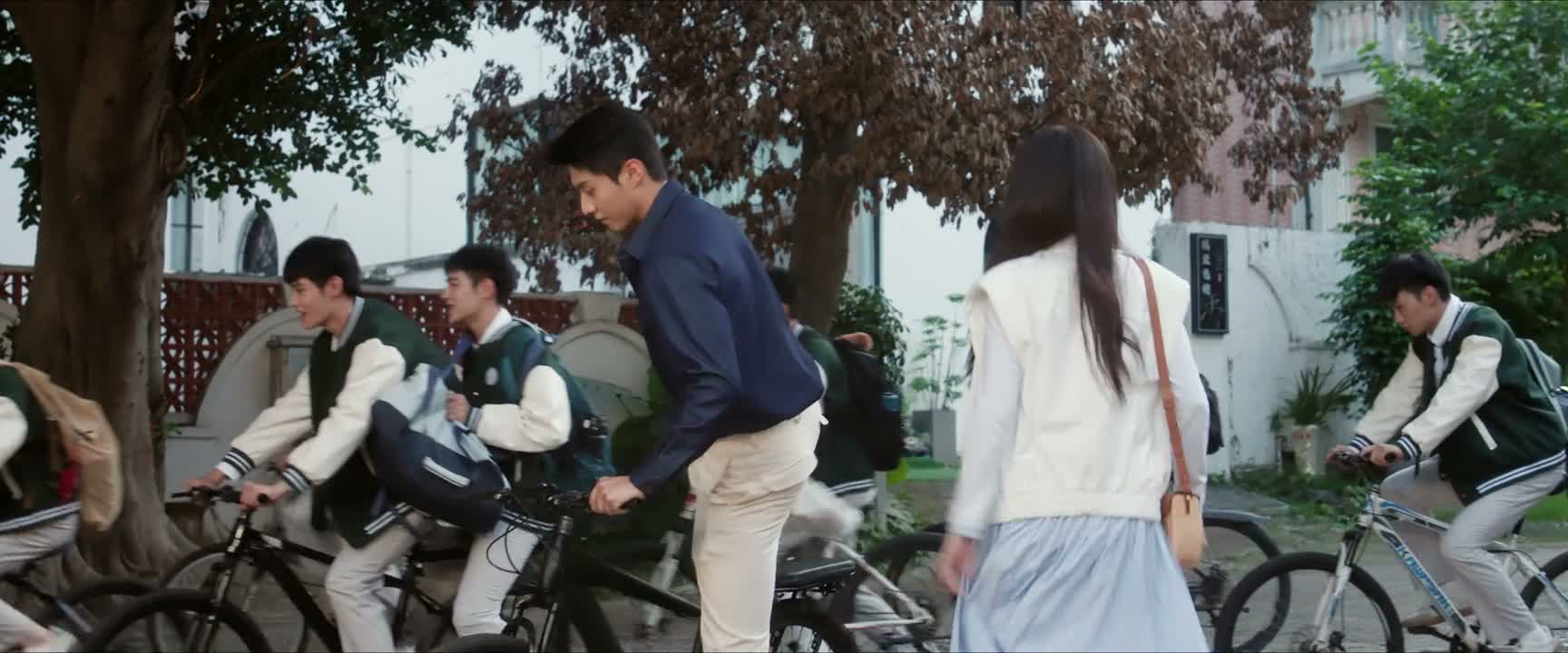
“Thanks. Slow down. I'm off.”

“Thanks, Vicky. No problem. Thank you.”