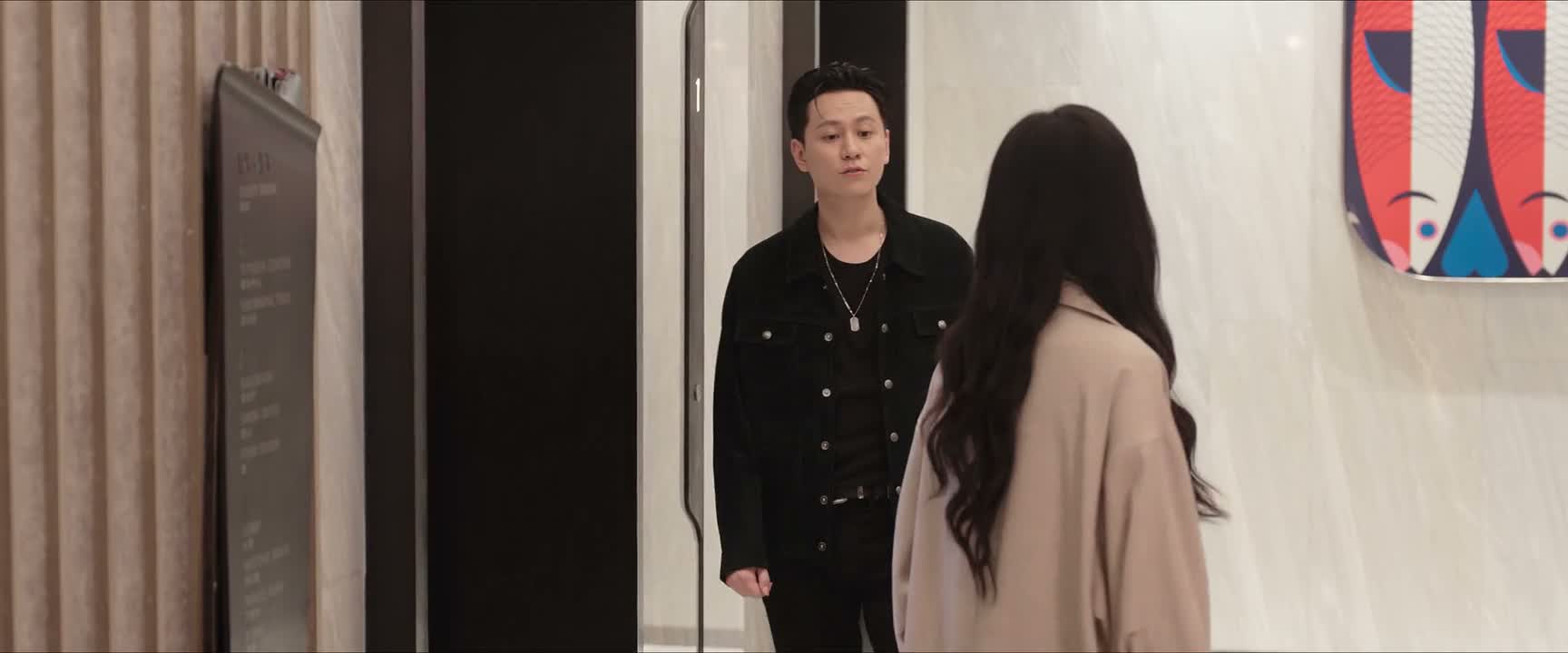
你好好养着 我还有事 我先走了
“Take care. I need to go. See you.”
THE DIALOGUE REEL
嫂子还在呢啊
“Your wife is here.”
你好 好养着 我还有事 我先走了
“Take care. I need to go. See you.”
“Thanks. No need for thanks. We're buddies.”
Direct spoken expression in this communicative setting.
In Chinese etiquette, visitors must explicitly urge an ailing person to rest and state an excuse (having other errands) so the host does not feel neglected or obligated to see them out.
LEARNING CHUNKS & PARTICLES
rest well and take care of your health
A warm parting wish directed at someone who is ill, recovering from injury, or postpartum.
I'm leaving now / I'll take off first
The standard informal formula for taking leave in casual Chinese social interactions.
Aspect particle indicating the continuation of an action or state, here used to suggest maintaining a prolonged state of resting.
Marks a change of state or imminent departure, softening the exit.
VOCABULARY & EXPRESSIONS
Parallel Spoken Cinema Scenes (语义近邻切片)
“Get some proper rest. I'll head off first.”

“I need to be somewhere else. I'll get going. Alright.”

“I have matters to attend to, I'll take my leave.”

“I have things to do. I'm leaving.”