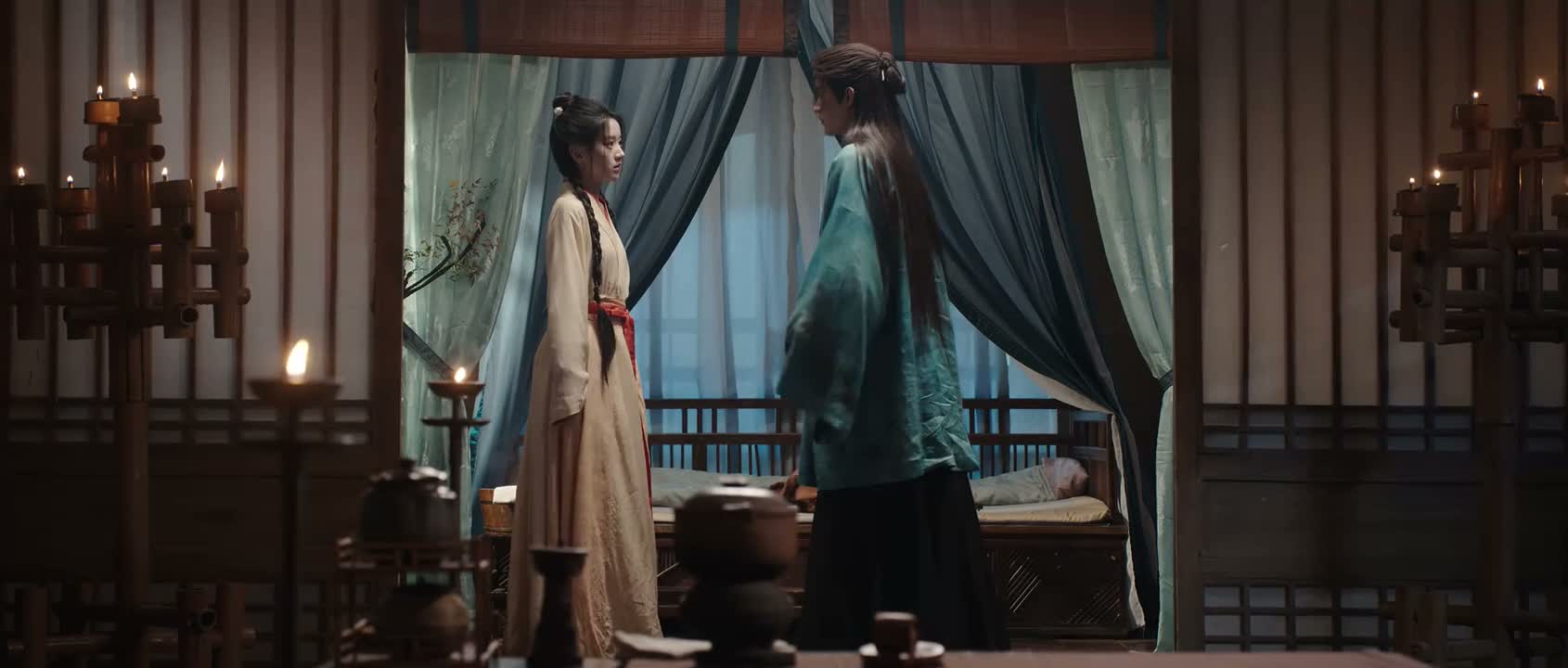
这平时在家里谁收拾房间哪
“Who usually cleans up around here?”
THE DIALOGUE REEL
这平时 在家 里 谁收拾 房间哪
“Who usually cleans up around here?”
你叫什么名字呀
“What's your name?”
“Your room is such a mess, do your parents do everything for you?”
Older or senior acquaintances often casually ask younger people about domestic habits to assess their maturity, diligence, and family upbringing.
LEARNING CHUNKS & PARTICLES
tidy up the room; clean the room
Common everyday verb-object phrase describing household cleaning or organizing.
usually; normally; on regular days
Used as a time adverbial to ask about general habits rather than exceptional moments.
Softens the interrogative question into a conversational, non-threatening curiosity.
VOCABULARY & EXPRESSIONS
Parallel Spoken Cinema Scenes (语义近邻切片)

“If you want to change your life and the world, the first thing to do is tidy your room.”

“I'm very good at tidying up rooms.”
“You usually do housework?”

“I'll tidy your room up, OK? OK.”

“This apartment is quite clean.”

“The best way to clean a room”