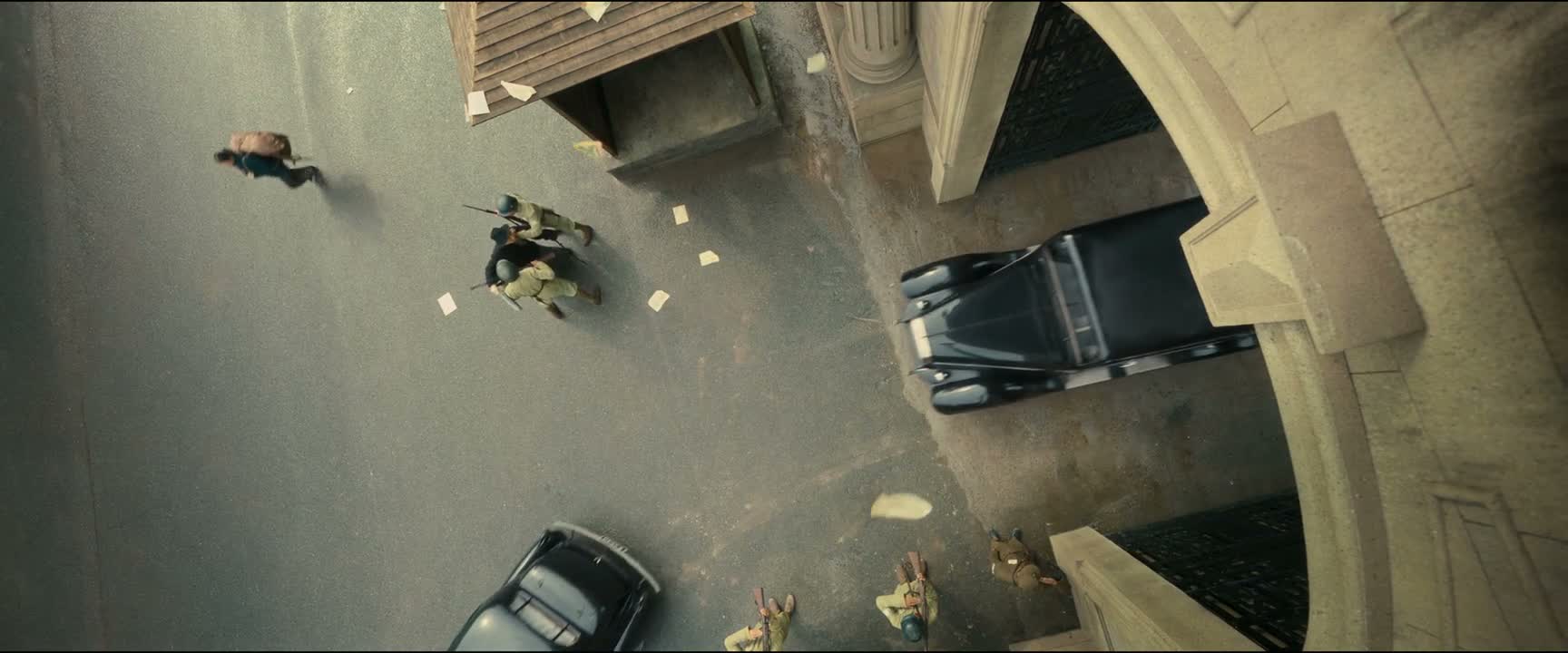
你就先逃跑了 把我们老百姓抛下
“and you ran away first! Leaving us civilians behind,”
THE DIALOGUE REEL
日本人还没来呢
“The Japanese haven't even arrived,”
你就先逃 跑了 把我们 老百姓 抛下
“and you ran away first! Leaving us civilians behind,”
你这就是卖国
“this is treason!”
“You are supposed to protect us, but you saved your own skin and left us to die.”
In Chinese moral philosophy, leaders and protectors lose all legitimacy when they abandon common civilians ('老百姓') during external crises.
LEARNING CHUNKS & PARTICLES
ordinary people; the common folk
A culturally resonant term for the general populace, contrasting sharply with officials, elites, or military personnel.
to abandon; to leave behind
Conveys callous desertion, often used with the '把' construction.
to flee; to run away
Has a strong derogatory connotation of cowardice when applied to leaders or soldiers.
Marks the completed act of fleeing and highlights its unacceptable reality.
VOCABULARY & EXPRESSIONS
Parallel Spoken Cinema Scenes (语义近邻切片)

“Are they running away or just on the same way as us?”

“Meiyan, I must find a chance to escape this time.”
“You all fled to the rear,”