你在单位那套做派 拿家来 我看你是总这样
“that workplace attitude home with you. You're always like this.”
THE DIALOGUE REEL
林培生 你总这样 有火你就发出来 你别把
“Lin Peisheng, you're always like this. If you're angry, just let it out. Don't bring”
你在单位那套 做派 拿家来 我看你是 总这样
“that workplace attitude home with you. You're always like this.”
我怎么了
“What about me?”
“Stop acting like my boss; you are at home now!”
In Chinese society, bringing workplace hierarchy and bureaucratic posturing into marital relationships is a frequent source of domestic friction.
LEARNING CHUNKS & PARTICLES
that mannerism / that style of behavior (often pejorative)
Used disapprovingly to criticize someone's habitual posturing, airs, or institutional habits.
in my opinion, you are / seems to me you are
A colloquial opener used to deliver a direct, subjective judgment or accusation.
VOCABULARY & EXPRESSIONS
Parallel Spoken Cinema Scenes (语义近邻切片)

“Take it. You have to take it. Let me introduce. Uncle.”

“Take it. Just take it. You made the front page.”

“Don't bring those ways here.”

“Let me tell you. That stall keeps us swamped. Give it to me.”

“Come on, bring it here. Bring it here. I know this place too well.”
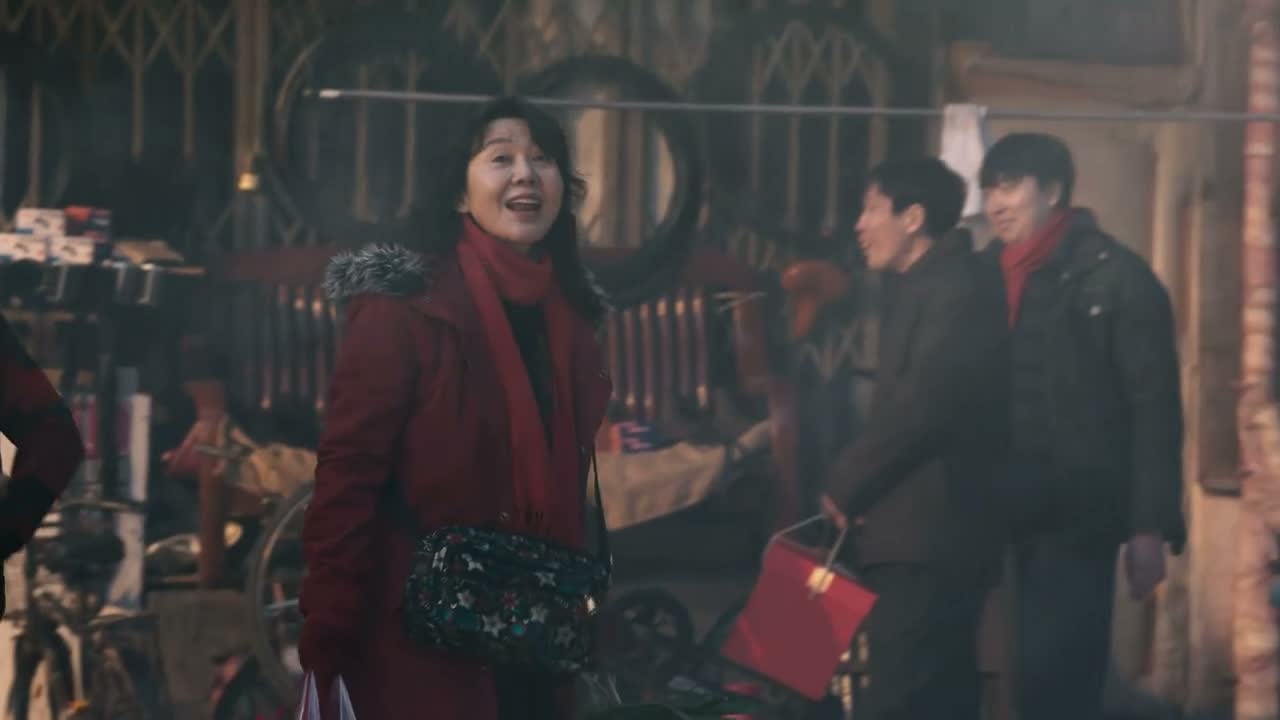
“Come down and get the things. Coming! Coming!”