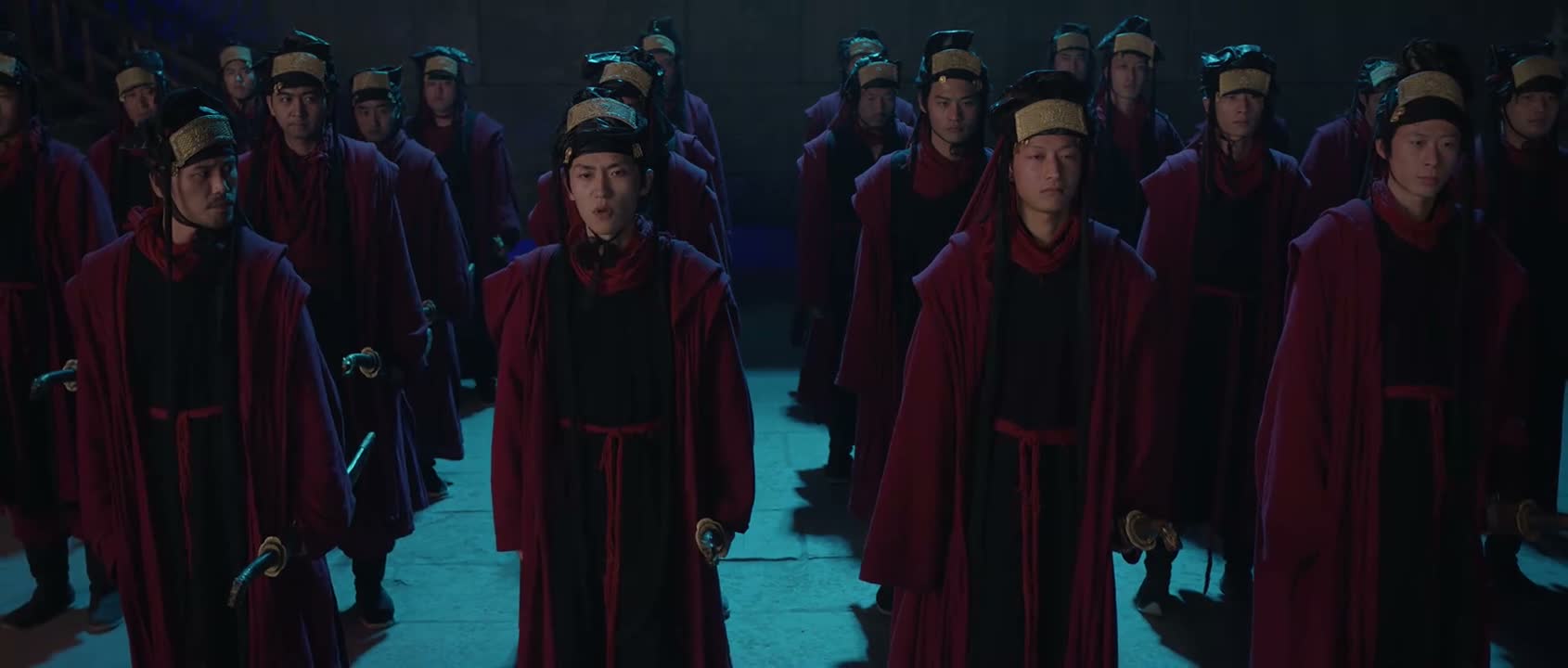
那些想要谋反篡位的逆臣
“The treacherous officials who tried to usurp the throne”
THE DIALOGUE REEL
“I am the only heir left behind by Father.”
那 些 想要 谋反篡位 的逆臣
“The treacherous officials who tried to usurp the throne”
也都被本王拿下
“have been captured.”
“Do not dare oppose me, or you will end up dead like the rest of the traitors.”
In imperial Chinese political discourse, accusing opponents of 'usurping the throne' (篡位) invokes the highest moral and legal crime under the mandate of heaven.
LEARNING CHUNKS & PARTICLES
to plot rebellion and usurp the throne
A classical four-character idiom used in historical or dramatic contexts to describe treason against a ruler.
traitorous or rebellious ministers
A literary term for imperial court officials who betray the crown.
VOCABULARY & EXPRESSIONS
Parallel Spoken Cinema Scenes (语义近邻切片)

“who would commit treason and usurp power.”

“all these treacherous and corrupt officials”
“are traitors who stole the Mu clan's legacy!”