我又会打木工 又会搭棚子
“I can do carpentry. I can build shelters.”
THE DIALOGUE REEL
我生存能力强
“I know how to survive.”
我又会打木工 又会 搭棚子
“I can do carpentry. I can build shelters.”
“I might even help with rescue work.”
Direct spoken expression in this communicative setting.
Demonstrating hands-on manual survival skills is highly valued during crises or outdoor endeavors, signaling dependability rather than mere talk.
LEARNING CHUNKS & PARTICLES
do carpentry or woodwork
A colloquial northern spoken phrasing for doing manual woodworking jobs.
pitch a tent or put up a makeshift shed
Refers to setting up temporary shelters or canopies using tarps, poles, or scaffolding.
can do both... and...
A parallel construction used to list multiple capabilities or skills possessed by a person.
VOCABULARY & EXPRESSIONS
Parallel Spoken Cinema Scenes (语义近邻切片)

“I'll go upstairs and get the tools for the shelter.”
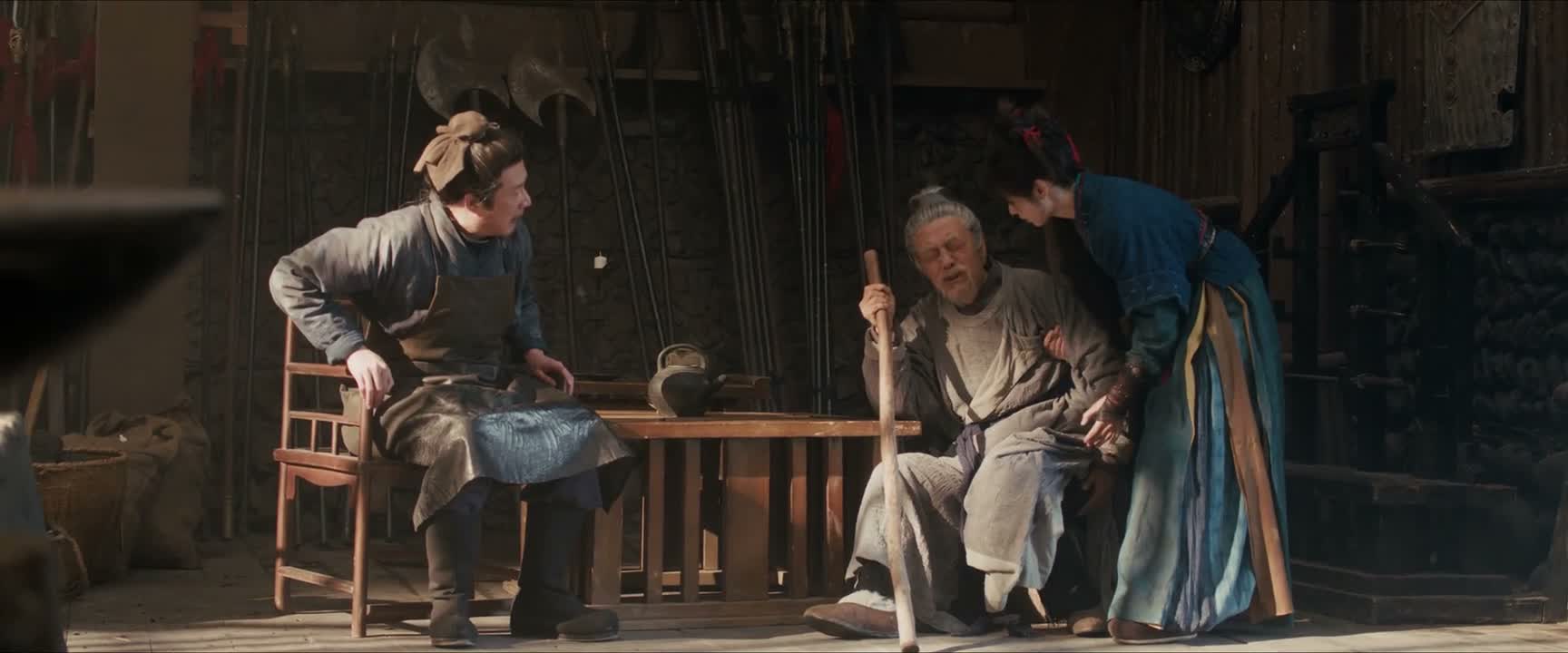
“and make me sit on this wooden stump?”

“Takeki, we can figure something out together.”

“If we don't know anything, we can learn. I couldn't make furniture before either.”

“Who's to say you won't be chosen by the Jianmu Tree,”

“I can learn a trade.”