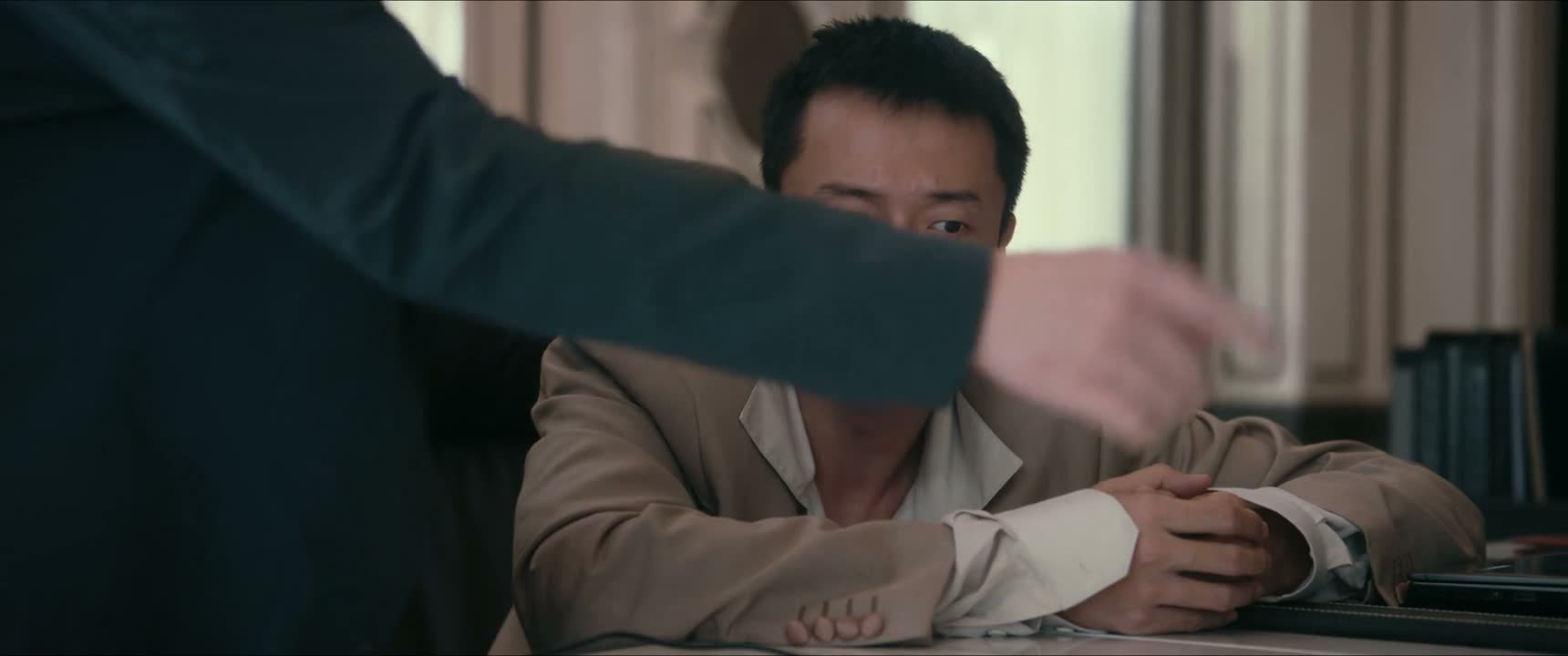
刚才他进来 你没看见吗
“Didn't you see him when he came in?”
THE DIALOGUE REEL
刚才他进来 你 没看见吗
“Didn't you see him when he came in?”
为什么不领他进来
“Why didn't you bring him in?”
“You clearly saw him, so why were you just sitting there instead of greeting him properly?”
In Chinese workplace and social hierarchies, subordinates are expected to possess 'yanlijian'—the proactive ability to notice guests arriving and immediately attend to them without being told.
LEARNING CHUNKS & PARTICLES
just now; a moment ago
A common temporal noun used at the start of sentences to refer to actions that occurred in the immediate past.
didn't you see?
A rhetorical negative question often used confrontational tone to criticize someone's lack of situational awareness.
Forms a rhetorical negative question that emphasizes the speaker's disbelief and annoyance.
VOCABULARY & EXPRESSIONS
Parallel Spoken Cinema Scenes (语义近邻切片)
“but he saw it a-as soon as he came in?”

“What I imagined was that”

“You went to see him just now?”

“You were so fierce when you came in.”

“I saw him entering someone's house,”

“When he carried her in just now,”