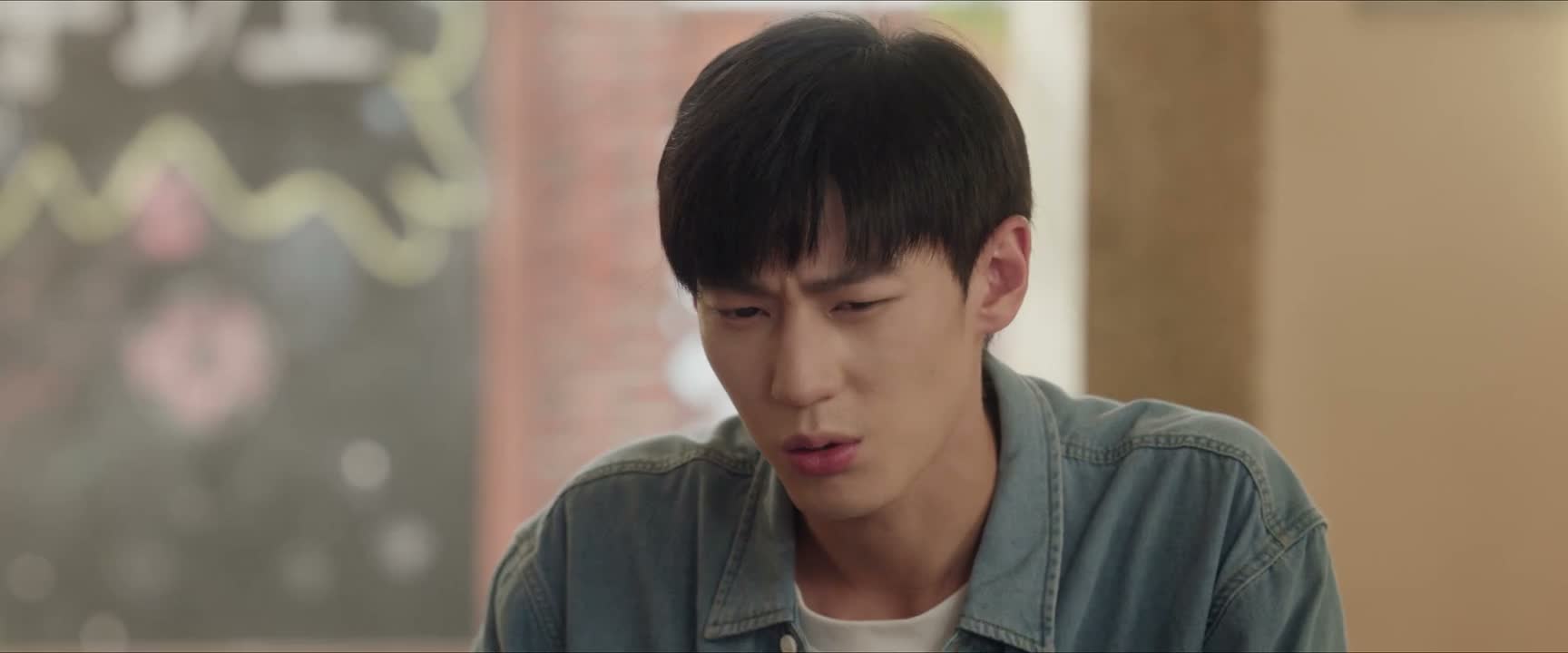
原来是假发啊 路老师还是有偶像包袱啊
“(It's actually a wig?) (Mr. Lu is still behaving like an idol.)”
THE DIALOGUE REEL
路老师估计要转型戏路 走实力派了
“(Looking at his new style, Mr. Lu is probably switching genres) (and starting to do some serious acting.)”
原来是 假发 啊 路老师 还是 有 偶像包袱 啊
“(It's actually a wig?) (Mr. Lu is still behaving like an idol.)”
“(What news is Mr. Lu reading?) (Why is he frowning?)”
“Here we thought he was getting serious about real acting, but he still cares way too much about his looks.”
In Chinese entertainment culture, serious actors (实力派) are expected to abandon vanity, whereas 'idols' carry the baggage of having to look perfect at all times.
LEARNING CHUNKS & PARTICLES
idol burden; being overly conscious of one's public image/appearance
Commonly used in modern Chinese pop culture to describe someone who refuses to look silly, ugly, or casual because of vanity.
so it turns out to be...
Used when discovering the truth after previous misconception.
Softens the realization and marks an amused, conversational discovery.