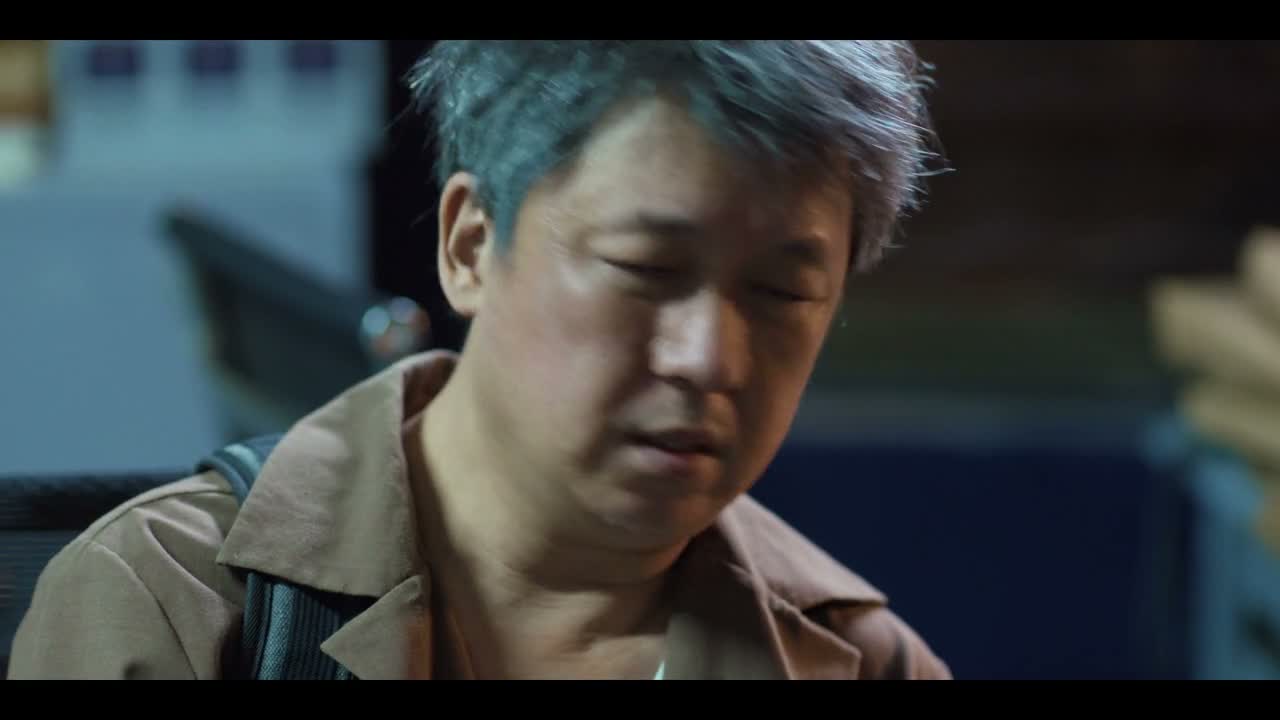
我说你呢听见没有啊
“I'm talking to you—did you hear me?”
THE DIALOGUE REEL
“take my shoes off so I can loosen up a bit.”
我说你呢 听见没有啊
“I'm talking to you—did you hear me?”
哥 你看他家里出事了 你看这个样子
“Boss, Boss, well, something happened in his family. Just look at him.”
“Don't play deaf with me, do what I told you right now!”
In informal hierarchical contexts, superiors or bullies often use sharp, repetitive interrogatives to intimidate subordinates into immediate submission.
LEARNING CHUNKS & PARTICLES
I'm talking to you
Commonly used in spoken Chinese to call someone out sharply when they are unresponsive or distracted.
Did you hear me?
A blunt, demanding way to confirm whether the listener heard or intends to comply with a command.
Highlights the target of the utterance, focusing direct pressure on the listener.
Intensifies the interrogative tone and signals irritation or impatience.
VOCABULARY & EXPRESSIONS
Parallel Spoken Cinema Scenes (语义近邻切片)

“I'm talking to you! Can't you hear me?”
“You hear that? He's scolding you.”

“Do you hear me?”

“Do you hear me? Answer me.”