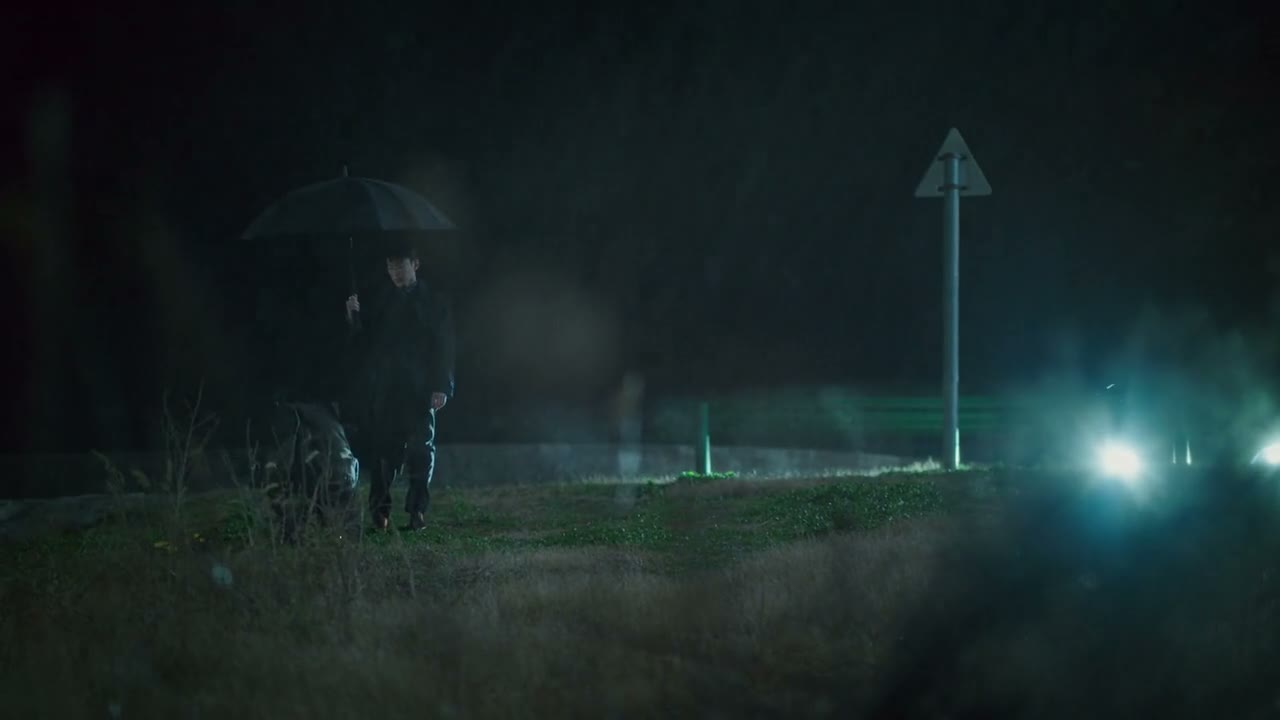
他不是走了吗 不是鬼 就是他
“Didn't he leave? It's not a ghost. It's him.”
THE DIALOGUE REEL
见鬼了吗
“Am I seeing a ghost?”
他 不是走了吗 不是 鬼 就是他
“Didn't he leave? It's not a ghost. It's him.”
他
“He's”
Direct spoken expression in this communicative setting.
In Chinese colloquial speech, encountering someone unexpected or presumed gone is often playfully or superstitiously framed as 'seeing a ghost' (见鬼).
LEARNING CHUNKS & PARTICLES
isn't it the case that...
A rhetorical pattern used to express disbelief or confirm an assumption that contradicts what is currently happening.
it is definitely him
Used with strong emphasis on '就是' to assert the identity of someone against doubt.
Forms a rhetorical question emphasizing the speaker's confusion about a supposedly established fact.
VOCABULARY & EXPRESSIONS
Parallel Spoken Cinema Scenes (语义近邻切片)

“and he can walk on his own.”

“Then why did he not leave?”

“He walked to Nanjing like a ghost, step by step,”

“Then is he a human or a ghost?”
“He had to leave early.”

“Wait, he... What exactly happened?”