慢走啊 两位 忙着呢 水伯 好好好 慢走
“Take care, sir. Busy, Mr. Shui? Yes. Take care.”
THE DIALOGUE REEL
这方墨便当回礼
“Please take this ink as a return gift.”
慢走 啊 两位 忙着呢 水伯 好好好 慢走
“Take care, sir. Busy, Mr. Shui? Yes. Take care.”
水伯 结账了
“Mr. Shui, the bill, please!”
Direct spoken expression in this communicative setting.
Telling departing guests to 'walk slowly' (慢走) conveys respect and care for their safety, serving as a core retail and host pleasantry.
LEARNING CHUNKS & PARTICLES
Take care / Safe travels (said to departing guests)
The universal standard farewell used by hosts and shopkeepers when seeing off guests or patrons.
Busy at the moment
A casual conversational greeting or acknowledgment exchanged between busy working acquaintances.
Softens the farewell and adds warmth and hospitality to the parting phrase.
Marks an ongoing action or state, conveying bustling activity in a casual manner.
VOCABULARY & EXPRESSIONS
Parallel Spoken Cinema Scenes (语义近邻切片)
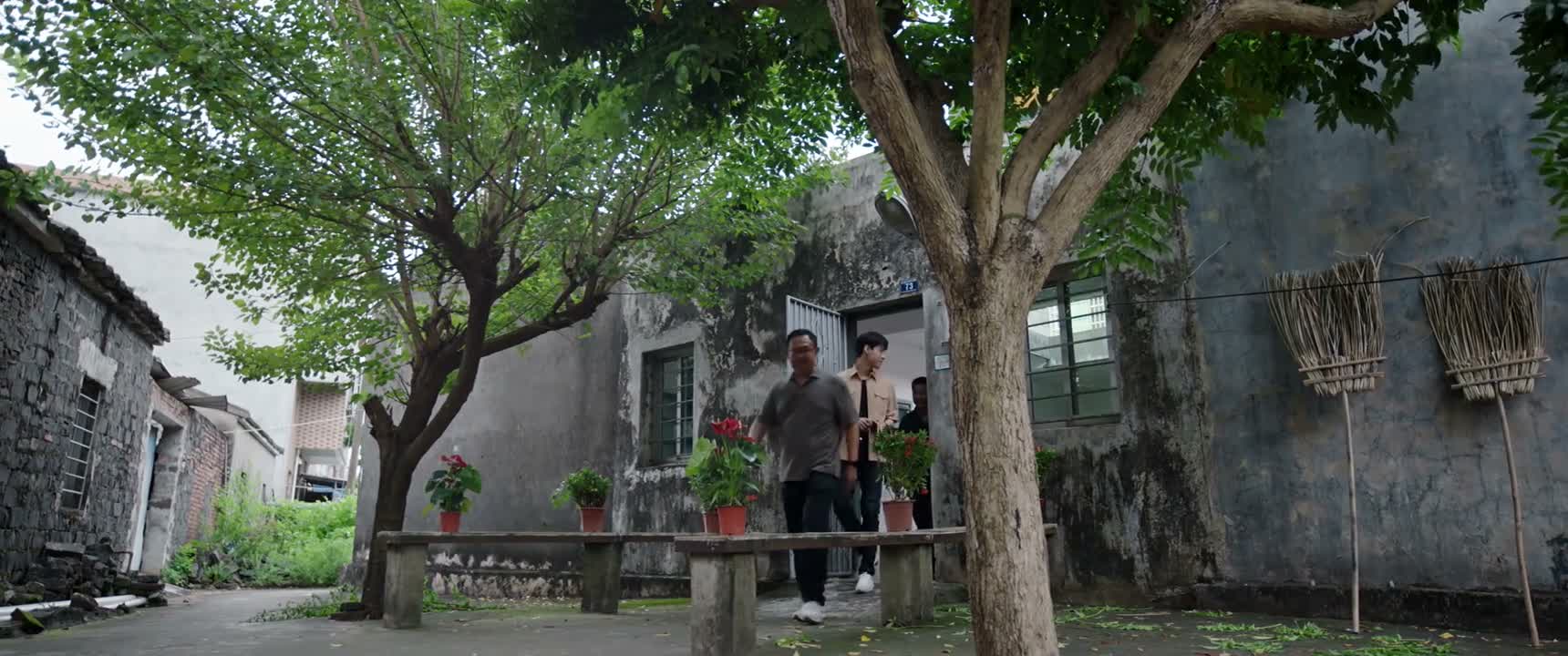
“Thanks. Take care, officers. Okay.”

“Take care, you two. Thank you. Please come again. Goodbye.”
“Alright. Take care. Let's go.”