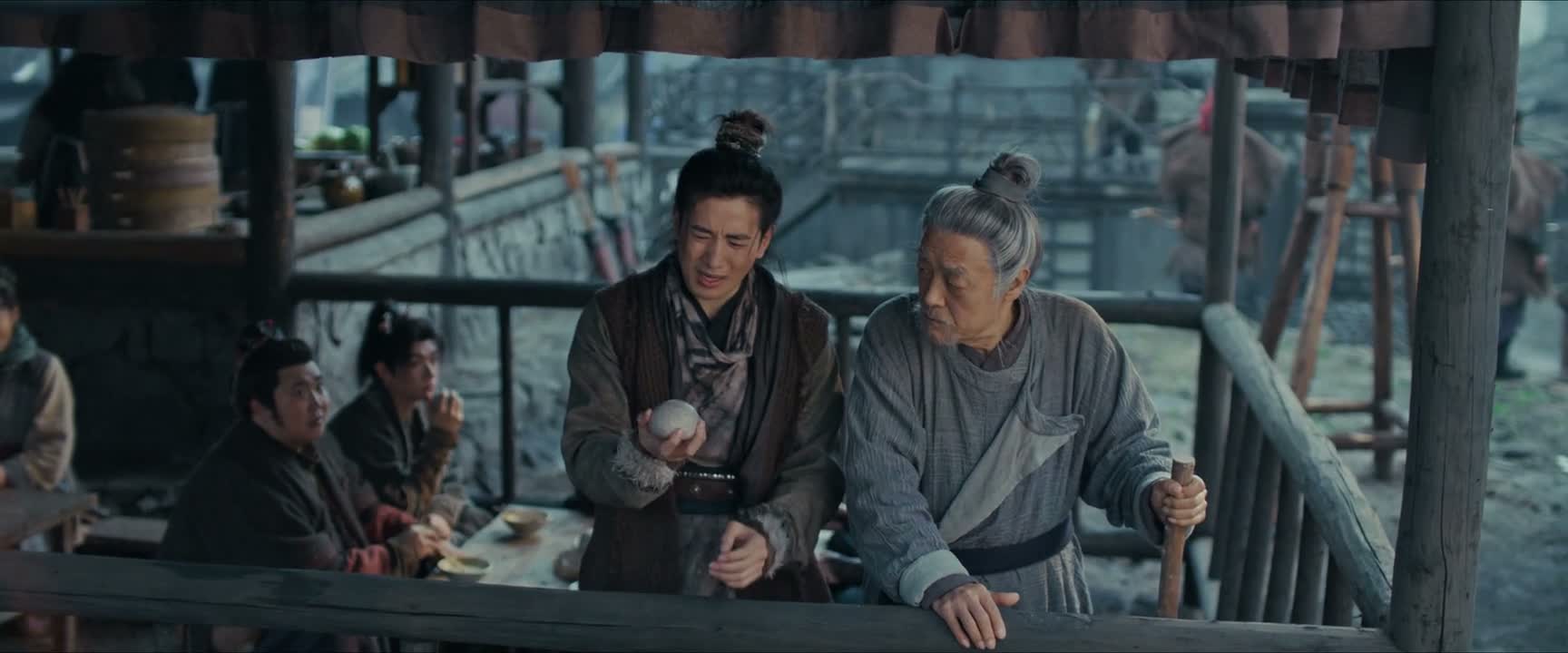
哪儿吃得了那苦啊 这馒头蒸两天就成了
“I can't endure tiring work. Making buns for a few days is enough. How could I keep doing it?”
THE DIALOGUE REEL
别提了 那馒头它 阿姨也是过过好日子的人
“You know what? Those buns... I used to live well.”
哪儿吃 得了 那 苦啊 这馒头蒸两天 就成了
“I can't endure tiring work. Making buns for a few days is enough. How could I keep doing it?”
“Making buns for a few days is enough. How could I keep doing it? I couldn't take it.”
Direct spoken expression in this communicative setting.
The ability to 'eat bitterness' is traditionally viewed as a virtue in Chinese society, so declaring someone cannot bear it highlights vulnerability or pampered living.
LEARNING CHUNKS & PARTICLES
how could anyone bear such hardship
A rhetorical phrase used to emphasize that a person is incapable of enduring tough physical conditions.
will be done; will suffice
A colloquial northern expression indicating that an action will complete a task or make something satisfactory.
Softens the rhetorical question and adds an emotional sigh of exasperation.
VOCABULARY & EXPRESSIONS
Parallel Spoken Cinema Scenes (语义近邻切片)

“I said cut back. Cut back. All you ever do is eat. Hurry up.”

“My buns wouldn't be like this. I don't know why these are moldy.”

“I don't know what's going on with these buns. You wretch, eat the buns!”
“the steamed buns don't even taste good.”

“Then how did they get sick? Where are the bad buns from?”

“I sell out of buns every day. Where would I get spoiled buns?”