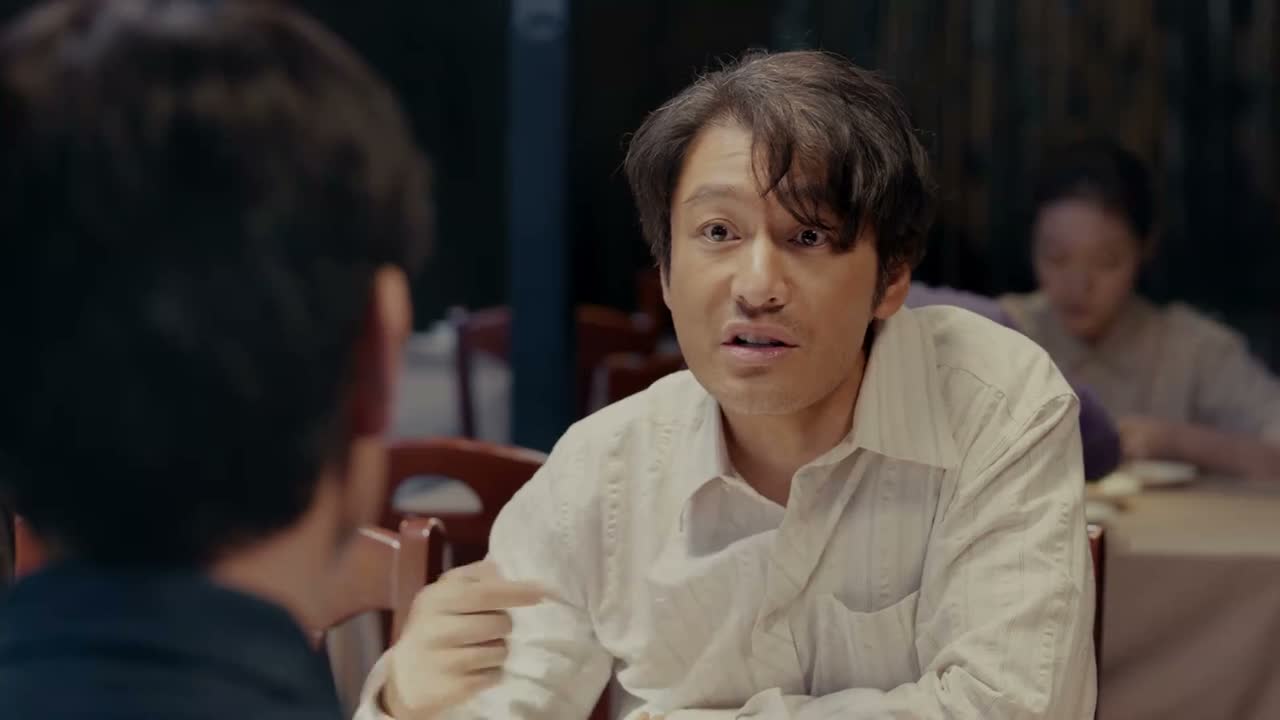
你买单了没有 老徐
“Did you pay the bill? Xu.”
THE DIALOGUE REEL
“Have one more bowl. Are you done?”
你 买单 了 没有 老徐
“Did you pay the bill? Xu.”
他买单了没有 买了
“Did he pay the bill? Yes.”
Direct spoken expression in this communicative setting.
In Chinese meal culture, tracking who pays the bill (买单) is often a focal point of peer dining interactions, frequently done discreetly before leaving.
LEARNING CHUNKS & PARTICLES
to pay the bill (at a restaurant)
Originally from Cantonese, this is now the universal spoken term across China for paying in restaurants.
Old Xu (friendly address for an older peer)
Prefixing '老' before a surname is a standard, affectionate way to address older friends or colleagues.
VOCABULARY & EXPRESSIONS
Parallel Spoken Cinema Scenes (语义近邻切片)

“Can't you stop hugging me? Can you?”

“You're the one who owes me!”

“I never took a cent from you. I didn't get into college either.”
“That was my personal debt.”

“Did I owe you in a past life or this one?”

“Yuxiu, I owe you too much.”