这孩子呀 吵着闹着要来找您
“["Eating daylight" is an old Huizhou dialect term for having breakfast] Look at him. He insisted on coming to find you, making quite a fuss about it.”
THE DIALOGUE REEL
小心点 你怎么跑来了 娘说喊您回家吃天光
“Be careful. Why are you here? Mother asked me to call you home to "eat daylight." [Li Tianxin, Great-Grandson of the Li Family's Eighth Branch] ["Eating daylight" is an old Huizhou dialect term for having breakfast]”
这孩子呀 吵着闹着 要 来找 您
“["Eating daylight" is an old Huizhou dialect term for having breakfast] Look at him. He insisted on coming to find you, making quite a fuss about it.”
是来接伯祖母回去吃天光 是不是
“You came to pick me up to "eat daylight", right?”
Direct spoken expression in this communicative setting.
In traditional Chinese families, children displaying intense eagerness to see extended elders is seen as a sign of filial warmth and close domestic harmony.
LEARNING CHUNKS & PARTICLES
clamoring; fussing and making a scene
A common reduplicated verbal phrase used to describe a child persistently pleading or demanding something.
Softens the opening topic, creating a lively, affectionate, and casual domestic atmosphere.
VOCABULARY & EXPRESSIONS
Parallel Spoken Cinema Scenes (语义近邻切片)

“The kid's playing outside. Aren't you afraid he'll get lost? Go find him. Why are you taking it out on me?”
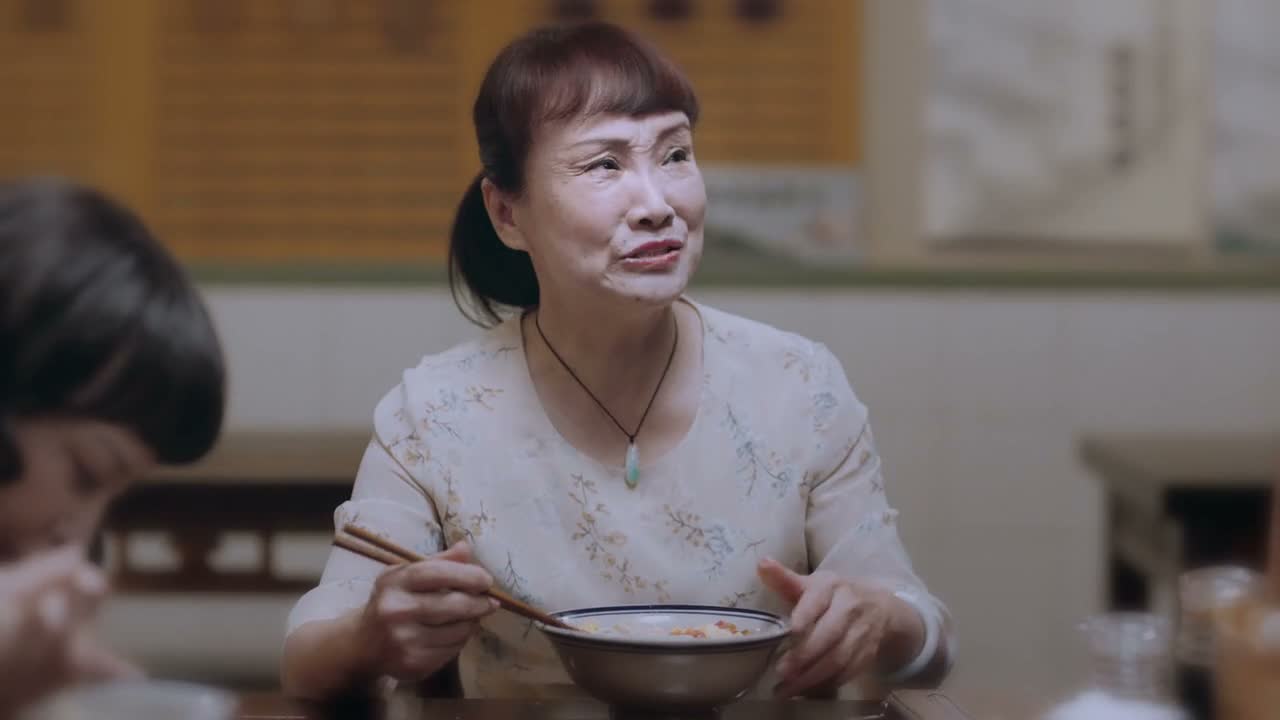
“He's just a kid, so it doesn't matter.”

“Let's find the children first. Alright.”

“why don't you go look for her and find out who took her?”
“You silly.”

“to find the child. Then what are you doing here?”