我 说得好像 我会欺负他似的
“I... You make it sound like I'm going to bully him.”
THE DIALOGUE REEL
白菊你到底站哪边的
“Bai Ju, whose side are you on?”
我 说得好像 我会 欺负 他 似的
“I... You make it sound like I'm going to bully him.”
我要回广州 我肯定带他一起走啊
“If I go back to Guangzhou, I'll definitely take him with me.”
“You make me sound like the villain here, which is completely ridiculous.”
In close Chinese social circles, family members or friends often take sides, which can trigger defensive reactions when someone feels unfairly judged.
LEARNING CHUNKS & PARTICLES
speaking as if; making it sound like
Used to challenge or ridicule another person's misleading portrayal of reality.
to bully; to pick on; to mistreat
Frequently used in close personal relationships to refer to emotional dominance or unfair treatment.
Functions as a sentence-final particle indicating resemblance or pretense, adding a skeptical edge.
VOCABULARY & EXPRESSIONS
Parallel Spoken Cinema Scenes (语义近邻切片)
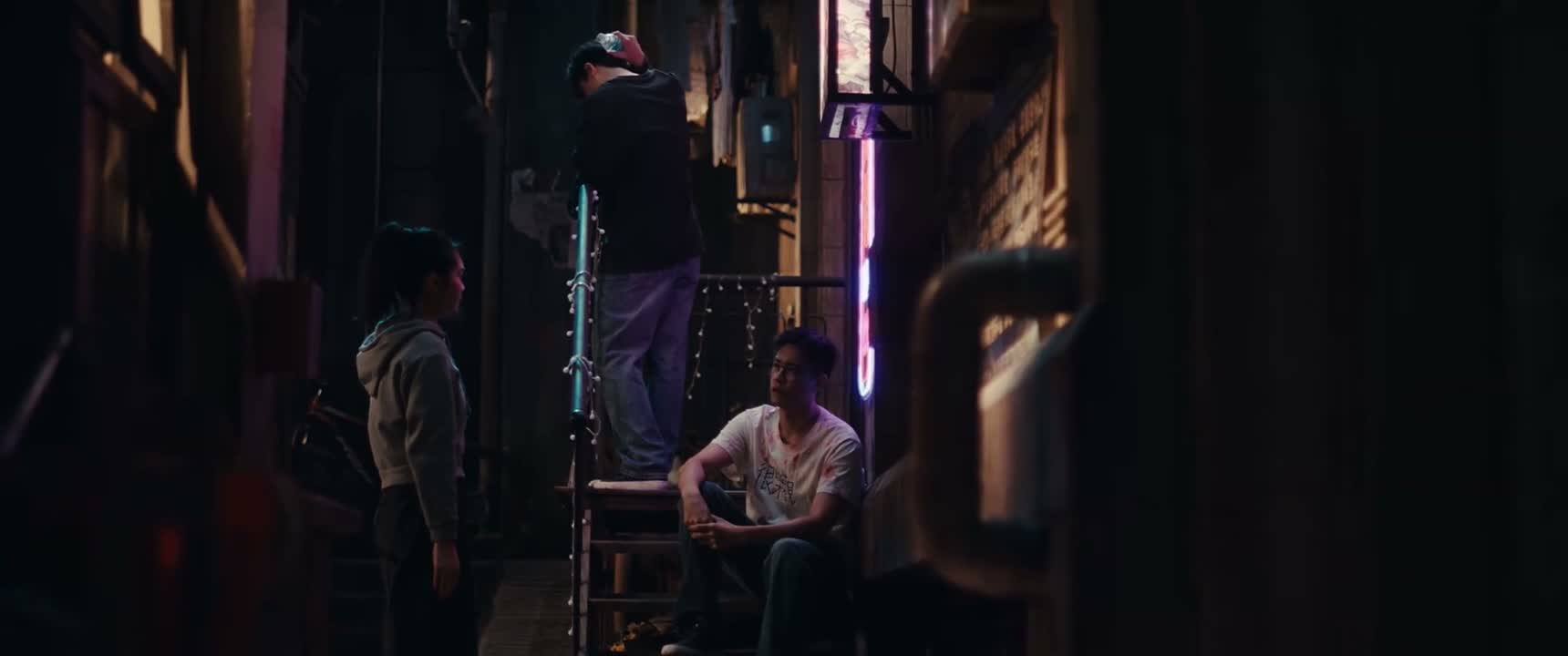
“The way he talked about... Who did I mess with? You think I'd mess with San Mei?”

“It sounds like I was bullying a young girl.”