我不爱吃苹果 谁问你了
“I don't like apples! Who the hell asked you that?”
THE DIALOGUE REEL
听说过吗
“Ever heard of it?”
我 不爱吃 苹果 谁问你了
“I don't like apples! Who the hell asked you that?”
我只做了一个人的饭 我问你们俩一个问题
“I only made enough food for one person. I'll ask you two a question. [Young Zhang Hailou] [Young Zhang Haixia]”
“Nobody cares what you like, keep your irrelevant opinions to yourself.”
Phrases like '谁问你了' are common in Chinese casual banter to tease friends or aggressively set boundaries without necessarily destroying the relationship.
LEARNING CHUNKS & PARTICLES
to love eating / to like eating
Common spoken expression used for dietary preferences instead of just '喜欢吃'.
who asked you?
A highly colloquial, sharp rhetorical comeback used to dismiss someone who chimes in unnecessarily.
Functions in the rhetorical question '谁问你了' to highlight the completion of an uncalled-for remark.
VOCABULARY & EXPRESSIONS
Parallel Spoken Cinema Scenes (语义近邻切片)
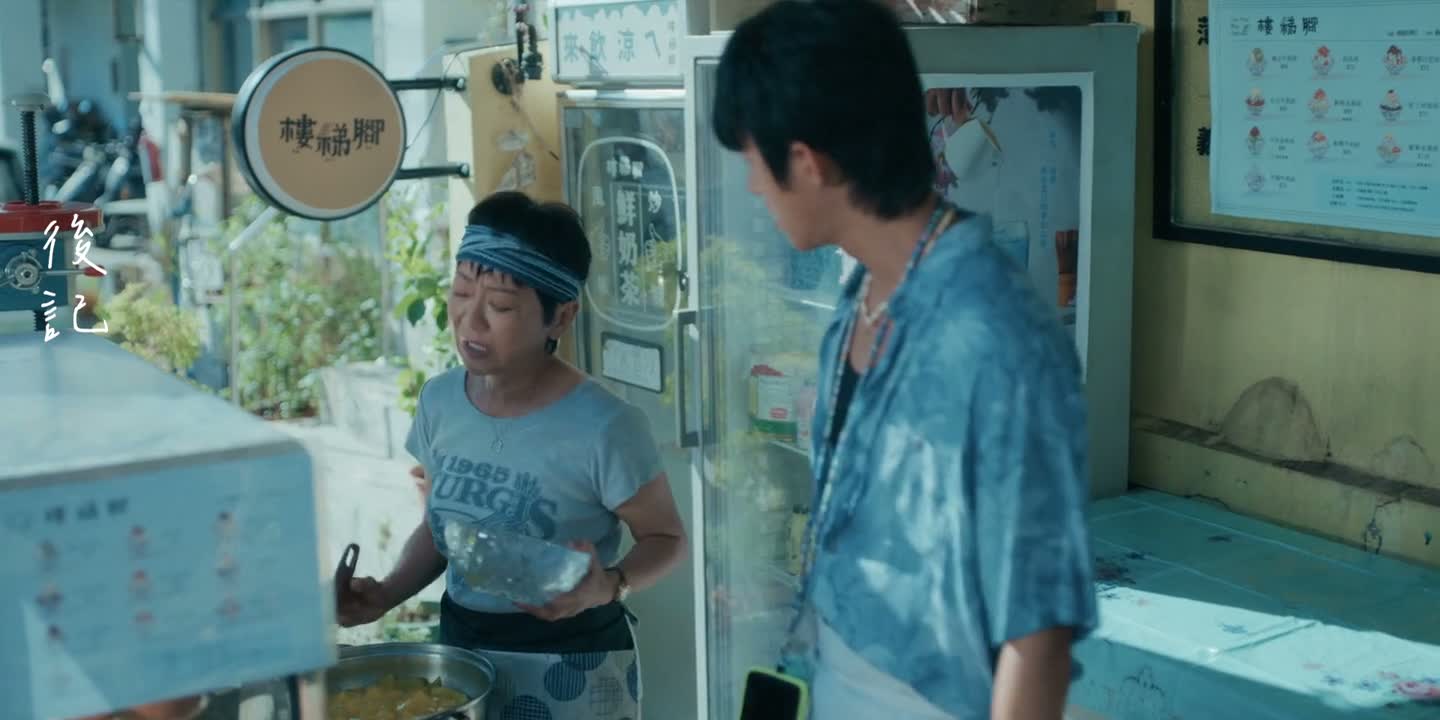
“Didn't you say he likes them?”

“You have to eat some. How can you skip fruit?”

“You love it, so I bought more.”

“Is it not to your taste? - I can order something else... - No.”

“I am not taking it. You have to.”

“No, no. I don't eat junk like that.”