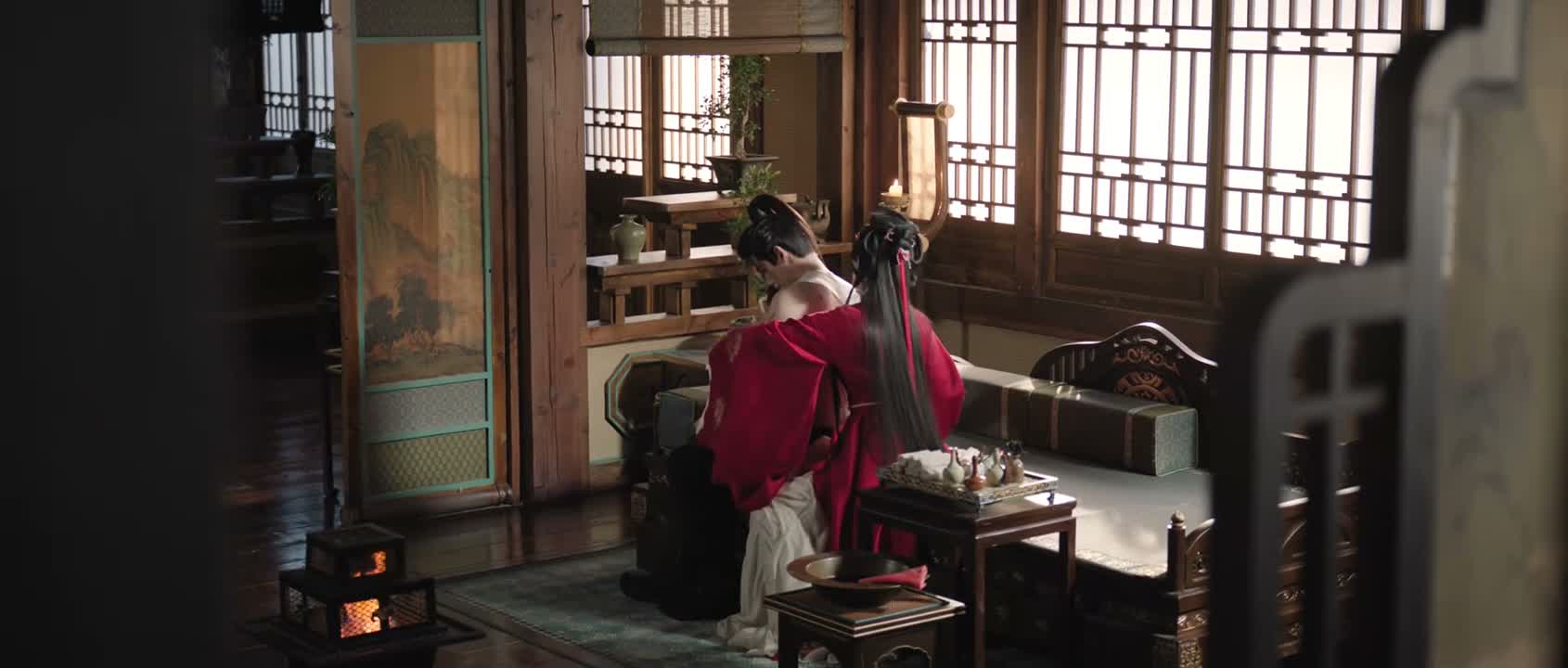
这孩子身上这么多的伤
“Look at all his scars.”
THE DIALOGUE REEL
这样的人会害将军
“I refuse to believe a man like that could turn traitor.”
这孩子身上 这么多的伤
“Look at all his scars.”
和朔漠军交手
“Fighting the Northern Desert troops”
“Look at these battle wounds; someone who bled this much for our cause would never betray the general.”
In Chinese martial and historical narratives, battle scars serve as undeniable physical proof of loyalty, courage, and sacrifice for one's lord.
LEARNING CHUNKS & PARTICLES
so many wounds on one's body
Commonly used in spoken Chinese to emphasize physical hardship, combat sacrifice, or abuse.
VOCABULARY & EXPRESSIONS
Parallel Spoken Cinema Scenes (语义近邻切片)

“why do you have so many scars on your body?”

“Her daughter is badly injured,”

“You're covered in wounds, yet you can't bear to hurt her.”

“Soon, these wounds will heal on their own.”

“that I'm gravely injured,”
“how the other wounds on you came to be.”