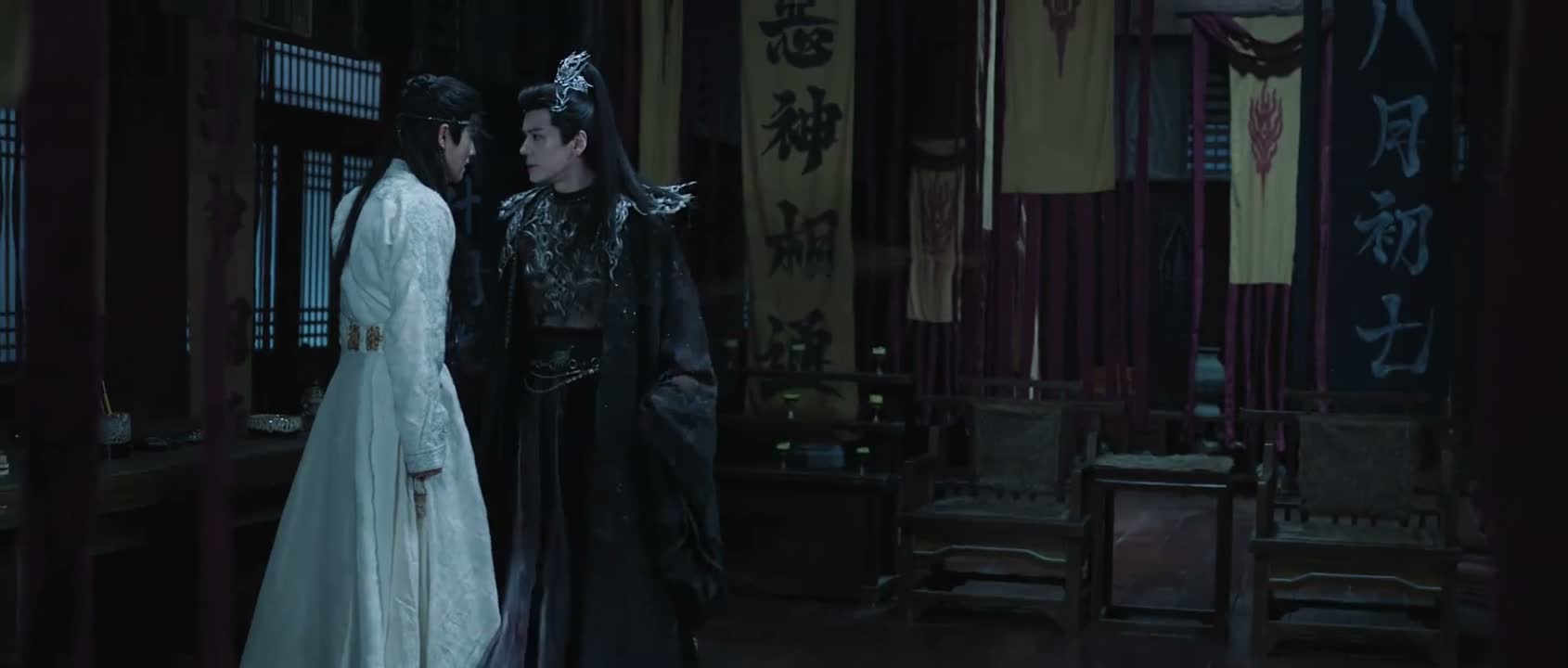
既然咱们都是同类的话 既然咱们都是同类的话
“Since we're all the same kind... Since we're all the same kind,”
THE DIALOGUE REEL
是啊
“Yes.”
既然 咱们都 是 同类 的话 既然 咱们都 是 同类 的话
“Since we're all the same kind... Since we're all the same kind,”
那为什么不提前告诉我呢
“why didn't you tell me earlier?”
“We are supposed to be on the same side, so why did you hide this from me?”
Using '咱们' explicitly draws the listener into the same in-group, which heightens the sense of betrayal when the in-group member conceals secrets.
LEARNING CHUNKS & PARTICLES
we are all / we both are
The inclusive pronoun '咱们' creates an immediate bond or highlights common ground between speaker and listener.
of the same kind / peers
Can refer to similar species or metaphorically to people sharing the same background, secret, or nature.
Part of the conditional marker '...的话', softening the premise into a conversational condition.
VOCABULARY & EXPRESSIONS
Parallel Spoken Cinema Scenes (语义近邻切片)

“I knew we were exactly the same kind of people.”

“we liked to use the term "corporate slaves" to describe ourselves,”

“You keep saying that we are the same,”
“Because we're of the same kind.”

“We totally understood each other.”

“We're just classmates.”

“In that case, let's be frank.”

“What do you mean by that? We have enough hands here.”