警察同志 给你添麻烦了
“Officer, sorry for the trouble.”
THE DIALOGUE REEL
等有了结果会通知家属的
“Family will be notified once there's a result.”
警察 同志 给你添麻烦了
“Officer, sorry for the trouble.”
可是这其中有一位是我未婚夫
“But one of them is my fiancé.”
“Please pardon my intrusion, but please bend the rules and help me find out about my fiancé.”
Addressing state authorities with respectful terms like '同志' and acknowledging oneself as a burden ('添麻烦') is an essential communicative strategy to elicit sympathy and favorable treatment.
LEARNING CHUNKS & PARTICLES
officer; comrade officer
A highly respectful and official spoken address used by citizens when speaking to law enforcement officers in China.
to cause trouble; to inconvenience someone
A standard politeness formula used when asking for assistance or imposing on someone's time.
Marks the completed realization of having caused an inconvenience.
VOCABULARY & EXPRESSIONS
Parallel Spoken Cinema Scenes (语义近邻切片)

“Officer, what's going on? Why are there so many cops tonight? Not so many questions.”

“Mr. Officer, you must intervene.”

“I'm counting on you, Officer!”
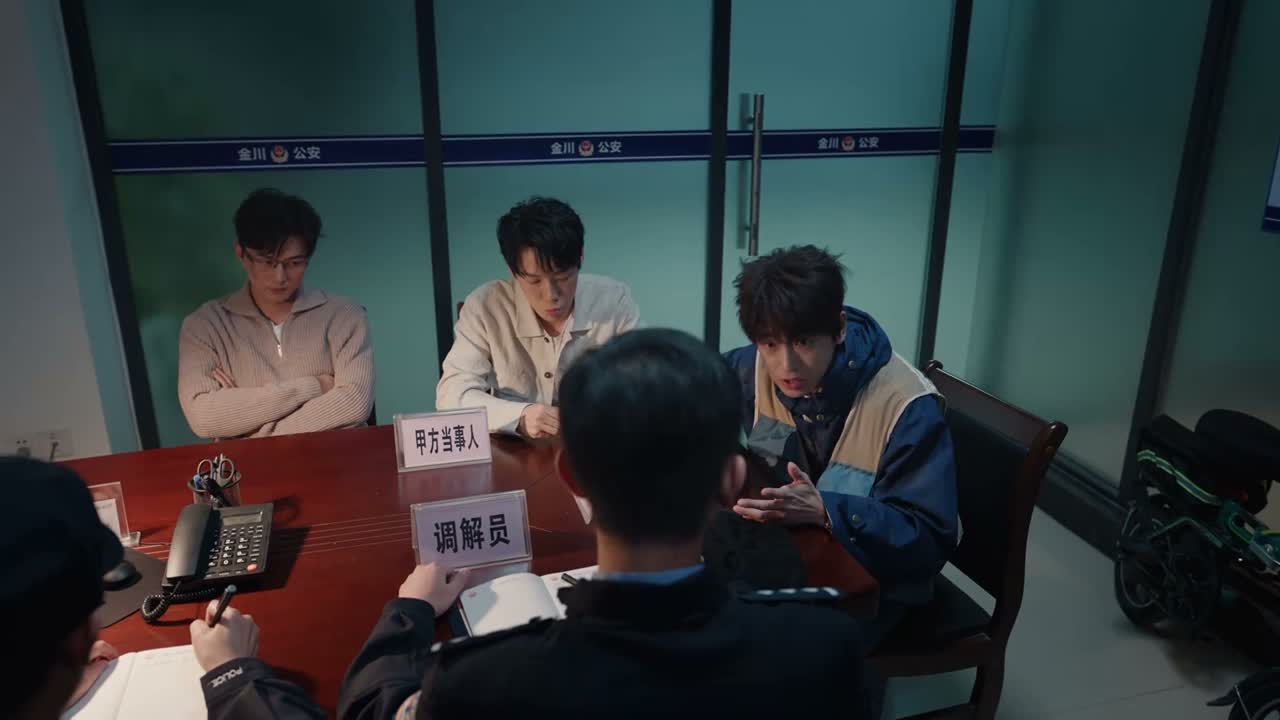
“Sir, the situation isn't like what he described.”

“Officer, I've told you everything I know.”

“Officer, I have already made it very clear.”