为什么不是基础数学啊
“Why not pure mathematics?”
THE DIALOGUE REEL
“Did you inquire about me from Professor Wu?”
为什么不是 基础数学 啊
“Why not pure mathematics?”
“I've heard you've won the gold medal in the Jiangcheng Math Competition more than once.”
“You seem smart enough for pure math, so why settle for computational math?”
In Chinese academia, pure theoretical sciences (基础学科) historically carried deep intellectual prestige, leading people to wonder when a promising scholar opts for applied fields.
LEARNING CHUNKS & PARTICLES
pure mathematics / foundational mathematics
Used in academic contexts to contrast theoretical math with applied mathematics.
why not / why isn't it
Used to challenge an assumption or ask for justification about a choice that defies expectation.
Softens the bluntness of the question, making the inquiry sound casually inquisitive rather than confrontational.
VOCABULARY & EXPRESSIONS
Parallel Spoken Cinema Scenes (语义近邻切片)

“It's exactly Math that I'm worried about.”
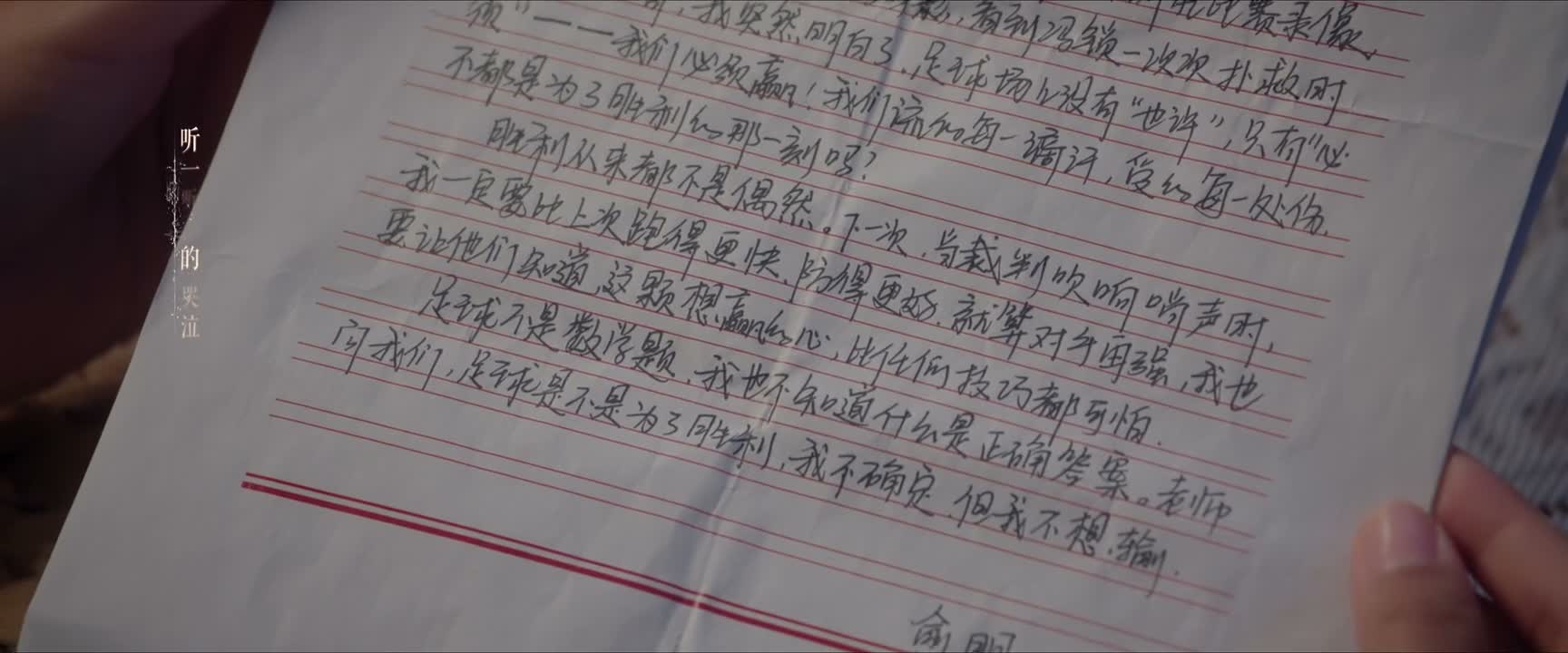
“[the referee blows the whistle,] But football isn't a math problem, ♪ Listen closely to its cries ♪ [I'll make sure I run faster than I did last time.]”

“Isn't mathematics about absolute rationality?”

“Math is the only one I struggle with. Could you tutor me?”

“Your math is kinda weak. You failed to solve one big problem.”

“Math was just a bit hard, and you're already giving up?”