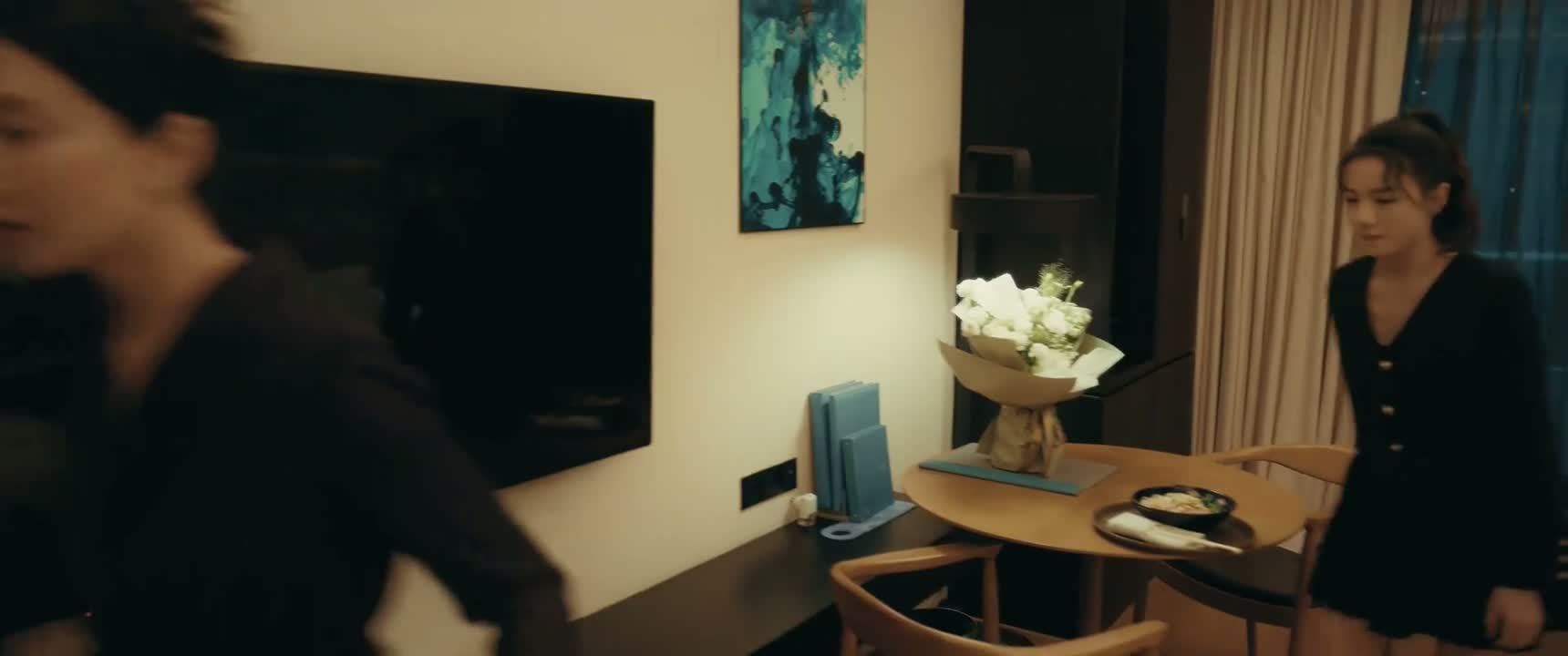
你现在住酒店了 对呀 我把之前那套房子给卖了
“You're staying at a hotel? Yes, I sold my apartment.”
THE DIALOGUE REEL
我来找你
“I'll come find you.”
你现在 住酒店 了 对呀 我把之前那套房子给 卖了
“You're staying at a hotel? Yes, I sold my apartment.”
“And the money could cover a lifetime of hotel stays.”
Direct spoken expression in this communicative setting.
Homeownership is traditionally seen as the ultimate anchor of security in Chinese society; casually selling one's home to live in hotels represents a radical, unconventional rejection of traditional financial pressures.
LEARNING CHUNKS & PARTICLES
that house / that apartment
套 (tào) is the standard measure word for apartments or houses when referring to them as real estate units.
sold off (something)
Adding 给 (gěi) before the verb in a 把 (bǎ) sentence is a very natural spoken intensifier that emphasizes the finality of the action.
In '住酒店了', it marks a change of state, indicating a new living situation compared to the past.
In '对呀', it makes the confirmation sound breezy, upbeat, and completely unbothered.