我终于不用给你推轮椅了
“I finally don't have to push your wheelchair.”
THE DIALOGUE REEL
虾仔
“Shrimpie.”
我 终于不用 给你 推轮椅了
“I finally don't have to push your wheelchair.”
其实我这腿啊
“Actually, my legs”
“I am so thrilled and relieved that your legs have healed and you can stand on your own again!”
Among close Chinese friends or family, deep care and joy over someone's recovery are often expressed indirectly by joking about being freed from the 'burden' of taking care of them.
LEARNING CHUNKS & PARTICLES
finally don't have to
Use this before a verb when a long, tiring obligation or burden has finally come to an end.
to push a wheelchair
Standard verb-object collocation for assisting someone in a wheelchair.
Indicates a new situation, highlighting the transition from needing to push the wheelchair in the past to no longer needing to do so now.
VOCABULARY & EXPRESSIONS
Parallel Spoken Cinema Scenes (语义近邻切片)
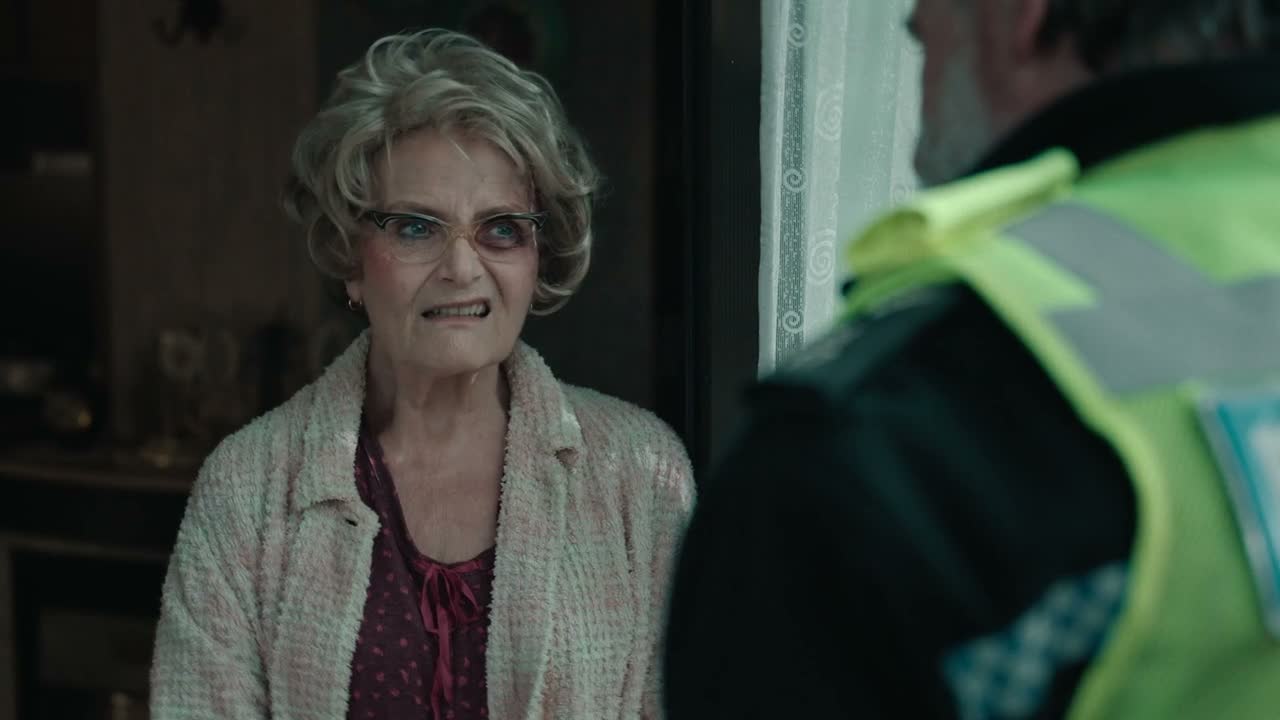
“- [Cunningham] Mm. - But I hate it. Makes me feel like an invalid.”

“That guy in the wheelchair is smart.”

“If she goes around in her wheelchair every day,”

“I can never walk again.”

“It's fine. You can go rest.”

“stop persuading me.”