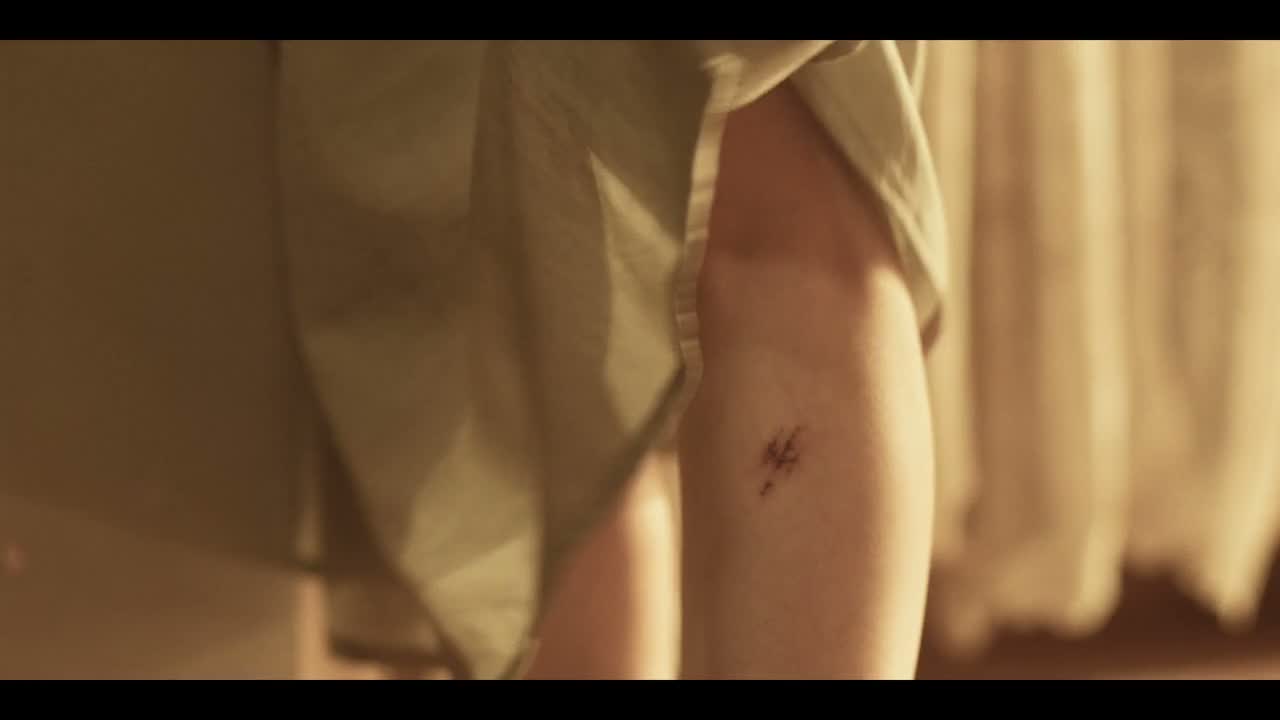
不是 这么多烟疤呢
“Why are there so many burn scars?”
THE DIALOGUE REEL
没事
“It's nothing.”
不是 这么多 烟疤 呢
“Why are there so many burn scars?”
就是在工厂干活的时候烫的
“I got them from working at the factory.”
“Don't tell me it's nothing; how on earth did you get burned this badly?”
In Chinese culture, people often say 'it's nothing' to avoid worrying others or showing vulnerability, prompting close friends or partners to push harder to show genuine care.
LEARNING CHUNKS & PARTICLES
Wait / Hold on / No (discourse marker)
Used at the beginning of a sentence in casual speech to express surprise, disbelief, or to reject the previous speaker's dismissal, rather than literally meaning 'is not'.
cigarette burn scar
A compound noun combining 'cigarette' and 'scar', referring to marks left on the skin from cigarette burns.
Intensifies the questioning tone and draws attention to a surprising existing state, equivalent to asking 'how come there are...?'
VOCABULARY & EXPRESSIONS
Parallel Spoken Cinema Scenes (语义近邻切片)

“would not leave scars this wide.”

“Or she might have a scar that she didn't want anyone to see. The possibilities are endless.”

“He has a very long scar here.”

“Why is there such a deep scar on your hand?”
“It's basically healed. It won't leave a scar.”

“What happened to your face?”