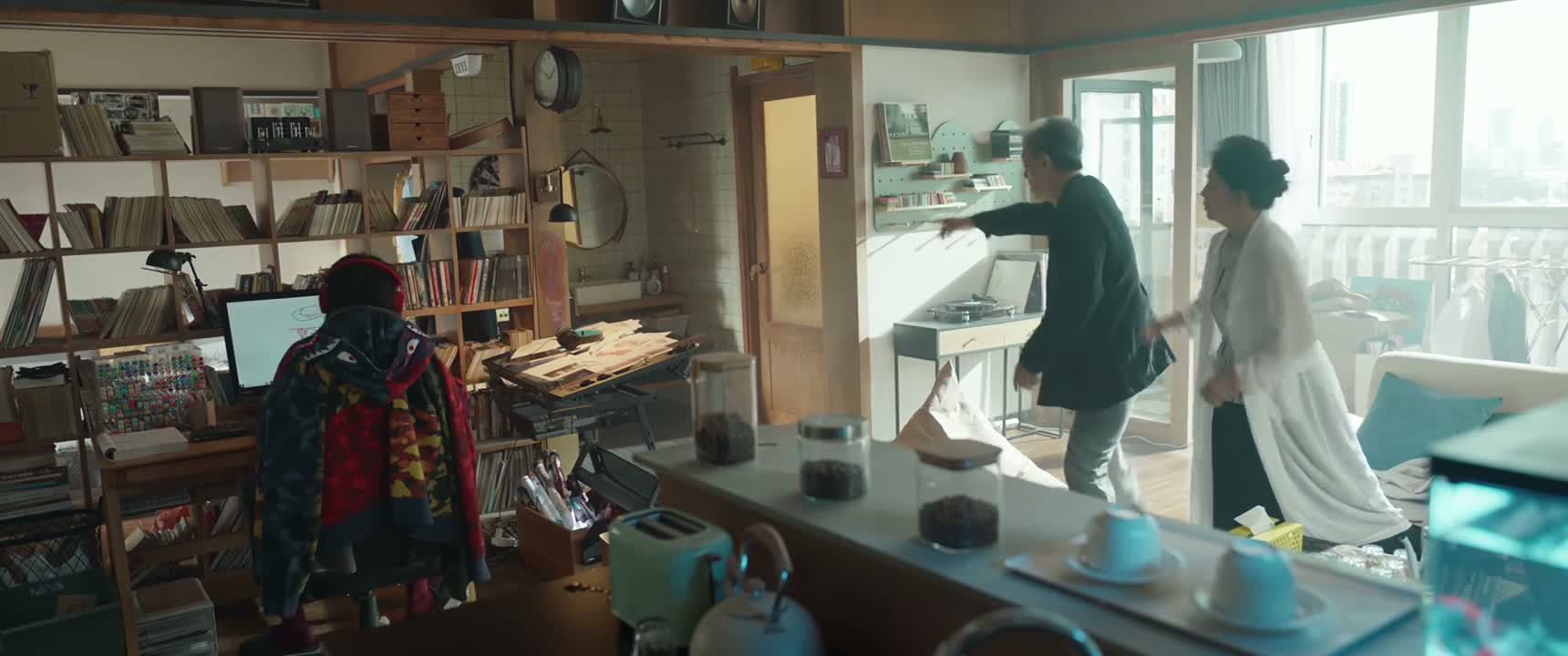
《Go Ahead》 S1·E40 (35:34)
HSK 4
qiáo qiáo nǐ men zhè ge jiā luàn de
瞧瞧你们这个家乱的
“Look how messy it is!”
《Go Ahead》
S1·E40
TIMECODE: 35:34
·
1080P MASTER AUDIO
THE DIALOGUE REEL
[-1] PREVIOUS TURN
kè qì
客气
“You're welcome.”
qiáo qiáo nǐ men zhè ge jiā luàn de
CURRENT FOCUS
瞧瞧 你们 这个家 乱的
“Look how messy it is!”
[+1] FOLLOW-UP TURN
wǒ yī huì gěi nǐ men hǎo hǎo shōu shí yī xià ba yě bù zhī dào nǐ men sān gè
我一会给你们好好 收拾一下吧 也不知道你们三个
“I'll help you tidy it up. I really wonder”
Subtitles synced to millisecond timecode
Browse Show Clips →
Scene:
Family & Home
Function:
AFFECTIONATE CRITICISM
Tone:
NAGGING
Emotion:
AFFECTION
WHAT THEY REALLY MEAN (PRAGMATIC SUBTEXT)
“You really can't take care of yourselves without me, so let me fix this for you.”
💡 Cultural Insight: Caring Nagging (Dao Nian)
In Chinese family dynamics, pointing out a mess or deficiency is a common way for elders or close relatives to express love, involvement, and domestic responsibility.
INTENT TAGS:
#nagging
#criticism
#affection
#intervention
🧩
2 CHUNKS · 1 PARTICLES
LEARNING CHUNKS & PARTICLES
瞧瞧
SPOKEN CHUNK
take a look at; just look at
A colloquial reduplication used to direct someone's attention to something obvious, often with mild critique or amusement.
乱的
SPOKEN CHUNK
so messy; in such disorder
Used at the end of an evaluative clause to emphasize an extreme descriptive state.
Modal Particle「的」 (de)
CHANGE OF STATE
Marks a descriptive state with emphasis, highlighting the degree of disorder.
🏮
3 EXPR · 0 GRAMMAR
VOCABULARY & EXPRESSIONS
COLLOQUIAL EXPRESSIONS:
CROSS-CINEMA CORPUS BOARD · PARALLEL SCENES
EXPLORE BY SEMANTIC SIMILARITY
Parallel Spoken Cinema Scenes (语义近邻切片)


《Go Ahead》 S1·E40 (35:34) · Authentic Cinema Dialogue Corpus