那边发生什么事了 听说有人中了那个会死人的草毒
“What happened over there? I heard someone was poisoned by that deadly grass poison,”
THE DIALOGUE REEL
海楼
“Hailou?”
那边 发生什么事了 听说 有人 中了 那个 会死人的 草毒
“What happened over there? I heard someone was poisoned by that deadly grass poison,”
有个医师就在现场救人呢
“and a doctor is trying to save him right on the spot.”
Direct spoken expression in this communicative setting.
In Chinese public spaces, crowds naturally gather and exchange hearsay (tingshuo) when an unexpected street incident unfolds.
LEARNING CHUNKS & PARTICLES
what happened / what's going on
The most common everyday phrase to ask about a commotion, accident, or surprising event.
I heard that / rumor has it
Used at the start of a sentence to introduce hearsay or unconfirmed information.
Marks the completion of a change of state, indicating an event has already occurred.
VOCABULARY & EXPRESSIONS
Parallel Spoken Cinema Scenes (语义近邻切片)
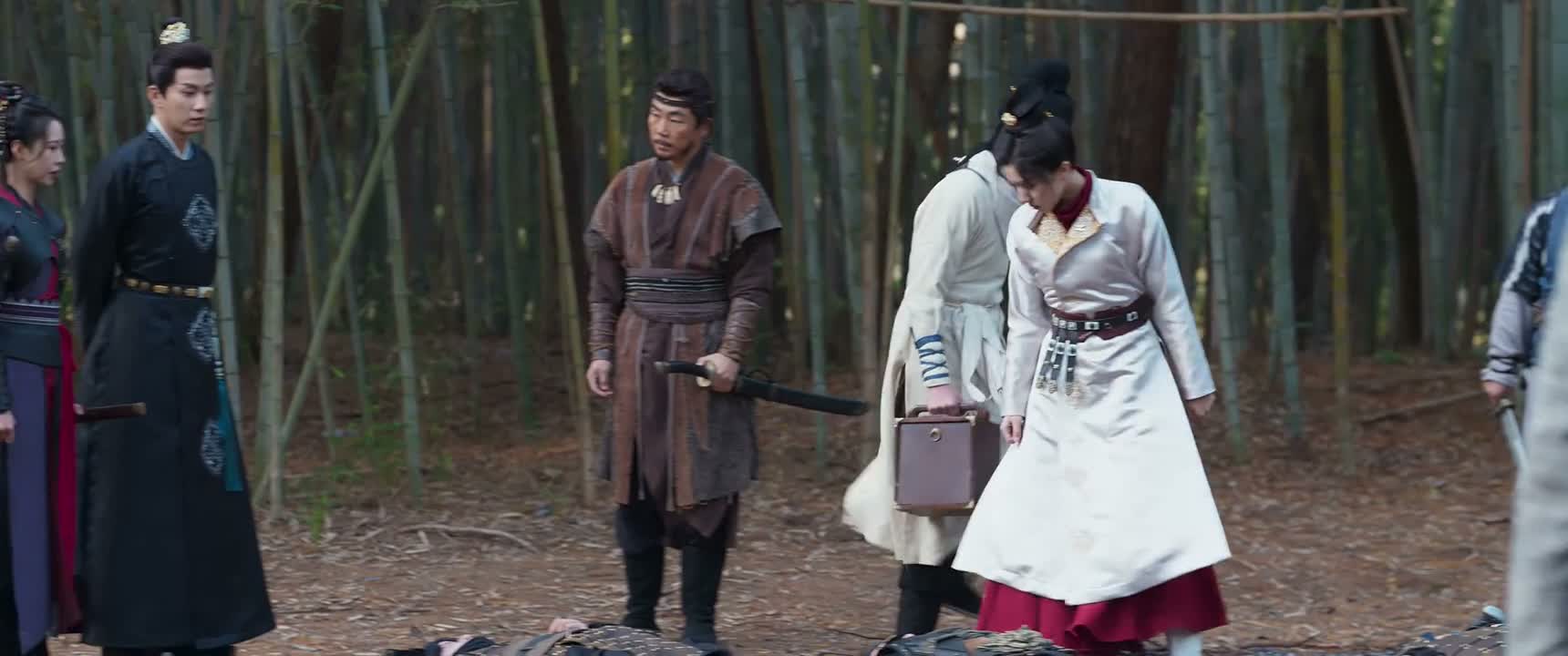
“Worried that animals or insects might ruin the bodies”

“With the toxic weed outbreak on the ship, everyone came to see what was happening.”