那要不吃点这个 不用麻烦
“Then try some of this. - Have this. - Don't trouble yourself.”
THE DIALOGUE REEL
对 不用不用
“Yes. Really, no need.”
那要不 吃点 这个 不用麻烦
“Then try some of this. - Have this. - Don't trouble yourself.”
你们这小两口
“You two newlyweds”
“Let's keep it simple so you don't have to fuss over us.”
In Chinese culture, considerate guests proactively tell hosts not to go to extra trouble ('不用麻烦') to maintain comfort and mutual ease.
LEARNING CHUNKS & PARTICLES
in that case, how about; then why not
A very natural conversational starter to propose an alternative plan smoothly.
no need to trouble yourself
Essential etiquette phrase used to decline extra hospitality politely.
VOCABULARY & EXPRESSIONS
Parallel Spoken Cinema Scenes (语义近邻切片)
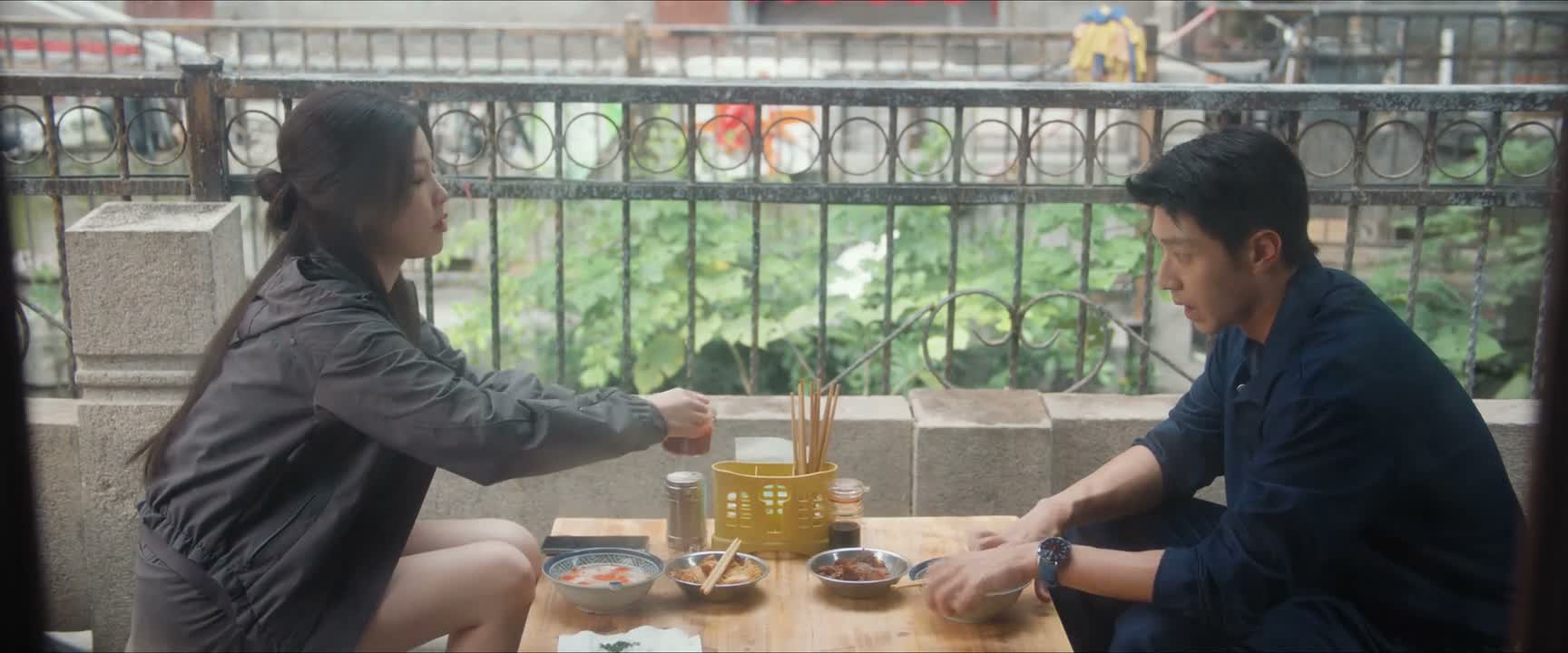
“Do you want some? No, thanks.”

“Don't ever eat pork chops. - I won't. - Cardiovascular disease.”

“(I've changed my mind. I don't want those extra dishes.) I want this instead.”

“absolutely no spicy food or seafood. And this hand,”

“Don't eat too hot and spicy food later.”

“This one's free. Try it. It's free. Is it tasty?”