你在别人家里能自在吗
“Can you feel at ease in someone else's house?”
THE DIALOGUE REEL
但是你都是搬到别人家里
“But you always moved into someone else's house.”
你在别 人家 里 能自在吗
“Can you feel at ease in someone else's house?”
这次
“This time, I'll let you know”
“Admit it, staying under someone else's roof must be exhausting and restrictive.”
Chinese cultural values place great emphasis on having one's own autonomous space; living in someone else's household ('zai bieren jiali') is widely seen as restrictive, psychologically taxing, and awkward.
LEARNING CHUNKS & PARTICLES
in someone else's home
A common locational phrase used to discuss boundaries, etiquette, or feeling out of place.
can (one) really be comfortable / at ease?
A rhetorical question used to cast doubt on whether someone can truly relax in a given circumstance.
Forms a question that functions rhetorically, conveying strong skepticism rather than requesting neutral information.
VOCABULARY & EXPRESSIONS
Parallel Spoken Cinema Scenes (语义近邻切片)

“I couldn't be at ease in someone else's house.”
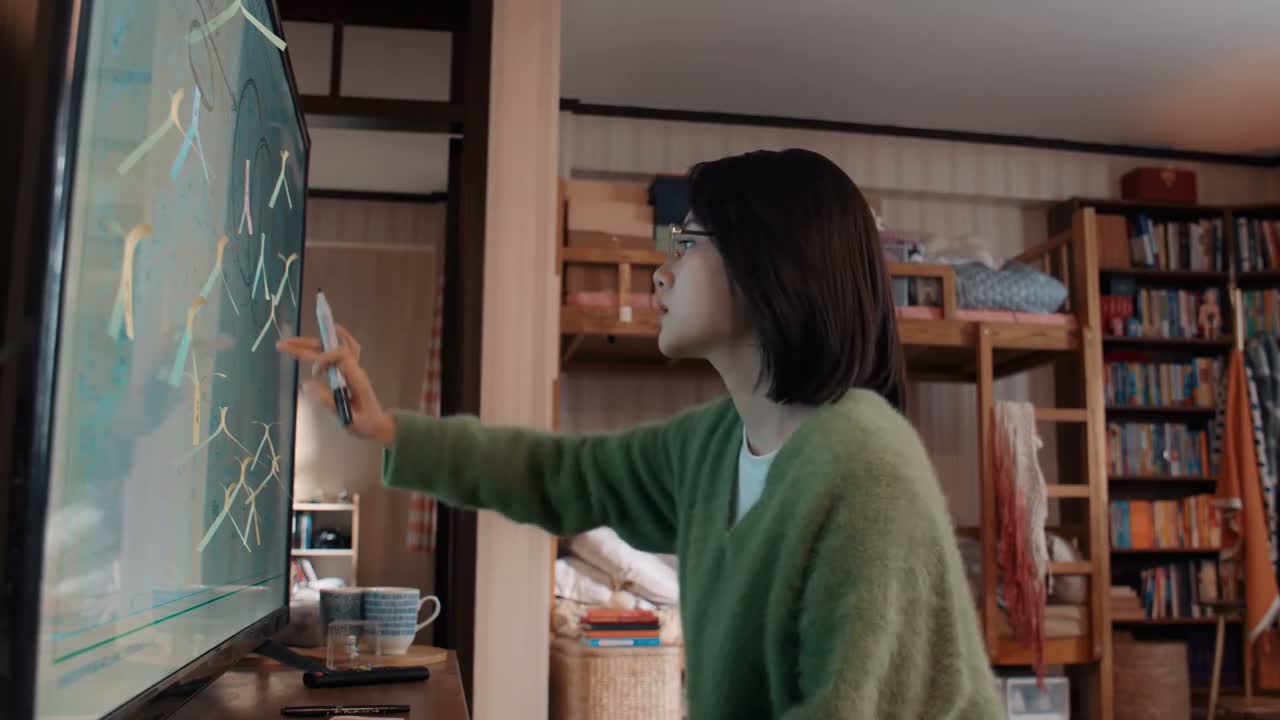
“them staying at someone's house.”

“I still wouldn't barge into someone else's room on purpose.”