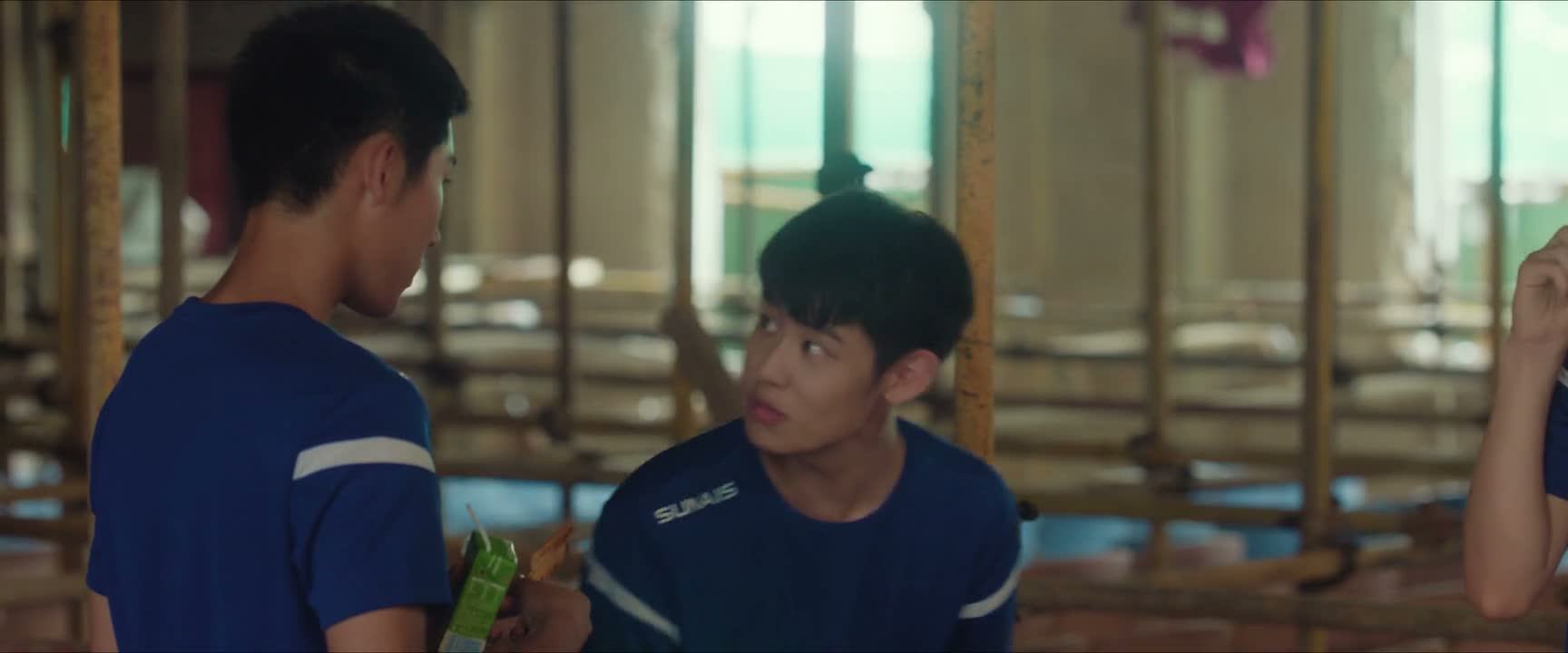
等他走了还好自己练 你傻啊兄弟
“So we can train by ourselves after he leaves. Are you stupid, bro?”
THE DIALOGUE REEL
“We'd better record our training for the next few days.”
等他 走了 还好 自己练 你傻啊兄弟
“So we can train by ourselves after he leaves. Are you stupid, bro?”
“What's the point of training without a coach?”
“Nobody trains on their own once the coach leaves—stop being so ridiculously naive.”
Direct insults like '你傻啊兄弟' between young Chinese male peers are paradoxically markers of closeness and peer solidarity rather than genuine hostility.
LEARNING CHUNKS & PARTICLES
are you stupid?, don't be silly
A highly colloquial, blunt rhetorical question used between close male peers to mock silly ideas.
practice by oneself
Common athletic phrase meaning independent, unsupervised training.
Intensifies the rhetorical challenge and adds an edge of incredulous mockery.
VOCABULARY & EXPRESSIONS
Parallel Spoken Cinema Scenes (语义近邻切片)

“You need to wear them, practice, and walk more. Well, don't rush home just yet.”

“You can slack off instead of practicing.”

“I can nail it. Off you go!”

“I'll get stronger and come back.”

“You just can't handle the pressure. You need to toughen up.”
“What's the point of training without a coach?”