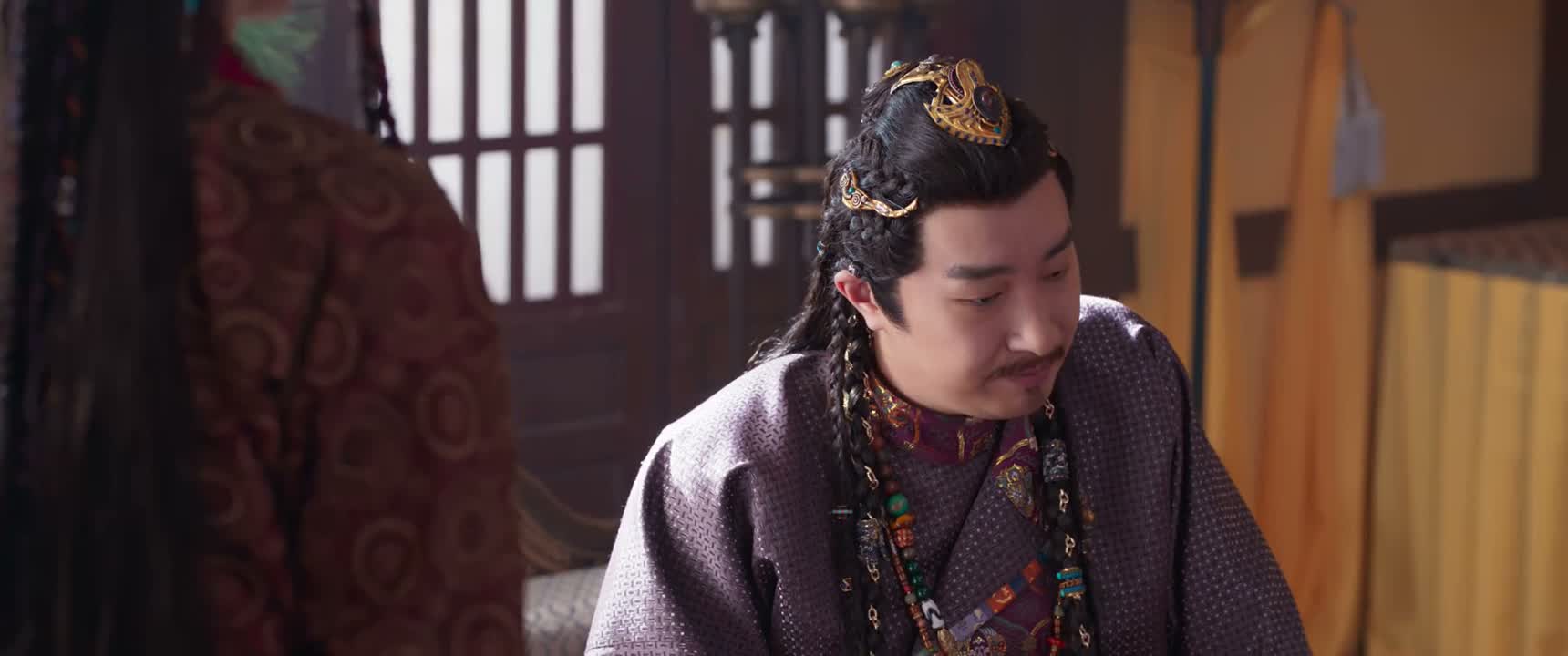
我族妹呀 不然呢你以为
“My cousin. What'd you think?”
THE DIALOGUE REEL
乔七呀
“Qiao Qi.”
我 族妹 呀 不然呢 你以为
“My cousin. What'd you think?”
来
“Here.”
“She is just my cousin; do not let your imagination run wild.”
Terms like '族妹' distinguish clan lineages and often get brought up to rule out romantic entanglement.
LEARNING CHUNKS & PARTICLES
what else? / what did you expect?
A very common rhetorical rejoinder used to highlight an obvious fact or counter an incorrect assumption.
what did you think?
Spoken rhetorical phrase used to challenge an assumption or call out someone's hidden suspicion.
Softens the assertion, giving the statement a lively, casual, and conversational tone.
Forms a bounce-back rhetorical question to emphasize that the answer should have been obvious.
VOCABULARY & EXPRESSIONS
Parallel Spoken Cinema Scenes (语义近邻切片)

“Something is about to happen to her.”

“could this Ms. Gu be my cousin?”

“Whether he's my brother-in-law is still up in the air.”
“Well, my little sister.”

“The chieftain must have adored her”

“I just wanted to see how my cousin is doing now.”