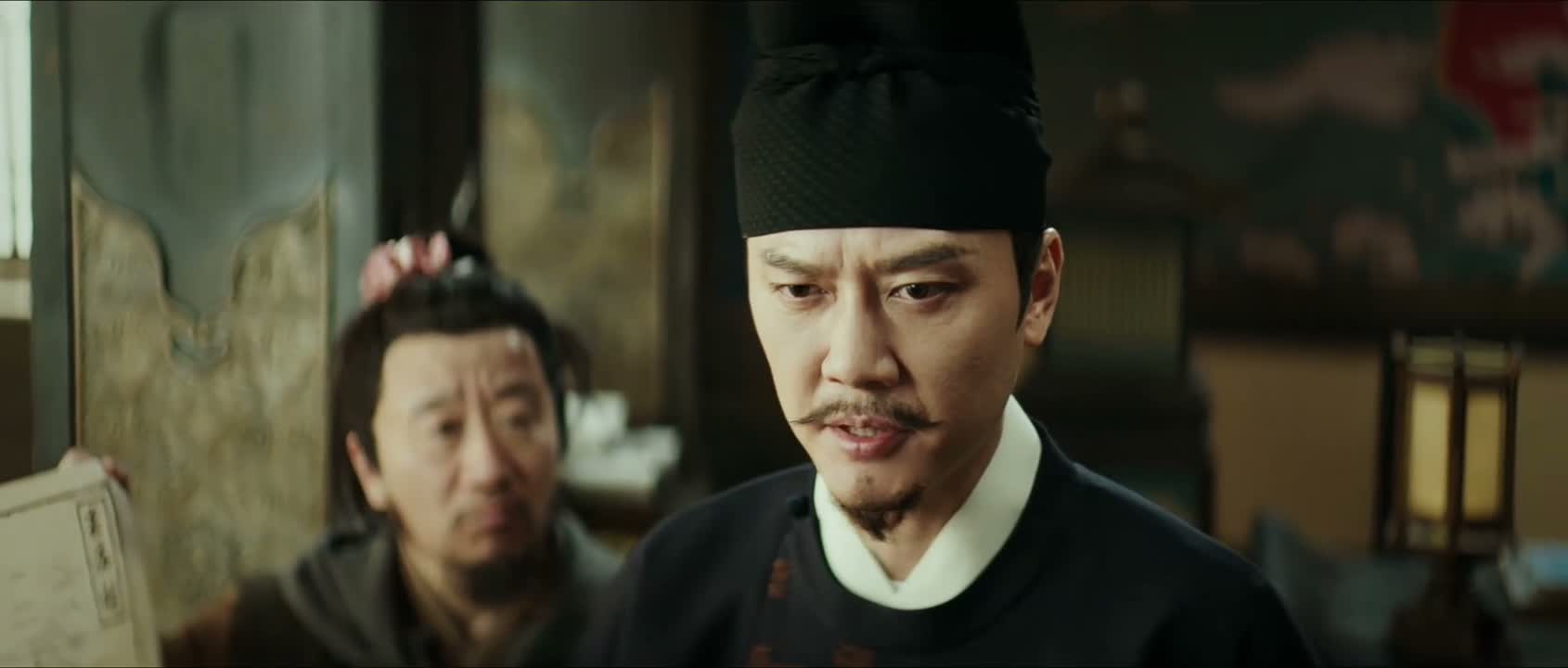
一个小小的护卫长 怎敢擅自毁尸灭迹
“There's no way a lowly guard captain would've dared destroy the corpse.”
THE DIALOGUE REEL
“Isn't this Wei Cheng, the Song Mansion's guard captain?”
一个 小小的 护卫长 怎敢 擅自 毁尸灭迹
“There's no way a lowly guard captain would've dared destroy the corpse.”
只怕背后是魏言之教唆 他依附宋国公给予的恩荫
“I'm afraid Wei Yanzhi ordered it. He owes everything to the Duke of Song.”
“A pawn like him doesn't have the guts or power to do this unless someone powerful ordered it.”
In imperial Chinese bureaucracy and noble households, lower servants rarely had the agency to commit major crimes without direction from their aristocratic masters.
LEARNING CHUNKS & PARTICLES
mere, minor, humble (diminutive prefix)
Used before titles or occupations to downplay their rank or emphasize their lack of autonomous power.
how dare (one)
A rhetorical question marker used to express skepticism that someone has the audacity or authority to act.
destroy corpses and eradicate all traces; eliminate criminal evidence
A common four-character idiom (chengyu) frequently used in mystery and legal contexts.
VOCABULARY & EXPRESSIONS
Parallel Spoken Cinema Scenes (语义近邻切片)

“I'd also like to see if the Guardian Corps has improved over the past two years.”

“destroying evidence.”

“I will leave Guardian Corps here to safeguard you.”

“I'll station the Guardian Corps at the gates so you can't set foot outside!”
“destroy the evidence.”

“Guard Li went down to call a physician.”