在家吧 但不太确定 能帮我找找不
“At home, I think, but I'm not sure. Can you look for it?”
THE DIALOGUE REEL
那照片现在在哪儿呢
“Where's that photo now?”
在家 吧 但 不太确定 能 帮我找 找不
“At home, I think, but I'm not sure. Can you look for it?”
“I'd like to take a look. Okay, I'll look for it.”
Direct spoken expression in this communicative setting.
When asking for favors among acquaintances or friends, complex formalities (such as 'mafan nin' or 'qingwen keyi') are often omitted. Instead, reduplicated verbs ('zhao zhao') paired with sentence-final affirmative-negative questions are used, reflecting closeness and informality.
LEARNING CHUNKS & PARTICLES
can you... / could you...
An affirmative-negative question pattern extremely common in northern spoken Chinese, often used among acquaintances to make requests. It sounds more casual and natural than the standard 'neng bu neng'.
not quite sure / not certain
Used to express tentative speculation or a lack of certainty about information; a high-frequency spoken expression.
Indicates a tentative speculation or presumption that the speaker is not completely certain about.
Placed at the end of a sentence to form an affirmative-negative question, asking for the listener's consent or making a request.
VOCABULARY & EXPRESSIONS
Parallel Spoken Cinema Scenes (语义近邻切片)

“This household— she is not yet the one in charge.”

“Smells good, doesn't it? Don't rush. It's all yours.”

“♪ Where lantern light is dimly shed ♪ Don't worry. I'm okay. ♪ But in the crowd once and again I look for her in vain ♪”

“Don't worry. I'm fine.”

“Rest assured. Everything's arranged.”
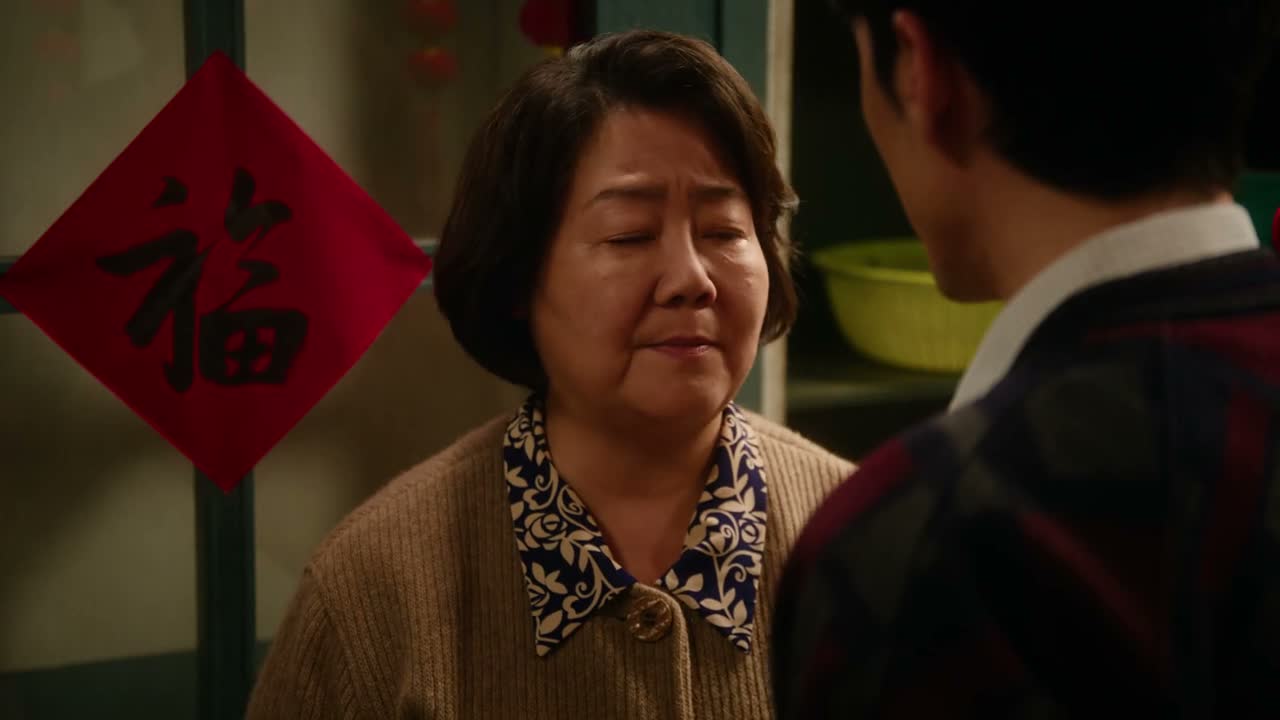
“Don't worry, I'm here.”