后来厂里不就出事了吗
“Then the accident happened at the factory.”
THE DIALOGUE REEL
“He said he just wanted to clock in and then go home to sleep.”
后来厂里 不就 出事了 吗
“Then the accident happened at the factory.”
我就去现场找我的摩托车
“I went to the site to look for my motorcycle.”
Direct spoken expression in this communicative setting.
In traditional Chinese industrial towns, the factory ('厂里') is the center of social and community life, where workplace accidents and community affairs are closely intertwined.
LEARNING CHUNKS & PARTICLES
to have an accident; something bad happens
A very common colloquial expression used when trouble, an accident, or a crime occurs.
didn't... happen (rhetorical confirmation)
Used to remind the listener of a shared fact or an obvious subsequent event.
Marks the change of state or completion of the incident occurring.
Forms a rhetorical question prompting confirmation from the listener.
VOCABULARY & EXPRESSIONS
Parallel Spoken Cinema Scenes (语义近邻切片)

“something happened at the factory.”

“There must be something wrong with that factory.”

“there must be something wrong with that factory.”

“Otherwise, if this had blown up,”
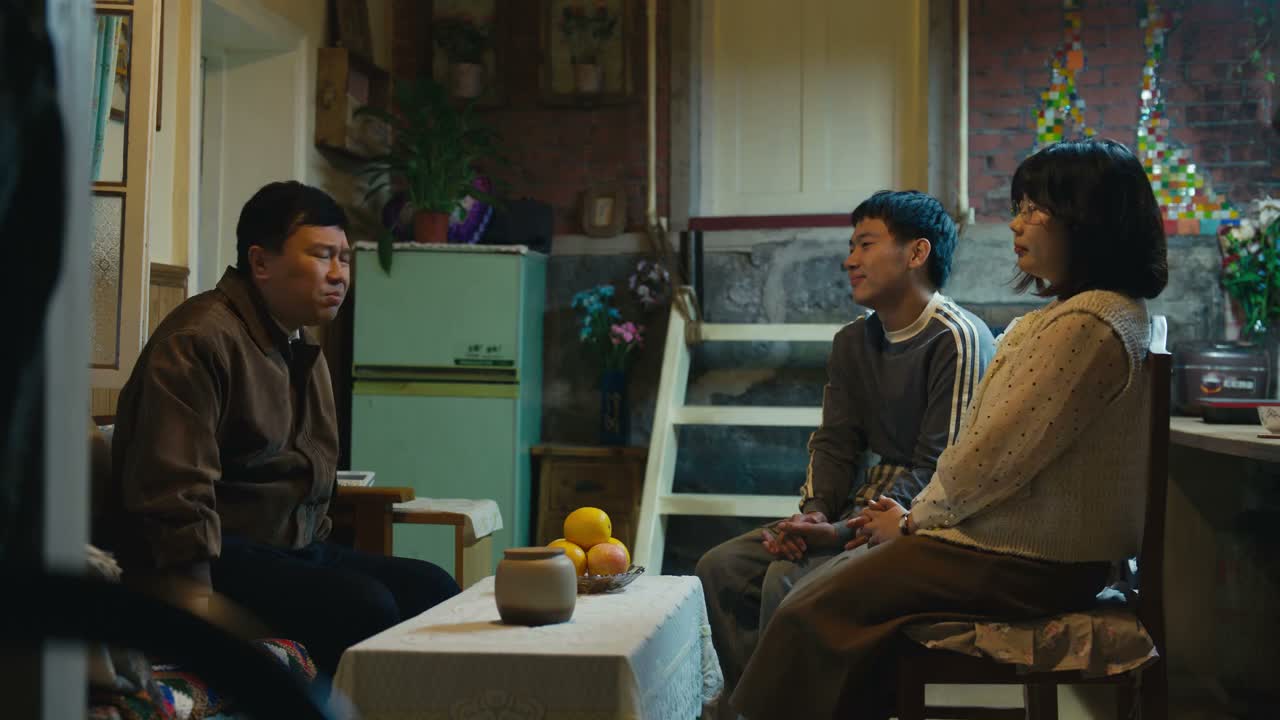
“It was my job as a factory worker, wasn't it?”

“There are too many people at the factory. I don't remember.”