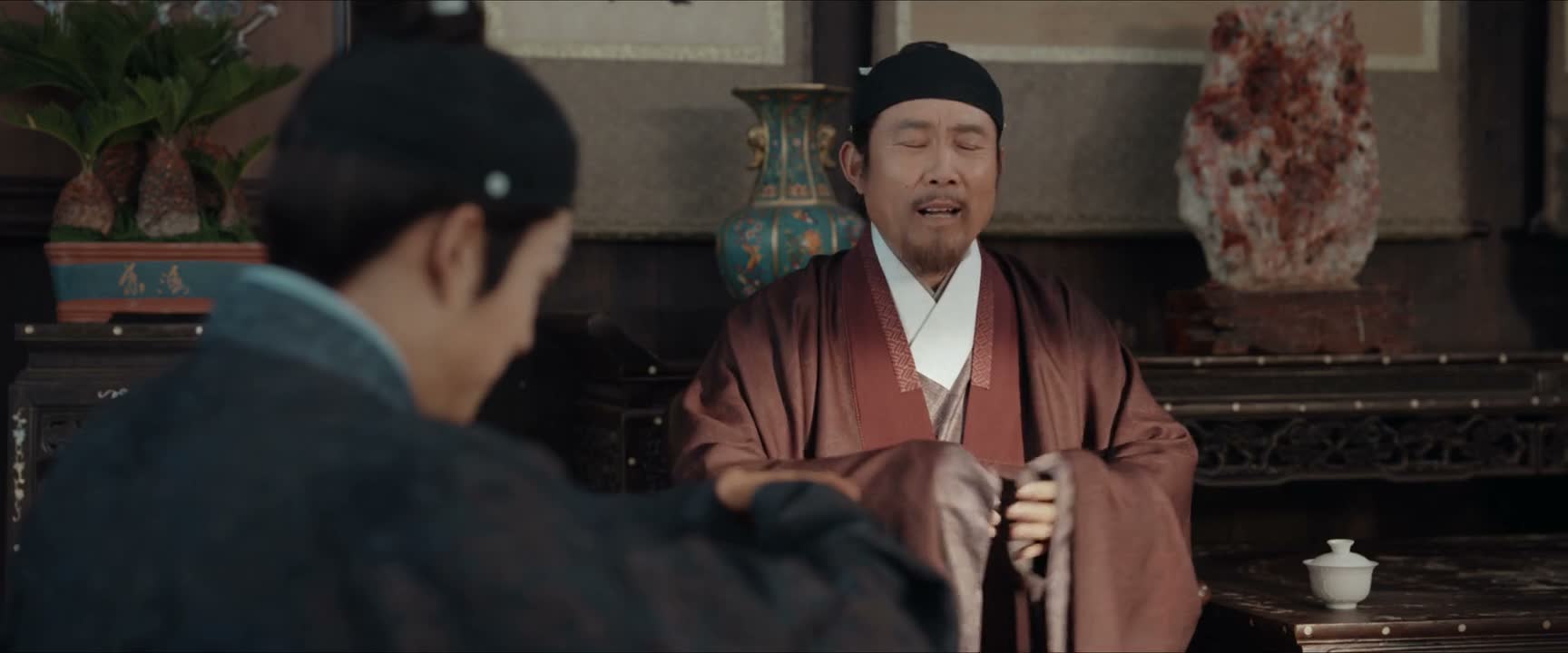
好了 好了 我们不说这事
“Okay, let's not talk about that.”
THE DIALOGUE REEL
当时我同事喊我去消防检查 我 我在工作嘛
“My colleague called me for a fire inspection. I... I was working.”
好了 好了 我们 不说这事
“Okay, let's not talk about that.”
大军 我问你啊
“Jun, let me ask you.”
“Stop making excuses, I do not want to hear it anymore.”
Rather than directly refuting an unsatisfactory excuse, Chinese speakers often use phrases like this to cut the conversation short and prevent overt conflict.
LEARNING CHUNKS & PARTICLES
alright, enough
Used to cut someone off gently or impatiently when an explanation is no longer wanted.
drop the topic / not talk about this matter
A direct colloquial phrase used to terminate a sensitive or irritating subject immediately.
Functions here in the fixed phrase '好了' to indicate completion or sufficient degree, urging a halt.
VOCABULARY & EXPRESSIONS
Parallel Spoken Cinema Scenes (语义近邻切片)
“Alright, alright. Let's not talk about this anymore.”

“Alright, alright. Let's not talk about it. Let's not.”

“Alright. Let's not talk about the depressing stuff.”

“Alright, alright. We don't want to know what you're doing.”