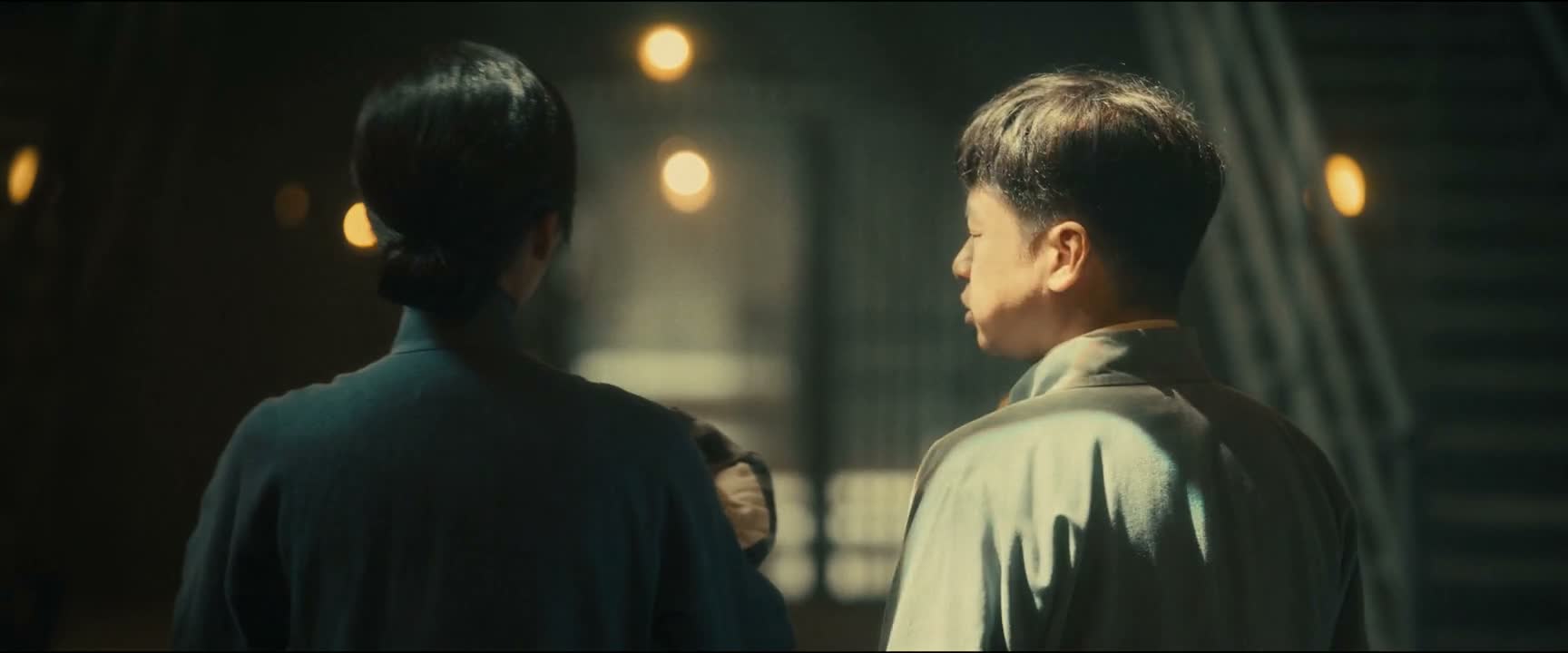
当时救人的时候 你心里想的是什么 嗯
“what you thought when you were saving lives? Yeah.”
THE DIALOGUE REEL
汪科长好 你好 方穆扬同志 你先跟我们大伙讲讲
“Hello, Ms. Wang. Hello, Fang Muyang. Why don't you start with”
当时 救人 的时候 你 心里 想的是什么 嗯
“what you thought when you were saving lives? Yeah.”
“(Thank goodness I prepared for this.) Ms. Xu.”
“Tell me what drove you, and make sure your answer meets the official standard.”
In mid-to-late 20th century China, acts of bravery had to be accompanied by politically correct thought and selflessness to be commended by the organization.
LEARNING CHUNKS & PARTICLES
what one was thinking / what was on one's mind
Standard conversational and interview pattern used to probe inner motivations.
at the moment of rescuing someone
A common temporal clause setting the specific backdrop for an inquiry.
Appended at the end to prompt an immediate response and exert subtle authoritative pressure.
VOCABULARY & EXPRESSIONS
Parallel Spoken Cinema Scenes (语义近邻切片)

“I was just there to help her. Don't think I don't know.”

“"When I was saving them, my mind was blank.”

“"When I was saving them, my mind was blank.”

“That's because to me, saving lives is an instinct.”
“How could you be wrong for saving someone?”

“If you were the one being resuscitated, I can't even bear to think about it.”