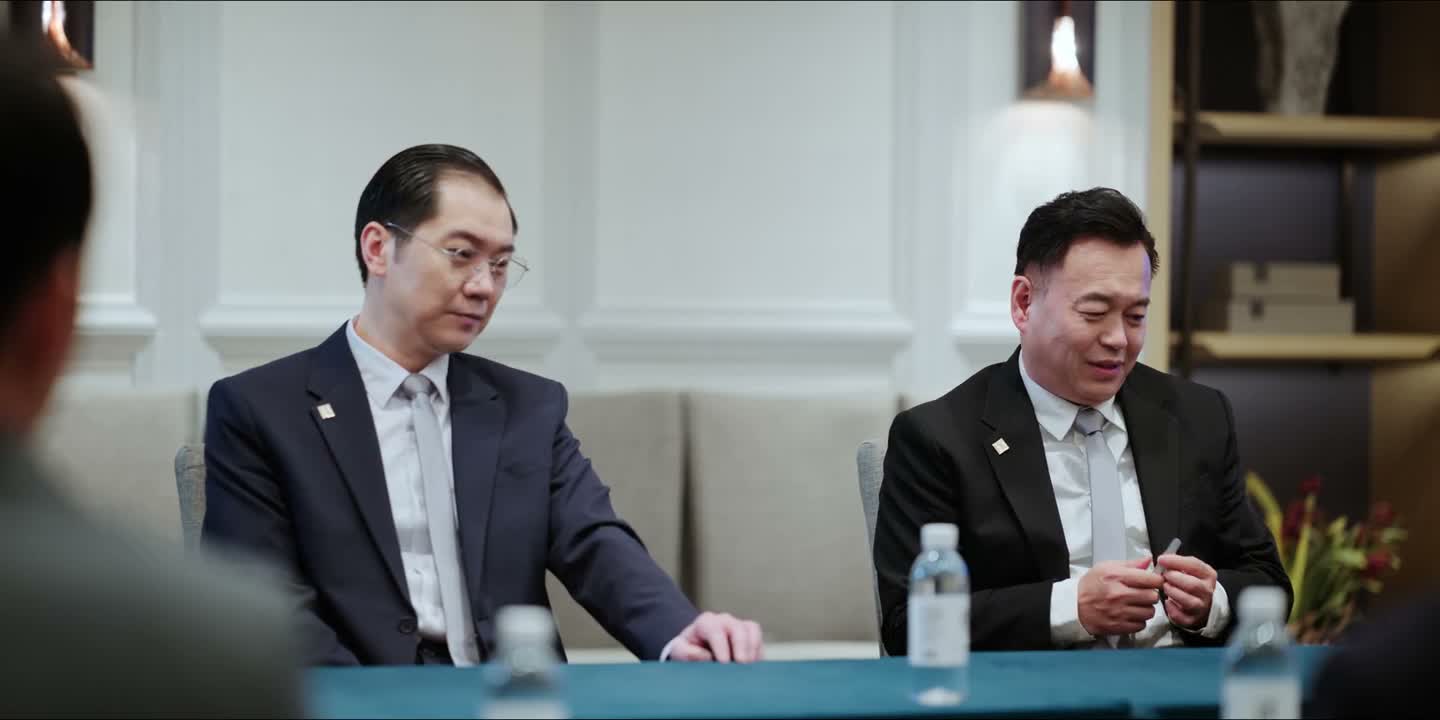
你就 没有怀疑过李老板抄袭
“Haven't you ever suspected that Miss Li might copy Yufei's work?”
THE DIALOGUE REEL
“you're so naive and innocent.”
你就 没有怀疑过 李 老板 抄袭
“Haven't you ever suspected that Miss Li might copy Yufei's work?”
“No one who did that will admit it?”
“Wake up and open your eyes; he obviously plagiarized it.”
In Chinese workplace discourse, calling someone 'naive' or questioning their lack of suspicion often serves as a blunt wake-up call regarding commercial cynicism.
LEARNING CHUNKS & PARTICLES
have ever suspected / ever doubted
Commonly used in spoken Chinese with negative adverbs like '从没' or '没有' to ask whether someone ever entertained a doubt.
plagiarism / to plagiarize
A standard term in both spoken and written Chinese referring to copying someone else's creative or professional work.
VOCABULARY & EXPRESSIONS
Parallel Spoken Cinema Scenes (语义近邻切片)

“Is she stupid?”

“of plagiarism in your design?”

“No one who did that will admit it?”
“Anyone hearing this might think you're about to audit him down to the last penny.”

“The most important thing now is this plagiarism lawsuit.”

“But the root of this matter is still whether Xia Xiaolan plagiarized.”