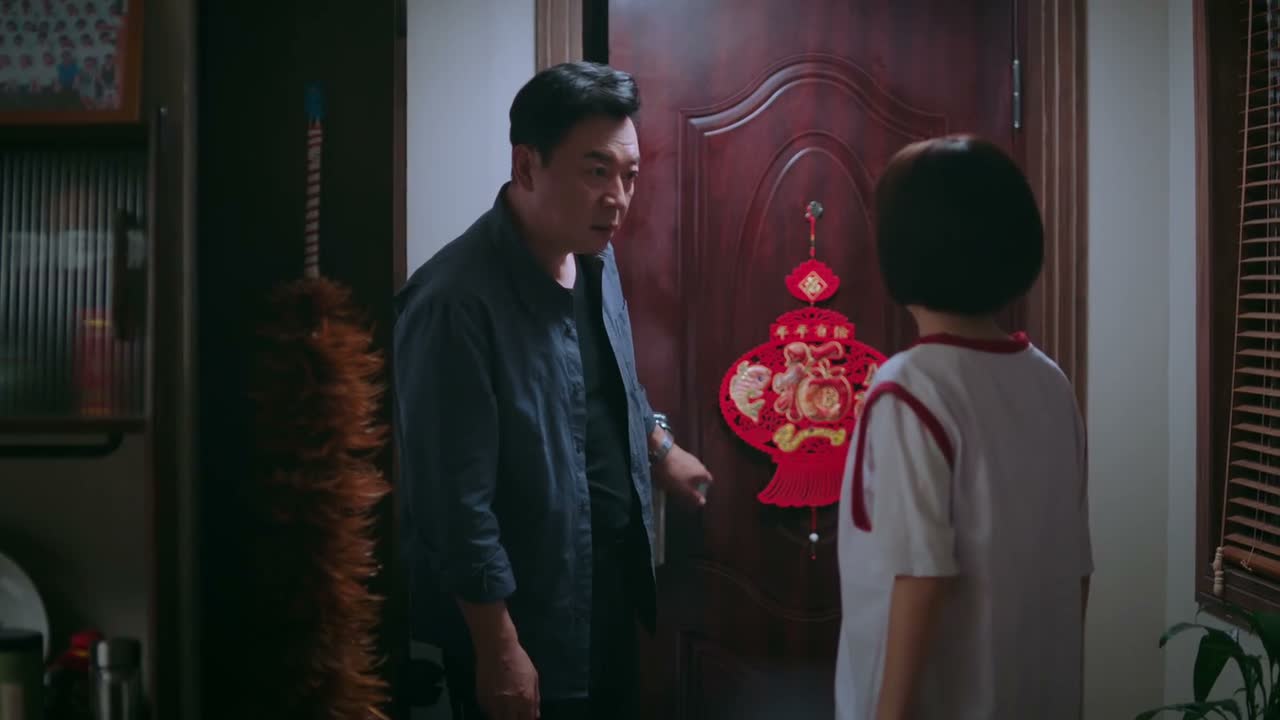
怎么这么早就睡了
“Why did he go to sleep so early?”
THE DIALOGUE REEL
来了来了
“Coming!”
怎么这么 早就 睡了
“Why did he go to sleep so early?”
改天再谢谢他吧
“I'll thank him another day.”
Direct spoken expression in this communicative setting.
In Chinese domestic culture, deviations from daily routines like sleeping early often prompt immediate concerned inquiries about health or mood.
LEARNING CHUNKS & PARTICLES
how come so...; why so...
Use this spoken pattern to express mild perplexity or surprise at an unusual degree or condition.
already went to sleep early
Used to describe someone retiring for the night earlier than customary.
Indicates a completed change of state regarding going to bed.
VOCABULARY & EXPRESSIONS
Parallel Spoken Cinema Scenes (语义近邻切片)

“Why are you up so early?”

“So early? Can you fall asleep?”

“Why aren't you sleeping?”

“You woke up too early.”
“Why are you still up at such late hours?”

“I was already sleepless for the first half of the night.”