好了 不哭了啊
“Alright. Don't cry.”
THE DIALOGUE REEL
好
“Yes.”
好了 不哭了 啊
“Alright. Don't cry.”
不哭了
“Stop crying.”
Direct spoken expression in this communicative setting.
Direct imperative phrases paired with softening final particles are standard ways to express deep affection and care among Chinese family members without needing elaborate emotional declarations.
LEARNING CHUNKS & PARTICLES
there, there / alright now
Commonly used at the beginning of a sentence to comfort someone, change the mood, or signal that an emotional outburst should end.
stop crying / don't cry anymore
A gentle and colloquial way to tell someone, especially children or close family members, to cease weeping.
Marks a cessation or change of state, indicating the action of crying should now stop.
Softens the imperative tone, conveying warmth, care, and gentle persuasion.
VOCABULARY & EXPRESSIONS
Parallel Spoken Cinema Scenes (语义近邻切片)
“Alright, don't cry.”

“It's okay, don't cry, don't cry.”

“Alright, don't cry.”

“Don't cry. Don't cry. There, there. Don't cry.”
“All right, all right. Don't cry.”
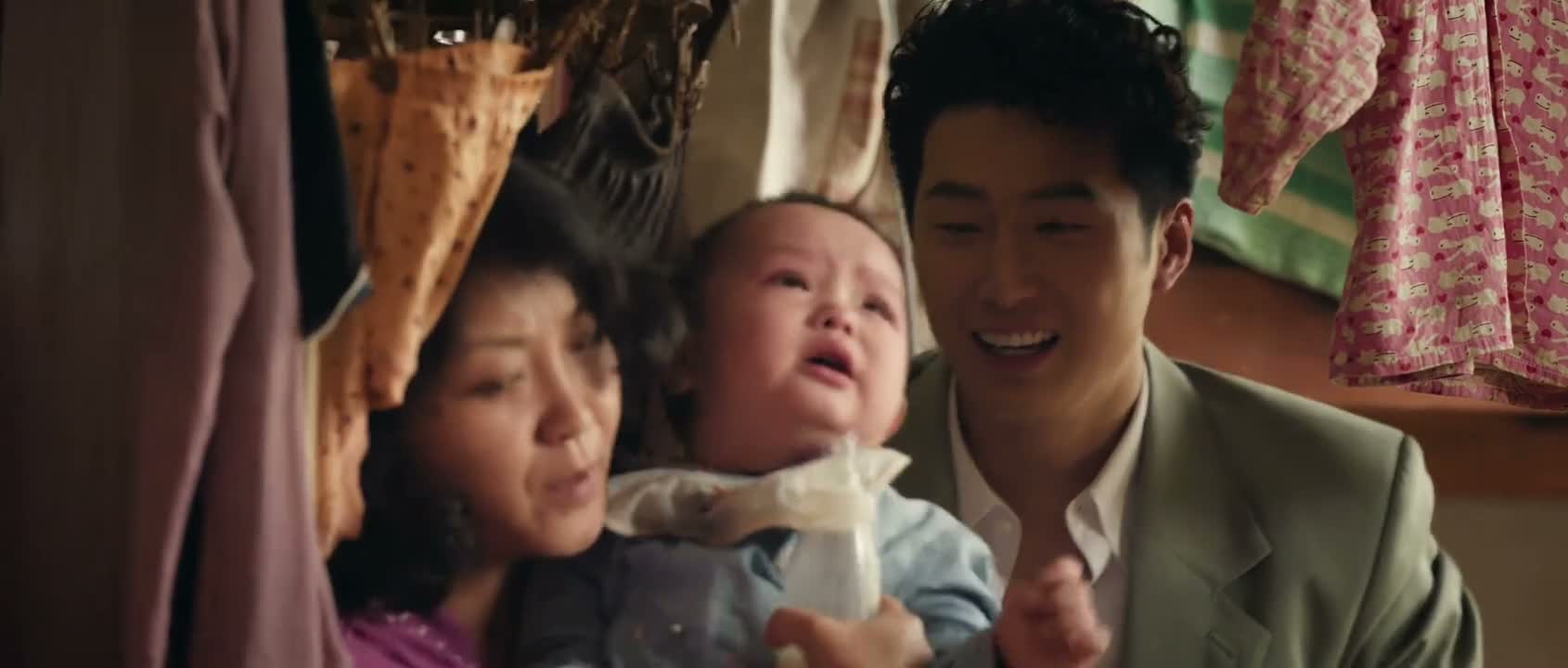
“Let me hold you. No more crying.”