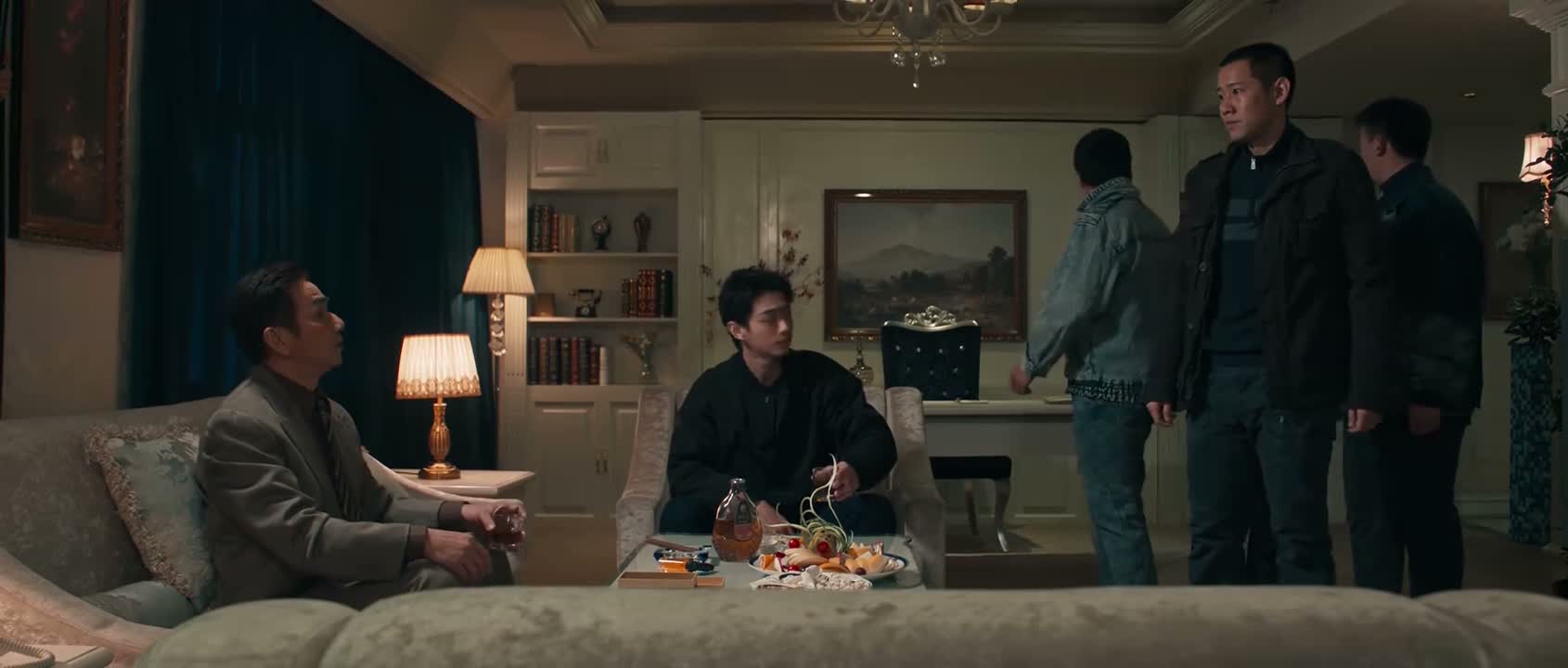
你要干什么
“What are you doing?”
THE DIALOGUE REEL
霍开明
“Huo Kaiming.”
你要干什么
“What are you doing?”
“You said you'd let us go after I brought Yang Baichun here.”
“What kind of game are you playing here?”
While Chinese interpersonal communication usually favors indirectness to preserve harmony, dropping polite hedges to say '你要干什么' explicitly signals that social decorum is suspended and an immediate standoff is occurring.
LEARNING CHUNKS & PARTICLES
What do you want to do? / What are you up to?
A highly direct, often confrontational question used when sensing hostile, suspicious, or intrusive behavior from someone.
VOCABULARY & EXPRESSIONS
Parallel Spoken Cinema Scenes (语义近邻切片)

“What is your kid doing again?”

“What are you doing? What are you doing?”

“Are you crazy?”
“What are you doing?”