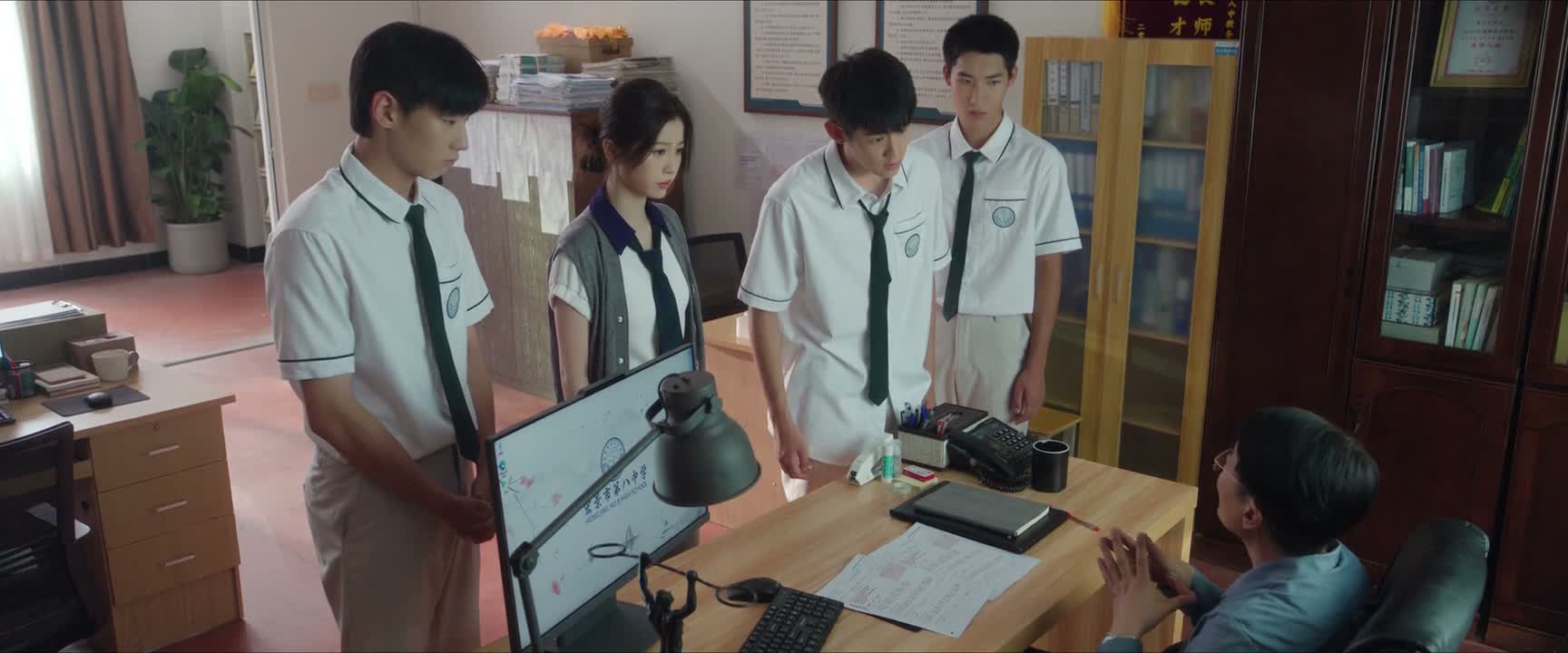
你刚才不是还 叫我说别惹事吗
“Didn't you just tell me not to cause trouble?”
THE DIALOGUE REEL
“These guys are really useless. Exactly.”
你刚才不是还 叫 我说 别惹事 吗
“Didn't you just tell me not to cause trouble?”
那是你
“I said that to you.”
“Why are you stirring up trouble now when you just told me to keep quiet?”
Chinese interpersonal pragmatics frequently emphasizes caution and avoiding conflict, making a sudden reversal of this rule noticeable and worth calling out.
LEARNING CHUNKS & PARTICLES
weren't you just (doing/saying something)
Used in colloquial speech to highlight someone's sudden change in attitude or contradictory behavior.
do not stir up trouble
A very common everyday warning urging someone to stay out of fights, controversies, or unnecessary problems.
Turns the rhetorical question into a direct check, emphasizing the listener's apparent inconsistency.
VOCABULARY & EXPRESSIONS
Parallel Spoken Cinema Scenes (语义近邻切片)

“I'm warning you. Don't cause trouble.”

“Don't be angry. I won't cause you trouble anymore.”

“I... I caused trouble for you again.”

“Causing trouble! I won't do it again, Ju. You liar!”
“But haven't you caused enough trouble? Other things aside,”

“I advise you not to provoke me.”