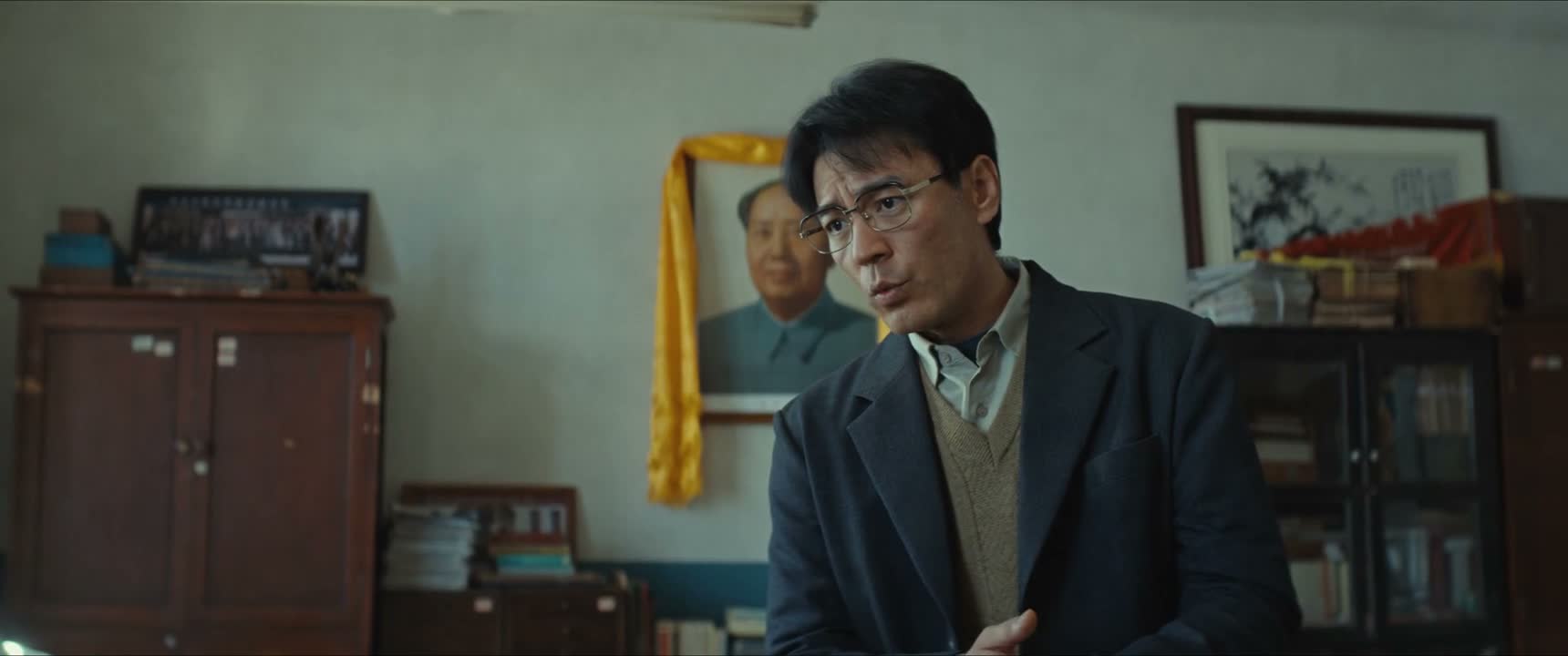
这就是你最大的问题 写文章是为了让普通的工人
“This is your biggest problem. Your writing should be easily understood”
THE DIALOGUE REEL
澄澈的美丽
“Full of clarity.”
这就是 你 最大的问题 写文章是为了让普通的工人
“This is your biggest problem. Your writing should be easily understood”
“by the ordinary workers and farmers. You just had to use these difficult words”
“Stop showing off with fancy vocabulary; write for ordinary people.”
In socialist Chinese contexts, intellectual and literary output was required to be accessible to common workers and peasants rather than overly ornate or bourgeois.
LEARNING CHUNKS & PARTICLES
this is your biggest problem
Used to bluntly pinpoint someone's key shortcoming or misstep during a critique.
writing articles is meant to...
A common rhetorical framing used to define the core purpose of a text.
VOCABULARY & EXPRESSIONS
Parallel Spoken Cinema Scenes (语义近邻切片)

“Are you looking down on frontline workers?”

“Mr. Xiao, may I ask— since I've completed all the work, what exactly is my problem?”

“It was my job as a factory worker, wasn't it?”

“and live as the most ordinary of people,”
“factors, the problem is”

“Does he also see you as just an ordinary employee?”