大家把话说开了那还斗什么呢
“If we can talk it out, what's left to fight over?”
THE DIALOGUE REEL
“we're all transmigrators. Who doesn't want to survive?”
大家 把话说开了 那 还 斗什么 呢
“If we can talk it out, what's left to fight over?”
你说是不是
“Don't you agree?”
“We have laid our cards on the table, so let us stop fighting and cooperate.”
In Chinese communication, which often relies on implicit meaning, explicitly 'speaking things open' signals an earnest desire to dismantle suspicion and build mutual trust.
LEARNING CHUNKS & PARTICLES
to speak openly; to lay all cards on the table; to clear the air
Extremely useful set phrase when resolving misunderstandings or opening up about hidden intentions.
why bother to...; what is the point of... anymore
A rhetorical grammatical pattern used to assert that an action is now pointless or unnecessary.
Softens the rhetorical question and invites the listener to agree with the speaker's logic.
VOCABULARY & EXPRESSIONS
Parallel Spoken Cinema Scenes (语义近邻切片)

“I won't join the discussion. You guys talk.”

“to discuss it together.”

“Since she's right, why should we oppose it?”
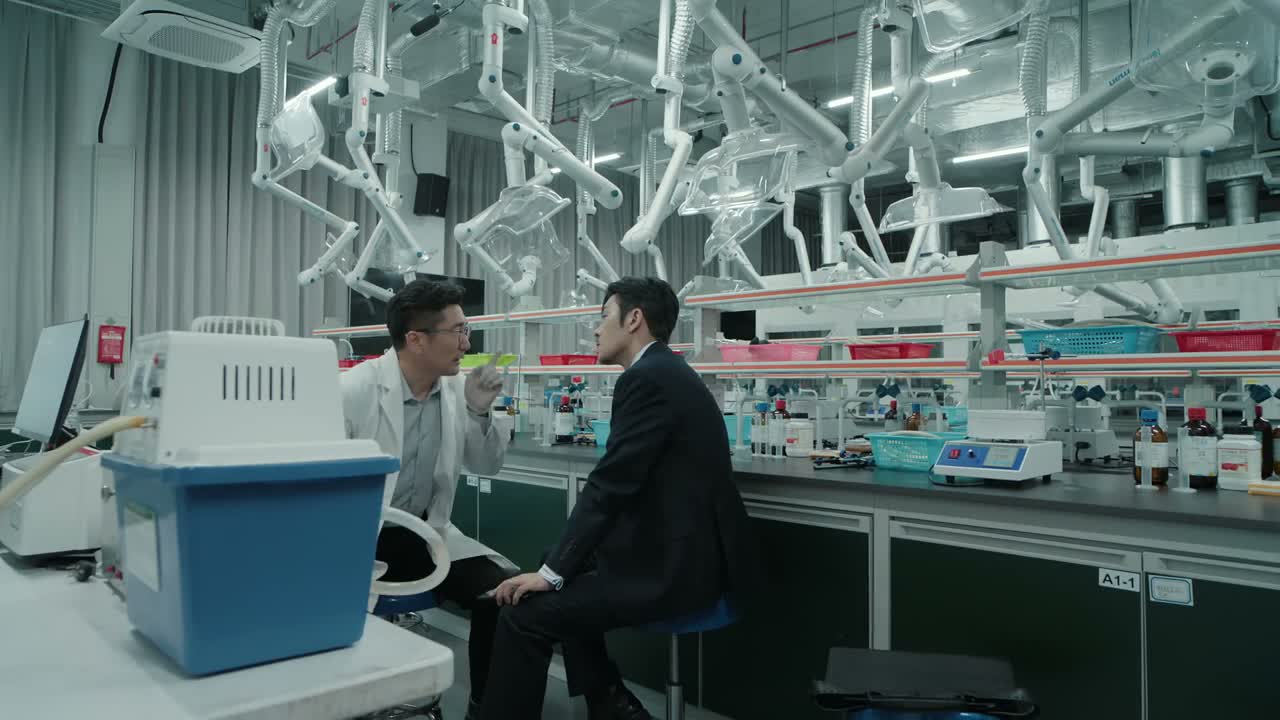
“We must fight against them to the end.”

“Let's just be honest.”

“Then why is everyone fighting so hard for it?”