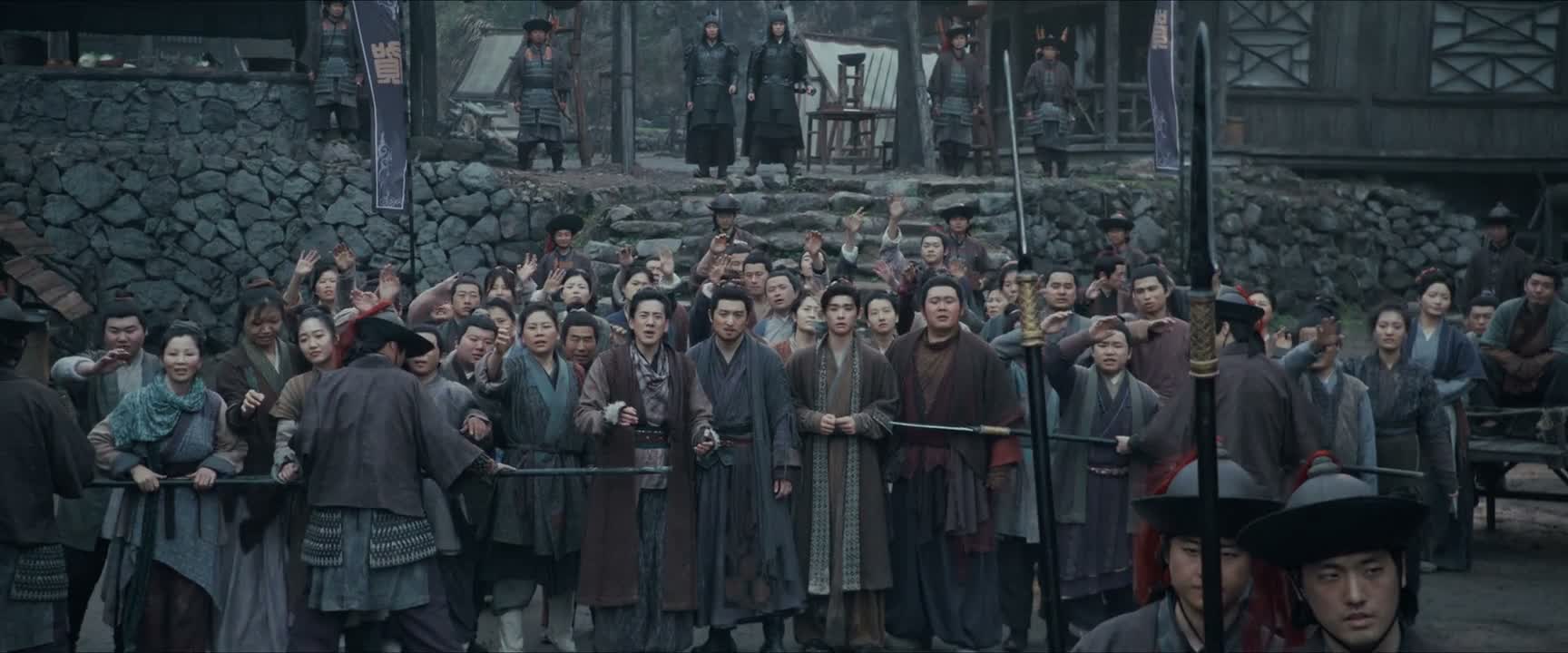
百姓死伤无数 能不恨吗
“With so many casualties, how could they not hate him?”
THE DIALOGUE REEL
结果边关被苍北人钻了空子 连下三城
“giving the Cangbei invaders the perfect opening, causing three cities to fall.”
百姓 死伤无数 能不恨吗
“With so many casualties, how could they not hate him?”
朝廷也是震怒 把他斩了
“(Death) The court was furious and killed him.”
Direct spoken expression in this communicative setting.
In Chinese historiography, the sentiment of the common people ('minxin') and their suffering are seen as the ultimate moral standard by which leaders' failures are judged.
LEARNING CHUNKS & PARTICLES
countless dead and wounded
A powerful four-character idiom used in both written and spoken Chinese to describe catastrophic casualties in battle or disaster.
how could one not...?
A widespread rhetorical question pattern used to emphasize that a certain emotional or logical outcome is completely inevitable.
Forms a rhetorical question that strongly reinforces the speaker's assertion.
VOCABULARY & EXPRESSIONS
Parallel Spoken Cinema Scenes (语义近邻切片)

“You'll end up miserable.”

“It won't kill him, but it'll leave him in misery.”

“Why did she have to die so brutally?”

“and caused over 100 deaths in the Chang clan,”
“If he kills so many innocent people,”

“We'll go down together.”