你上我们家 吃饭的时候 什么时候打过招呼
“Since when did you ever bother to give me a heads-up before coming over for dinner?”
THE DIALOGUE REEL
我是借用 我会还的 没有嚼子的马嘴巴硬
“I'm borrowing it. I'll return it. A horse without a bit won't listen.”
你上我们家 吃饭 的 时候 什么时候打过招呼
“Since when did you ever bother to give me a heads-up before coming over for dinner?”
我知道
“I know”
“You act completely informal at my house, so do not preach to me about formalities now.”
In close Chinese relationships, excessive formality is viewed as emotional distance, so dropping formalities like giving notice reflects closeness.
LEARNING CHUNKS & PARTICLES
to give advance notice; to say hello
Commonly used in informal speech to mean notifying someone beforehand rather than just greeting.
come over to our place
A very colloquial spoken expression equivalent to 到我们家.
VOCABULARY & EXPRESSIONS
Parallel Spoken Cinema Scenes (语义近邻切片)
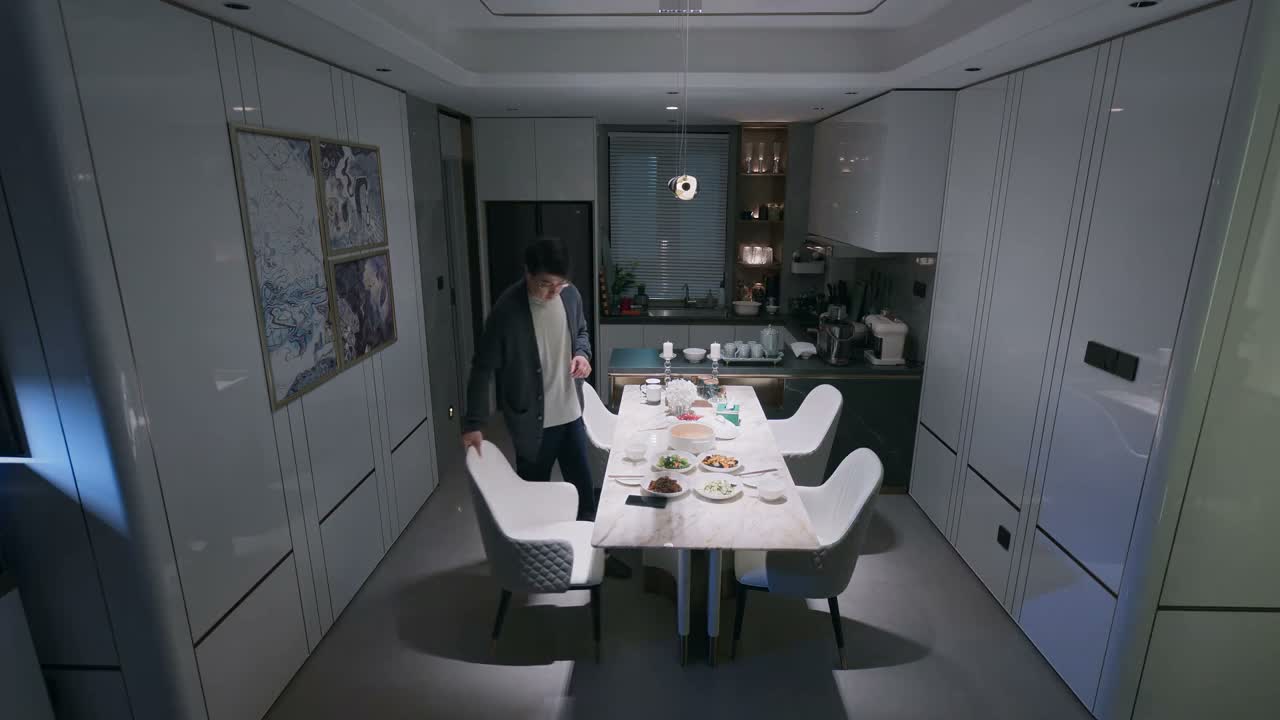
“it wouldn't be appropriate for me to come and cook for you.”

“Back when I went in, people just wanted enough to eat.”

“The last time I ate at your place, I thought something was off.”

“You should arrive this morning. What time is it? It's dinner time. Where did you go?”

“♪ I hope you still believe ♪ Nice to make your acquaintance today. ♪ Beautiful scenes and happy times are not far away ♪ This meal is on me. Do come more often, guys.”

“In the future, you can come to our place to eat, if you have the time.”