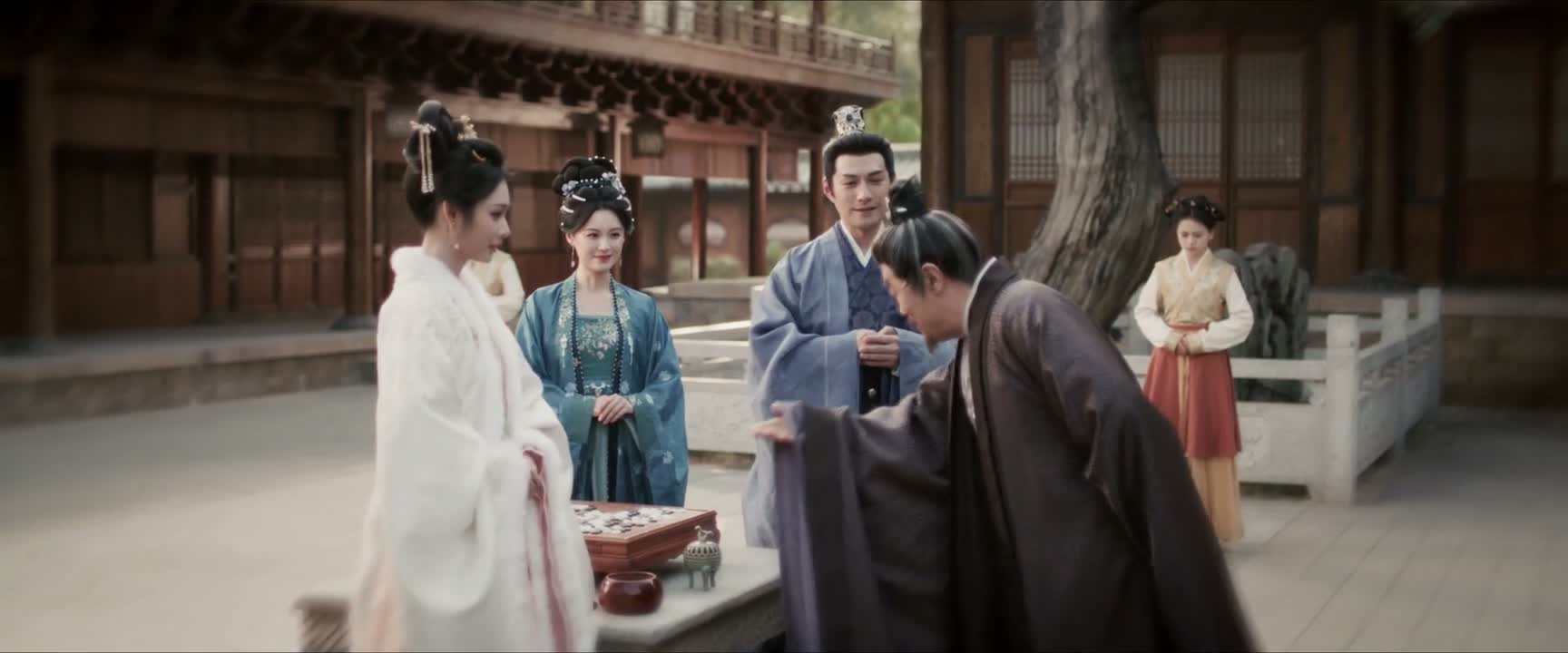
你俩别站着聊 坐坐坐 对 坐坐坐
“Don't just stand there. Have a seat. Yes, have a seat.”
THE DIALOGUE REEL
“I heard you also like coming to our murder mystery games.”
你俩 别站着聊 坐坐坐 对 坐坐坐
“Don't just stand there. Have a seat. Yes, have a seat.”
“Then you'll be our VIP from now on. My win rate hasn't been great lately.”
Direct spoken expression in this communicative setting.
Repeating an action verb multiple times (e.g., '坐坐坐', '吃吃吃') signals eager hospitality and friendliness, assuring the guests that they are deeply welcome.
LEARNING CHUNKS & PARTICLES
don't stand
Standard hospitable phrasing used by hosts urging guests not to feel awkward or formal by remaining standing.
take a seat / sit down
Repetition of verbs is a hallmark of enthusiastic Chinese hospitality to show genuine warmth without imposing pressure.
VOCABULARY & EXPRESSIONS
Parallel Spoken Cinema Scenes (语义近邻切片)

“Don't stand there. Please be seated. Make yourself comfortable.”

“Let's not stand and talk. Sit down and talk. Why are you being so polite?”

“Come, have a seat. Don't just stand there. Sit.”

“-Don't. -Sit down. Don't be polite. Sit. Sit.”
“Sit. Please sit.”

“Sit here. Please have a seat.”

“- Sit down. - Just sit. Introductions are in order.”

“Come on. Don't just stand there. Sit down and talk. I wouldn't dare.”