吴小姐没有自己的武器吗 要抢别人的
“Ms. Wu, don't you have your own weapon? Why take someone else's?”
THE DIALOGUE REEL
我自己玩
“I'll play by myself.”
吴小姐 没有 自己的 武器 吗 要 抢别人的
“Ms. Wu, don't you have your own weapon? Why take someone else's?”
我 我 你这么小气干吗 你借我玩一下嘛 不行
“I... Why are you being so stingy? Just let me play with it for a while. No.”
“Get your own hands off mine and go play with your own stuff!”
Using a formal surname address like 'Miss Wu' (吴小姐) in an informal, childish dispute adds ironic humor and playful distance.
LEARNING CHUNKS & PARTICLES
to snatch other people's things
Used colloquially to criticize grabby behavior, ranging from playful teasing to genuine reprimand.
don't you have your own...?
A rhetorical question pattern used to lightly challenge or mock someone taking another person's items.
Forms a rhetorical question that carries a teasing and challenging nuance rather than genuine inquiry.
VOCABULARY & EXPRESSIONS
Parallel Spoken Cinema Scenes (语义近邻切片)

“I need to distract the armed guards at the door first to have a chance to kidnap Miss Dong.”

“Outsiders can't easily obtain the weapons of Imperial Guards.”
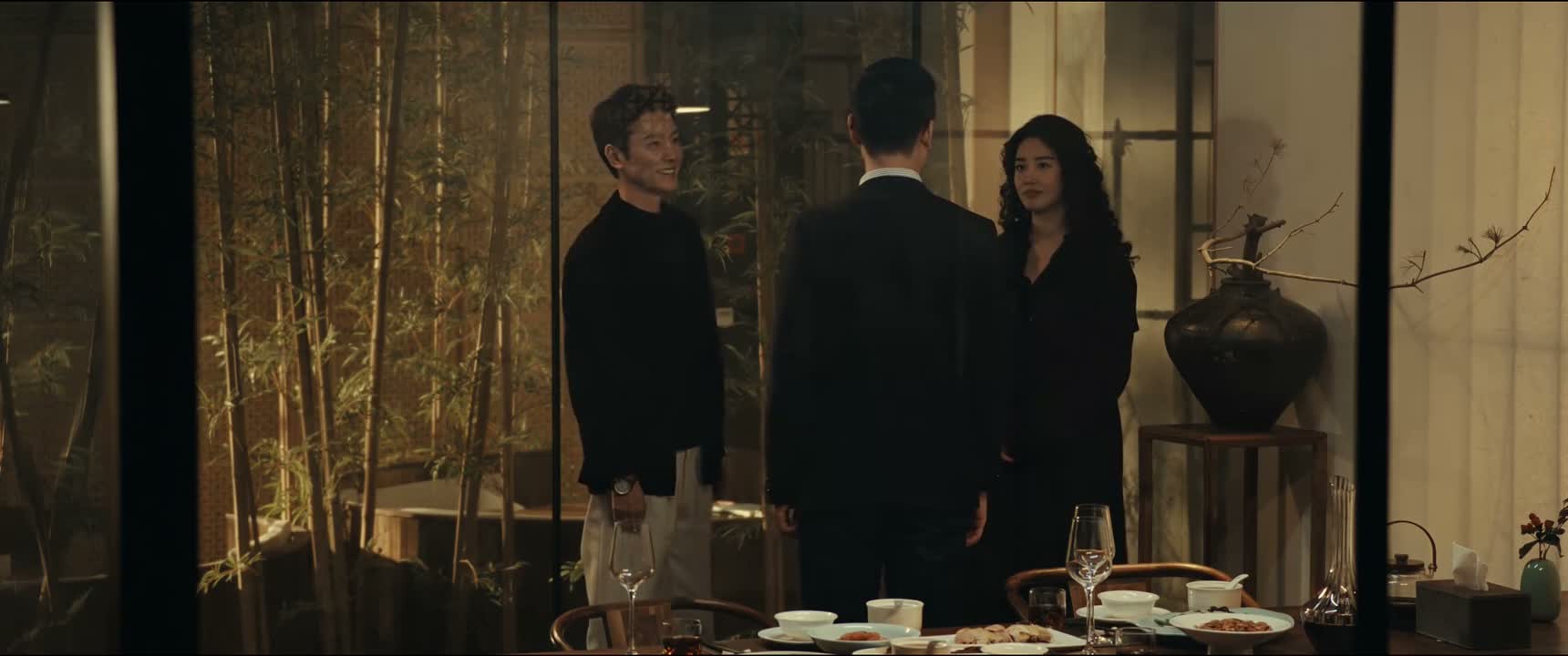
“Miss Zhou, nice to finally meet you.”

“Wu, go check the back door area. [Wu Jun, Narcotics Brigade, Haizhou City Public Security Bureau]”

“Aren't you Imperial Guards out there catching the culprit?”

“Ms. Sun, it's been a pleasure working with you.”