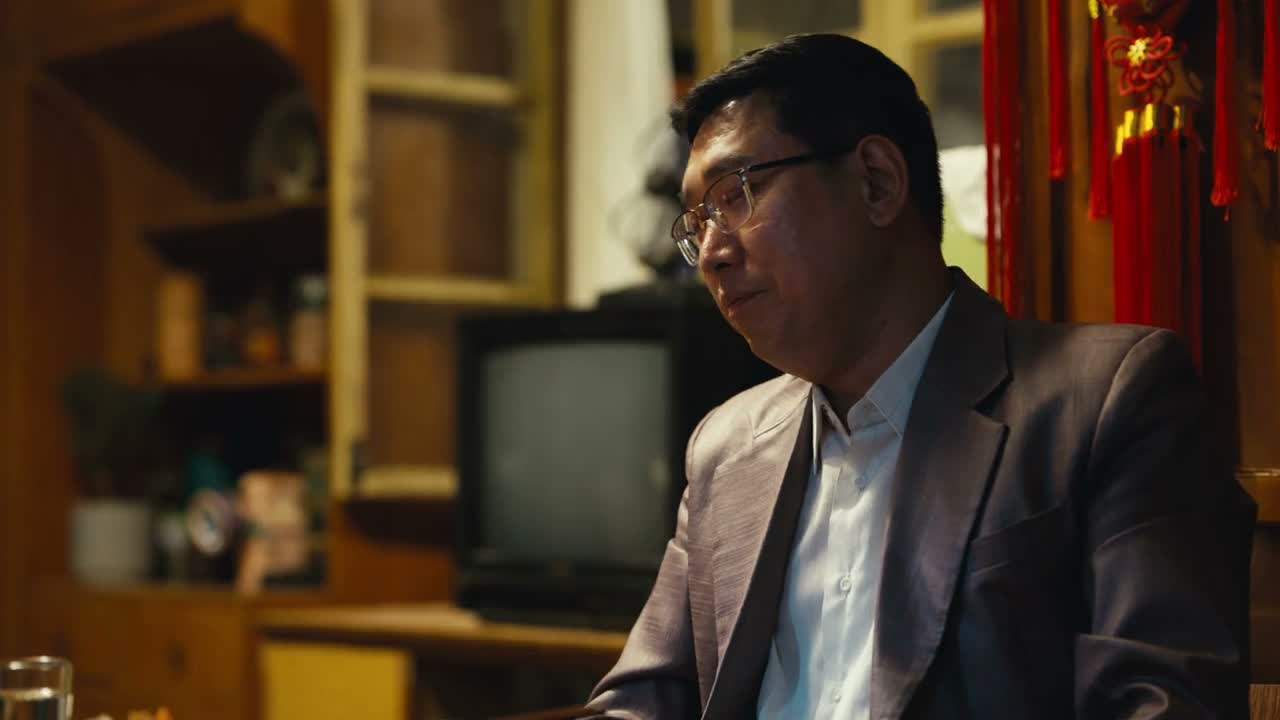
安科长 要我说你也太不够意思了
“Sir, you're not a good friend.”
THE DIALOGUE REEL
张大记者 有什么指示啊
“Reporter Zhang, what can I do for you?”
安科长 要我说 你也 太 不够意思 了
“Sir, you're not a good friend.”
“You didn't inform me of such a big news.”
“We're supposed to be friends—how could you leave me out of the loop on this big story?”
Accusing someone of being 'bugou yisi' invokes informal social obligations, using feigned hurt to reinforce reciprocal loyalty among professional contacts.
LEARNING CHUNKS & PARTICLES
if you ask me / in my opinion
Used to preface an informal, subjective observation or candid judgment.
unfair; not being a good friend; lacking loyalty
Very common colloquial expression for chiding friends or friendly colleagues in a half-joking way.
Marks an excessive state in conjunction with '太', emphasizing the speaker's perceived slight.
VOCABULARY & EXPRESSIONS
Parallel Spoken Cinema Scenes (语义近邻切片)

“Chief Wang told me everything.”

“Chief Wang, I really have nothing else to do.”

“What would Chief Wang think?”

“Chief Wang said you two set up bunk beds at home,”

“Contestant No.12, so I came to see what's going on.”
“So what if you're the principal?”